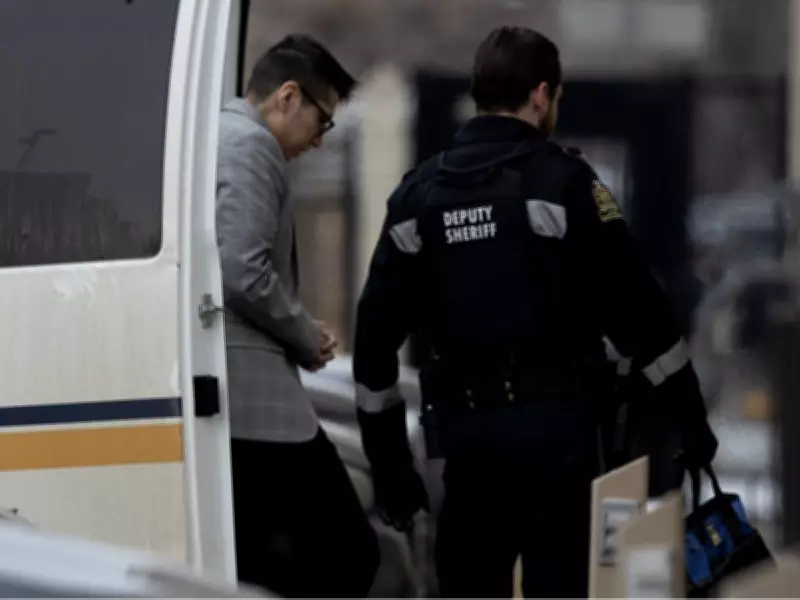
In a Regina courtroom, the credibility of former gang members took center stage during closing submissions at the murder trial of Dillon Ricky Whitehawk. The defense argued these witnesses cannot be trusted, while the Crown insisted their testimony is consistent and credible, alleging Whitehawk shot and killed two men in 2019.
Contrasting Views on Witness Reliability
Defense lawyer Thomas Hynes portrayed the trial as fundamentally a case of credibility, suggesting the key witnesses—referred to as the "core four"—lack reliability. All were affiliated with gangs at the time of the incidents, with three allegedly present for the shootings and a fourth claiming Whitehawk confessed in jail. Hynes reminded jurors that Whitehawk is legally innocent and that the Crown has not proven guilt beyond a reasonable doubt.
He emphasized that verdicts can fall on a spectrum, noting that "not guilty" does not necessarily mean completely innocent, but conclusions of "maybe" or "probably" guilty are insufficient for conviction. The defense's position hinges on casting doubt on the witnesses' backgrounds and motives.

Crown's Assertion of Truth
Crown prosecutor Adam Breker presented a starkly different view, stating bluntly, "Whitehawk did it. It's not complicated." He argued that the accused not only shot 27-year-old Jordan Gaiton Denton on November 9, 2019, and 23-year-old Keenan Scott Toto on December 1, 2019, but did so as part of a planned action with a criminal organization, supporting the first-degree murder charges.
Breker acknowledged the witnesses are "not angels" and were not behaving as such during the events, but he maintained they came to court to tell the truth. Their testimony, he submitted, aligns with the Crown's theory that Whitehawk committed the killings to elevate his status within the Indian Mafia street gang, which was in conflict with the rival Native Syndicate Killers.
Legal and Evidentiary Context
Whitehawk, 31, pleaded not guilty to both charges when his retrial began on March 2. The case revolves around drive-by shootings in North Central Regina, with the Crown alleging premeditation and gang involvement. A court-ordered publication ban protects the identities of the key witnesses, adding a layer of complexity to the public's understanding of the proceedings.
As jurors deliberate, they must weigh the contrasting arguments: the defense's emphasis on witness unreliability versus the Crown's assertion of consistent and credible testimony. The outcome will hinge on whether the evidence meets the high standard of proof required in criminal trials, with the concepts of absurdity, possibility, certainty, and doubt lingering in the courtroom air.