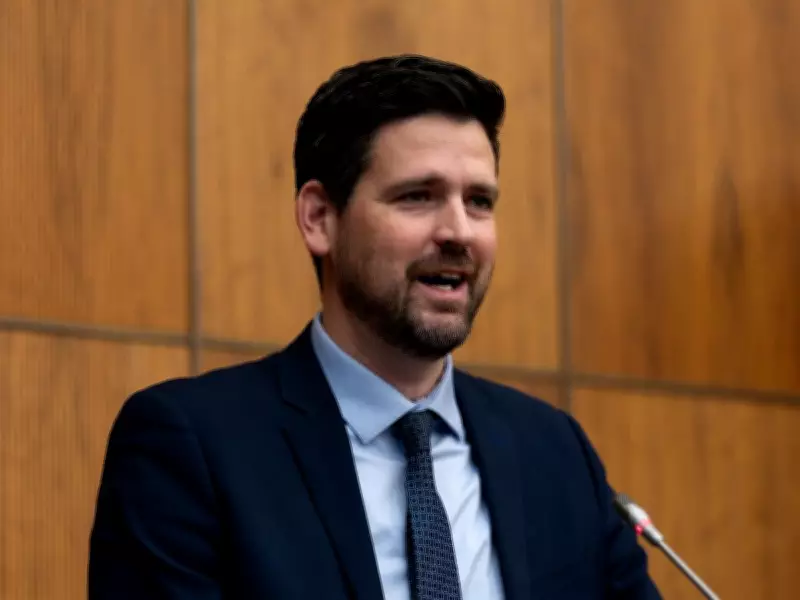
Justice Minister Sean Fraser has disclosed that he seriously considered invoking the controversial notwithstanding clause following a landmark Supreme Court of Canada ruling that eliminated mandatory minimum penalties for accessing and possessing child sex abuse images. While Fraser ultimately rejected this approach, his admission highlights the intense political and legal debate surrounding Canada's justice system.
Legislative Response to Supreme Court Decision
The current legislative discussion centers on Bill C-16, an omnibus crime bill that introduces what legal experts describe as a "safety valve" mechanism into mandatory minimum sentencing structures. This proposed legislation emerged directly from the fallout of last October's Supreme Court decision, where a narrow 5-4 majority struck down the one-year mandatory minimum sentences for possession and access to child exploitation material.
Fraser explained that while he never believed the notwithstanding clause represented the appropriate solution, he nevertheless "gave it the thought that it deserves" after the issue was raised by fellow parliamentarians. The justice minister emphasized that his initial instinct was against using the constitutional override mechanism, but he wanted to give the option proper consideration before dismissing it.

Political Reactions and Conservative Position
Reaction to the Supreme Court ruling was immediate and polarized across political lines. Conservative Leader Pierre Poilievre vowed that a future government under his leadership would employ the notwithstanding clause to override the court's decision and restore the mandatory penalties. Several provincial leaders, including Ontario Premier Doug Ford and Alberta Premier Danielle Smith, echoed this sentiment and called on Prime Minister Mark Carney to take similar action.
The Opposition Conservatives argue that introducing judicial discretion through Bill C-16's safety valve provisions creates a pathway for more offenders to avoid prison time. Fraser counters that his government's approach represents a necessary measure to restore those mandatory sentences already struck down by courts while preserving others he believes are destined to face similar constitutional challenges.
Constitutional Concerns and Practical Limitations
Fraser outlined multiple reasons for ultimately rejecting the notwithstanding clause option. "When I started to think about it, though it was against my initial instinct, I wanted to give it appropriate thought," he explained in an interview. "Very quickly, I came to the conclusion that we wouldn't actually be helping an additional person by invoking the notwithstanding clause."
The justice minister highlighted significant practical limitations of the constitutional mechanism, noting that it provides only a temporary solution since the clause automatically sunsets after five years. "Giving a temporary solution without providing a permanent constitutional guard against the analysis that was conducted in the decision wouldn't have solved the problem," Fraser stated.
Historical Context and Federal Precedent
While several provinces have triggered the notwithstanding clause in recent years to advance various legislative agendas, the mechanism has never been employed in criminal law matters or by any federal government. Fraser cited both practical and philosophical objections to using the clause, concerns that the federal government has formally outlined in an intervention filed with the Supreme Court regarding Quebec's controversial secularism law.
The justice minister emphasized that his government's proposed legislation represents a more sustainable approach to addressing the constitutional issues raised by the Supreme Court while maintaining appropriate penalties for crimes involving child exploitation. The debate over Bill C-16 continues as parliamentarians grapple with balancing judicial discretion, constitutional rights, and public safety concerns in Canada's evolving legal landscape.