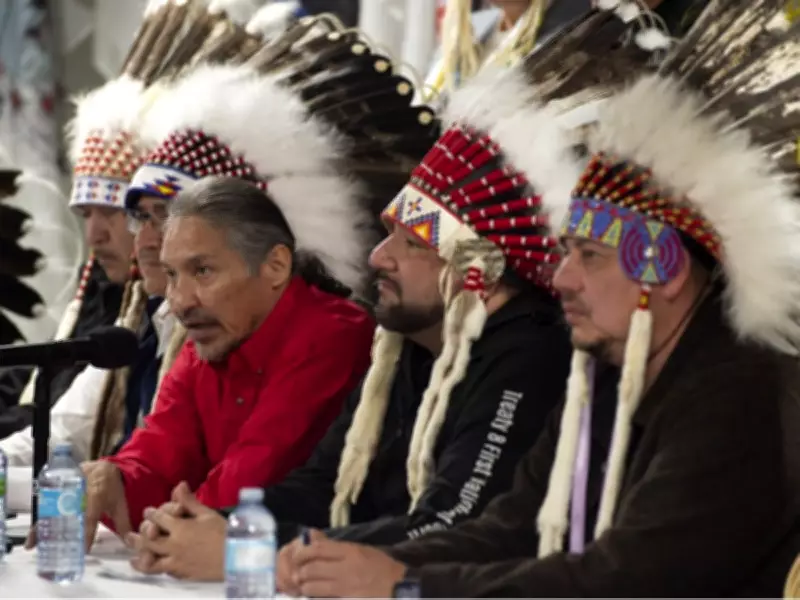
First Nations Launch Legal Challenge Against Alberta Separation Movement
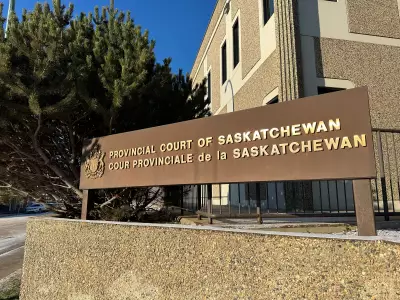
The Athabasca Chipewyan First Nation presented compelling arguments in Edmonton's Court of King's Bench this week, asserting that Alberta's potential independence would create international borders directly through their traditional territory, fundamentally violating treaty rights established long before Canada's existence. The judicial review hearing before Justice Shaina Leonard represents a critical moment in the ongoing debate about Alberta's separatist movement and its constitutional implications.
Treaty Rights at the Heart of Legal Battle
Lawyer Kevin Hille, representing the Athabasca Chipewyan First Nation, emphasized how an independent Alberta would transform provincial boundaries into international borders, directly interfering with the nation's ability to hunt, fish, and trap across their traditional lands as guaranteed under Treaty 8. "Sovereignty equals border. Border equals interference. It's as close to mathematical precision as you can get," Hille stated during the proceedings.
The Treaty 8 territory spans northeastern Alberta, Saskatchewan, and the Northwest Territories, creating a complex jurisdictional landscape that would be dramatically altered by Alberta's separation from Canada. Hille argued that Athabasca Chipewyan's ancestors signed the treaty with explicit assurances that their traditional way of life would continue uninterrupted, protections that would be fundamentally compromised by new international boundaries.

Multiple First Nations Join Legal Challenge
This case represents just one of three separate legal actions currently before the court. Sturgeon Lake Cree Nation presented arguments on Tuesday focusing on the "irreparable" harms their community would face from a separation referendum, including potential loss of treaty rights, increased racism, and foreign interference. The Blackfoot Confederacy was scheduled to present their case on Wednesday, creating a united front of Indigenous opposition to Alberta's separatist movement.
While all three cases challenge the same legislation—Bill 14, which removed screening provisions from the Citizen Initiative Act—they approach the issue from slightly different angles. Athabasca Chipewyan's case uniquely names separatist leader Mitch Sylvestre as a defendant, highlighting the direct connection between political activism and constitutional concerns.
Legislative Changes Spark Constitutional Concerns
The legal challenges center on Bill 14, legislation passed late last year that eliminated provisions designed to prevent unconstitutional petitions from proceeding to referendum. This legislative change occurred after Court of King's Bench Justice Colin Feasby determined that a citizen-initiated separation referendum would violate constitutional protections for Indigenous rights.
Hille pointed to what he called a "pattern of dishonourable conduct" by the provincial government, noting that former justice ministers Kaycee Madu and Mickey Amery had previously reassured First Nations about protections for treaty rights when responding to concerns about Alberta separatism. "Alberta's government has heard concerns from First Nations regarding how a referendum question may impact existing treaties between First Nations and the Crown," Amery stated in May of last year. "We are listening and we recognize the importance of protecting treaty rights."
Yet by December, the government had repealed the very screening provisions that provided those protections. "That promise was made in May," Hille noted during proceedings. "By December, that section was repealed entirely."
Broader Implications for Constitutional Law
The legal proceedings represent more than just a challenge to specific legislation—they touch on fundamental questions about treaty rights, constitutional protections, and the relationship between provincial governments and Indigenous nations. Chief Allan Adam of the Athabasca Chipewyan First Nation has previously expressed concerns about both the legality of the United Conservative Party government's actions regarding separation and the movement's connections to the United States.

As lawyers for the defendants prepare to respond to these arguments on Thursday, the court's eventual decision will have significant implications for Alberta's political future and the constitutional rights of Indigenous peoples across Canada. The outcome could establish important precedents regarding how treaty rights intersect with questions of provincial sovereignty and constitutional law in an era of increasing political polarization.
The hearings continue as First Nations leaders from Treaty 6, 7, and 8 territories unite in calling for politicians to respect treaty rights and constitutional obligations, creating a powerful Indigenous-led opposition to Alberta's separatist movement that combines legal strategy with political advocacy.