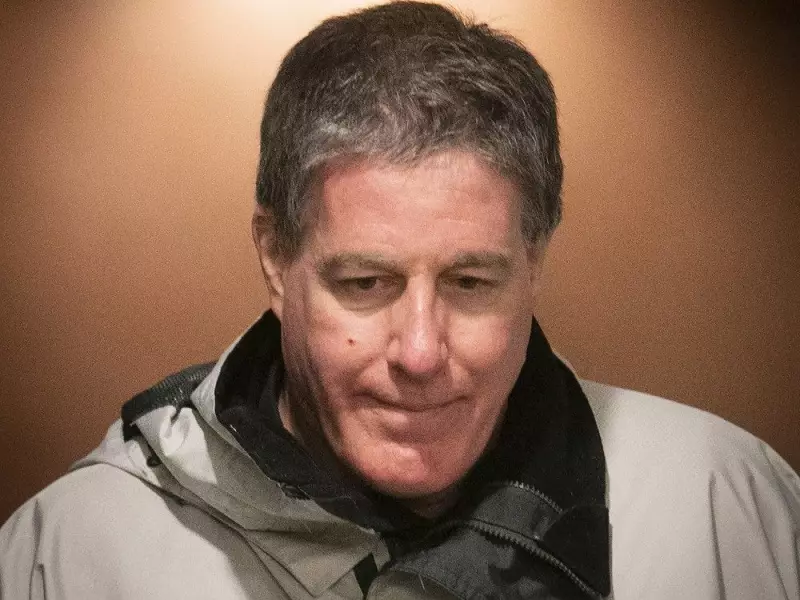
A former Catholic priest in Montreal, convicted of sexually abusing teenage boys, is now prohibited from entering specific sections of two boroughs after violating a condition of his release. Brian Boucher's statutory release has been amended with a new geographic restriction following an incident where he crossed paths with one of his victims.
Parole Board Imposes New Geographic Ban
In a decision made last week, the Parole Board of Canada added a significant condition to the terms of Brian Boucher's statutory release. The new order bans him from being within defined sections of the Côte-des-Neiges—Notre-Dame-de-Grâce (C.D.N.-N.D.G.) and Town of Mount Royal (T.M.R.) boroughs, unless authorized for medical reasons. This action was triggered after Boucher was found at a location where one of his victims was present, an event the board deemed a violation.
The restricted area in C.D.N.-N.D.G. is defined as south of Jean-Talon St., east of Highway 15, north of Chemin de la Côte St-Luc/the Boulevard, and west of Chemin de la Côte-des-Neiges. In T.M.R., he is banned from the area south of Highway 40, east of Highway 15, north of Jean-Talon St., and west of de l’Acadie Blvd.

Background of the Case and Statutory Release
Brian Boucher is serving an eight-year sentence for sexual offences committed while he was a parish priest. On January 8, 2019, he was found guilty of sexually abusing a boy between 2008 and 2011. Following that conviction, he pleaded guilty to sexually assaulting a different boy in a separate case, with crimes occurring between 1995 and 1999.
Under Canadian law, offenders in federal penitentiaries generally qualify for a statutory release after serving two-thirds of their sentence if not granted parole earlier. Boucher automatically qualified for this release in 2024. He was released on July 23, 2024, with an initial condition requiring him to reside at a halfway house for the remainder of his sentence.
Violation and Lack of Remorse
The recent parole board summary indicates the incident that led to the new ban occurred when Boucher apparently attended mass at a church on more than one occasion. During one of these visits, he made eye contact with one of his victims. Details of the location are redacted, but the victim's presence prompted Correctional Service Canada to request the geographic restriction.
The board's written decision paints a picture of an offender who has shown little change. It states Boucher "continues to demonstrate a high level of denial and lack of empathy" and has failed to recognize the problems related to his sexual offences. The case-management team reported he "remains completely closed off" to working on the reasons for his incarceration. Correctional Service Canada assessed him as not trustworthy and as having a history of disrespecting emotional boundaries, posing a risk of further trauma to victims and their families.
In October, one victim had requested a much larger restriction, potentially encompassing the entire island of Montreal. The imposed ban was described by the board as the least restrictive measure possible to manage the risk.
Ongoing Conditions and Previous Incidents
Boucher's release conditions from 2024 remain in effect. He is not allowed to have direct contact with the victims or their relatives. He is prohibited from holding any job or volunteer position that would put him in a position of authority over individuals under 18. Furthermore, he cannot have contact with anyone under 18 unless accompanied by a responsible adult who knows about his offences and with prior written authorization from his parole supervisor.
His time under supervision has been marked by other issues. In February 2023, he was transferred to a different halfway house following multiple incidents with a co-resident. Additionally, while incarcerated in 2023, Boucher was charged with sexually assaulting another inmate. That case ended in an acquittal on March 19 of last year when he agreed to follow the conditions of a peace bond, which included staying away from the other inmate for one year.

The parole board's latest intervention underscores the ongoing challenges in monitoring high-risk offenders released into the community and the system's attempt to balance rehabilitation with public and victim safety.