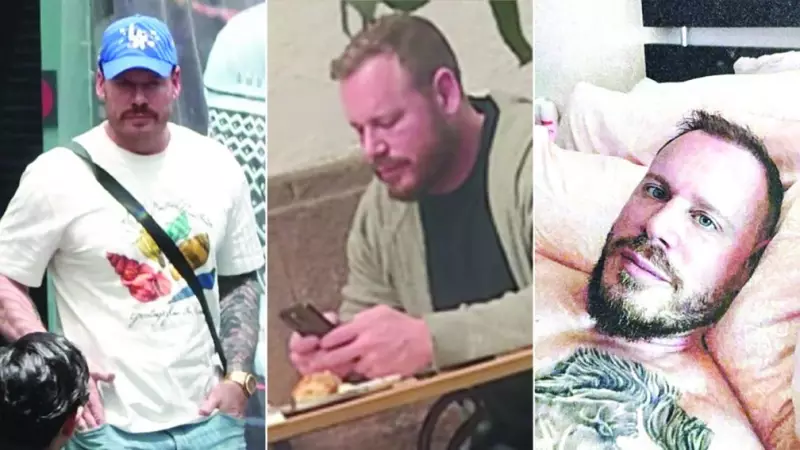
From Olympic Snowboarder to Alleged Drug Kingpin: The Fall of Ryan Wedding
Once celebrated as a fearless talent on the slopes, former Canadian Olympic snowboarder Ryan Wedding now stands accused of orchestrating one of the largest international drug trafficking operations of his generation. The 44-year-old athlete, who represented Canada at the 2002 Winter Olympics in Salt Lake City, pleaded not guilty on Monday to 17 federal felony charges that paint a dramatic picture of his alleged criminal transformation.
A Promising Career Derailed
Wedding's journey began with remarkable athletic promise. He won his first snowboard race at just 12 years old and made the Canadian national team by age 15. By 20, he had achieved the dream of competing in the Olympics. However, his performance in the men's parallel giant slalom event proved disappointing, with Wedding finishing 24th—a result that former teammates say deeply affected the ambitious competitor.
"He really started to change after that," a former teammate told the New York Post. "He was not happy about his performance there. He always wanted to win." Extreme weather conditions during the competition reportedly caught Wedding off guard, contributing to his underwhelming result.

The Alleged Criminal Transformation
Following his Olympic disappointment, Wedding enrolled at Simon Fraser University in Vancouver, where his parents—an engineer and a nurse—hoped he would pursue a more stable career path. Instead, according to reports, he began working as a bouncer at nightclubs frequented by gang members, gradually adopting their flashy lifestyle of expensive watches and luxury vehicles.
By 2006, police had raided a massive marijuana grow operation in Maple Ridge, British Columbia, uncovering loaded guns, 6,800 plants, and 86 pounds of dried cannabis worth an estimated $10 million. Though charges never stuck, authorities later linked the operation to Wedding. His alleged criminal activities escalated in 2008 when he was arrested in California for attempting to purchase cocaine from an undercover FBI agent.
Building an International Empire
After serving a reduced prison sentence, Wedding allegedly resurfaced in Montreal, where he reportedly grew close to Philipos Kollaros, a dealer connected to Joaquín "El Chapo" Guzmán's Sinaloa cartel. Experts note that non-Mexicans acting as cartel liaisons at this level are exceptionally rare, particularly Canadians.
"I haven't heard of many white men from Canada involved on this level, that's for sure," former ambassador Tony Wayne told the Post.
By 2015, Wedding allegedly proposed trafficking up to 5,000 kilograms of cocaine—worth hundreds of millions of dollars—to an undercover RCMP officer in Montreal. When police later arrived at his condo to make an arrest, he had already vanished, apparently tipped off about the investigation.
Operation Giant Slalom and Capture
Authorities say Wedding then disappeared into Mexico for nearly a decade, allegedly building a cocaine empire that generated more than $1 billion annually. The violence associated with his alleged operation became increasingly apparent. After Kollaros was released from prison in 2018, he was fatally shot in a Montreal restaurant, with no suspect ever named.
In 2023, the FBI and RCMP launched Operation Giant Slalom to track Wedding's activities. The investigation gained momentum when Wedding's former prison associate, Jonathan Acebedo-Garcia, reportedly began cooperating with authorities. Prosecutors allege Wedding responded by placing a $5 million bounty on Acebedo-Garcia's head. The informant was later found dead in a Medellín restaurant, shot five times in the head.
Wedding landed on the FBI's 10 Most Wanted Fugitives list in March 2025. Last week, Mexican officials announced he had surrendered at the U.S. Embassy in Mexico City—a claim his lawyer has dismissed as a "false narrative." Wedding was subsequently arrested and transported back to the United States to face trial.
The Charges and Investigation
Wedding now faces 17 federal felony charges, including:

- Drug trafficking
- Witness tampering
- Conspiracy to commit murder
FBI Director Kash Patel has described Wedding as "one of the largest narco traffickers in modern times" and compared him to infamous drug lords El Chapo and Pablo Escobar.
According to authorities, Wedding's alleged organization helped move millions of dollars' worth of cocaine from Colombia through Mexico, storing it in Southern California before distributing it across the United States and Canada. Prosecutors also allege he ordered "multiple murders of victims and government witnesses."
So far, 36 people connected to Wedding's alleged organization have been arrested. Law enforcement has seized more than 2,300 kilograms of cocaine, significant quantities of methamphetamine and fentanyl, and over $55 million in assets.
A Tragic Downward Spiral
Even those who knew Wedding during his athletic career express bewilderment at his alleged criminal transformation. "He was such a promising talent with big ambitions—completely fearless," his former teammate reflected. "But maybe his quest for money and power got to him in a bad way. He always wanted to be a big name, and wasn't the type to let anything stop him from getting what he wanted."
The former teammate added that despite Wedding's Olympic disappointment, "he was the last person who needed to go down this path." The case continues to unfold as Wedding prepares for what promises to be one of the most high-profile drug trafficking trials in recent Canadian-American legal history.