Former DEA Agent Sentenced to Five Years in Federal Prison for Corruption
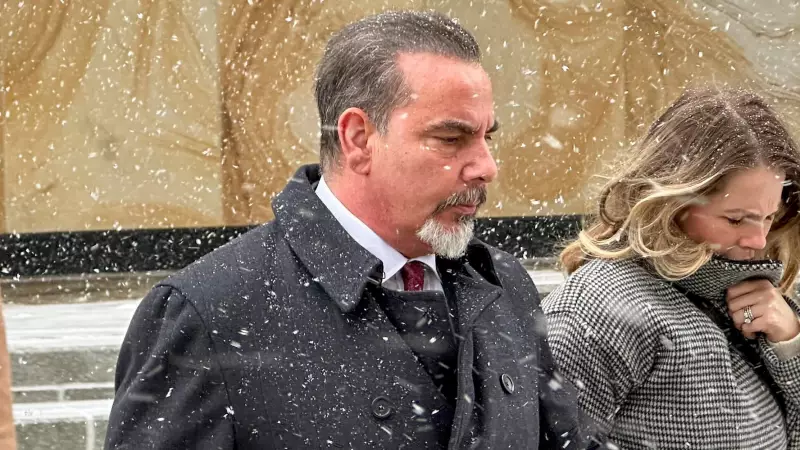
In a dramatic courtroom scene in Buffalo, New York, former Drug Enforcement Administration agent Joseph Bongiovanni faced sentencing for using his law enforcement authority to shield childhood friends who had become major drug traffickers. The 61-year-old, who once served as a "lead breacher" during his two-decade DEA career, expressed emotional turmoil as he awaited his fate, comparing the uncertainty to the risks of his former job.
Mixed Verdicts Lead to Reduced Sentence
U.S. District Court Judge Lawrence J. Vilardo imposed a five-year federal prison sentence on Bongiovanni for multiple corruption counts, a punishment significantly lighter than the 15 years prosecutors had requested. This decision came despite a jury convicting Bongiovanni in 2024 on four counts of obstruction of justice, conspiracy to defraud the United States, conspiracy to distribute controlled substances, and making false statements to law enforcement.
The judge acknowledged the complexity of the case, noting the "almost Jekyll-and-Hyde nature" of Bongiovanni's career. While the former agent had been acquitted of the most serious charges—including allegations he accepted $250,000 in Mafia bribes—his conviction on other counts revealed a troubling pattern of misconduct.

A Career of Contrasts
Bongiovanni's law enforcement record presented stark contradictions. Prosecutors detailed how he had once heroically entered a burning apartment building to rescue residents through thick smoke and had successfully prosecuted drug dealers, including the first ever in the region convicted for causing a fatal overdose.
Yet simultaneously, according to trial evidence, Bongiovanni maintained what prosecutors called his "little dark secret"—protecting drug traffickers from his tight-knit Italian American community in North Buffalo for over 11 years. Assistant U.S. Attorney Joseph Tripi argued that Bongiovanni's conduct "shook the foundation of law enforcement—and this community—to its core."
Pattern of Corruption and Cover-up
The prosecution outlined numerous allegations against the former agent, including creating false DEA reports, stealing sensitive files, misleading colleagues, exposing confidential informants, and assisting a high school English teacher with maintaining a marijuana-growing operation. Prosecutors claimed Bongiovanni even encouraged fellow agents to focus investigations away from Italian suspects and toward Black and Hispanic individuals.
A particularly damaging allegation involved Bongiovanni's failure to act on intelligence in 2008 about traffickers he knew personally, whose operation would eventually expand into a large-scale organization with connections to California, Vancouver, and New York City.
Connection to Broader Criminal Network
The case emerged from a wider sex-trafficking investigation that involved sensational elements, including a implicated judge who died by suicide after an FBI raid, law enforcement searching a pond for an overdose victim, and dead rats being placed outside a government witness's home before that witness allegedly died from a fentanyl overdose.
Central to the prosecution was Bongiovanni's relationship with Peter Gerace Jr., owner of the Pharoah's Gentlemen's Club outside Buffalo and a childhood friend. Authorities described Gerace as having ties to both the Buffalo Mafia and the violent Outlaws Motorcycle Club. A separate jury convicted Gerace of sex trafficking conspiracy and bribing Bongiovanni.
Defense Maintains Innocence
Throughout the proceedings, Bongiovanni maintained his innocence, telling the judge during sentencing, "I've always been innocent. I loved that job." His defense attorney, Parker MacKay, argued that the government's request for a 15-year sentence was "completely unmoored to the nature of the convictions" and noted that the judge had acknowledged Bongiovanni as a "beacon" of the Buffalo community.
MacKay told The Associated Press, "As Mr. Bongiovanni told the judge at sentencing, he is innocent, and we look forward to continuing to work with him to prove that."

Broader Implications for DEA
The case highlights ongoing concerns about corruption within federal law enforcement. Prosecutors compared Bongiovanni to Jose Irizarry, another disgraced former DEA agent serving a 12-year sentence for laundering money for Colombian drug cartels. This sentencing comes amid a series of DEA corruption scandals that have resulted in at least 17 agents facing federal charges over the past decade.
Just last month, prosecutors charged another former DEA agent with conspiring to launder millions of dollars and obtain military-grade weapons for a Mexican drug cartel.
Frank Tarentino, the DEA's northeast associate chief of operations, stated that Bongiovanni's sentence "sends a powerful message that those who betray their badge will be held accountable to the fullest extent of the law."
As Bongiovanni's family wept in the front row of the packed Buffalo courtroom, the former agent prepared to begin his five-year prison term—a substantial hardship for someone who has never been incarcerated, as the judge acknowledged, yet a fraction of what prosecutors had sought for what they characterized as a profound betrayal of public trust.