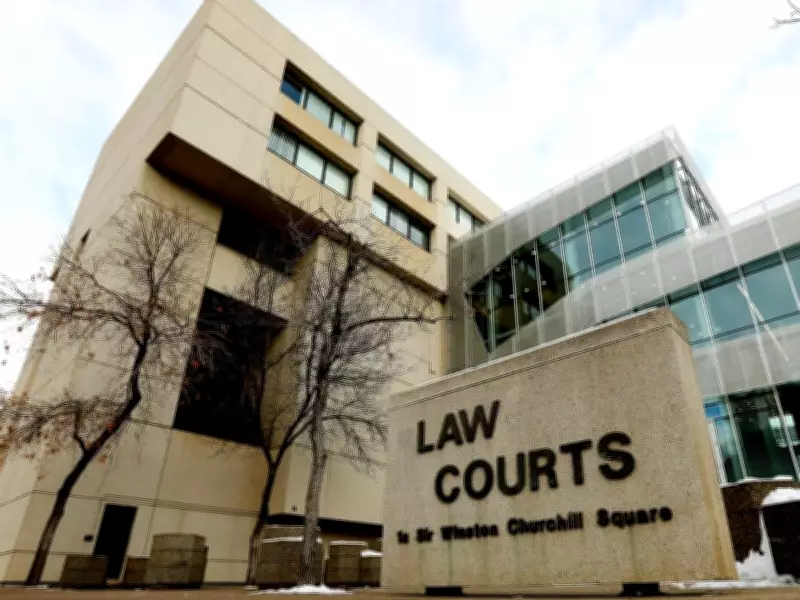
An Edmonton lawyer has failed in his legal attempt to have his sexual assault conviction overturned after a judge dismissed his claims that he received inadequate representation from his defense counsel. Jeffrey Peter O'Brien, who was convicted in 2023 and received an 18-month conditional sentence in early 2024, saw his appeal rejected by the Court of King's Bench.
Conviction Details and Legal Consequences
O'Brien was found guilty of sexual assault for groping a woman while watching television at her residence in late 2022. The victim testified that she repeatedly told him "no" during the incident. As a result of his conviction, O'Brien was automatically suspended from practicing law for the duration of his sentence, which included strict conditions and supervision.
Appeal Arguments and Judicial Response
In his appeal filed late last month, O'Brien argued that his defense lawyer, James Raworth, provided "ineffective assistance" that compromised his trial. Specifically, O'Brien claimed that Raworth failed to properly address key elements of his defense strategy, including comments about the victim's former boyfriend's erectile dysfunction that O'Brien believed were crucial to his case.

Justice Christopher Rickards, however, firmly rejected these arguments. In his ruling, Rickards stated that "as the evidence came out at the trial, there was not much to work with from the defence perspective." The justice emphasized that Raworth's strategy of focusing on O'Brien's clear denial and the high threshold of proof beyond reasonable doubt was "probably one of the better options available to trial counsel."
Defense Strategy and Evidence Considerations
O'Brien maintained throughout the proceedings that the touching never occurred and that the victim fabricated the sexual assault claim because she was offended by his comments about her former boyfriend. However, Raworth had advised against introducing these comments as evidence, citing concerns that they would violate Criminal Code protections regarding a sexual assault complainant's prior sexual history.
Justice Rickards noted that O'Brien also objected to Raworth's handling of evidence admissibility proceedings and his characterization of the victim as a "strong and cohesive" witness during closing arguments. The judge found that none of these concerns amounted to counsel incompetence.
Self-Inflicted Consequences
In a particularly significant observation, Justice Rickards pointed to O'Brien's own communications as damaging to his defense. The judge noted that in both post-offense text messages to the victim and in court testimony, O'Brien—described as "very precise and lawyerly"—apologized for "something he did, and not for comments he said."
This admission proved crucial to the court's decision. Rickards concluded that O'Brien was "the author of his own misfortune," stating that even if additional evidence about his comments had been admitted, "none of that would have overcome the damage done by (O'Brien's) text and his testimony."
Broader Legal Context
The case highlights the challenges defendants face when appealing convictions based on claims of ineffective counsel. Canadian courts generally require clear evidence that legal representation fell below professional standards and that this deficiency directly affected the trial's outcome. In this instance, the court found no such evidence existed.
O'Brien's conviction and failed appeal add to a growing list of legal professionals facing disciplinary action for criminal conduct. The automatic suspension from law practice underscores the serious consequences lawyers face when convicted of sexual offenses, regardless of their attempts to overturn verdicts through appellate processes.