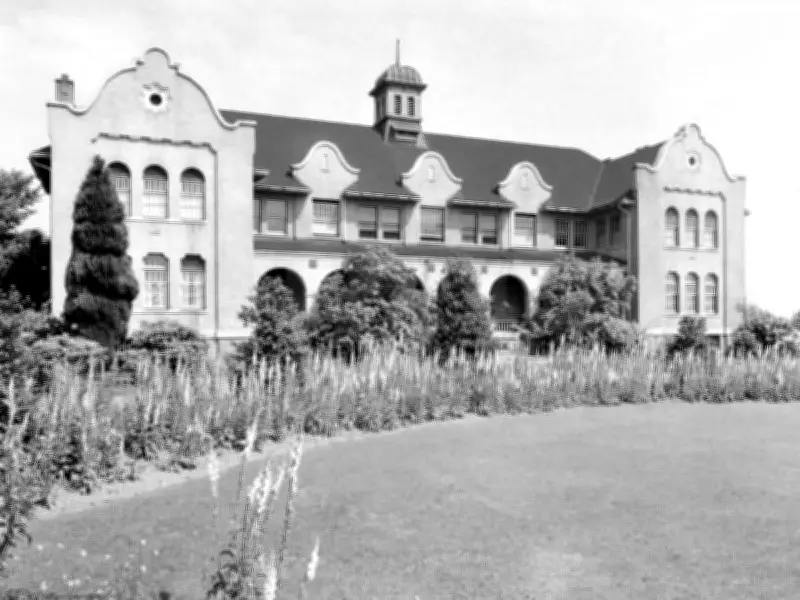
Historic 'House of Horror' Girls' School Faces Landmark Class-Action Lawsuit
A British Columbia Supreme Court judge has ruled that a class-action lawsuit can proceed against a former correctional institution for girls, infamously known as a "house of horror." The lawsuit seeks damages for alleged sexual, physical, and mental abuse suffered by girls, many of whom were Indigenous, who were incarcerated at the school between 1914 and 1973.
Allegations of Systemic Abuse and Negligence
The lawsuit, launched in 2020, targets the provincial and federal governments, along with school doctor T.C. MacKenzie and other staff members. It alleges that girls as young as six were sent to the Willingdon School for Girls in Burnaby for minor offenses such as being "unmanageable" or for "incorrigibility." Indigenous girls were reportedly committed for the offense of being intoxicated off reserve.
Key allegations include:

- Non-consensual genital examinations conducted by Dr. MacKenzie
- Forced sterilization of some girls
- Prison-like conditions with rigid surveillance, silent meals, and punitive confinement in a "hole" or wire cell chambers
- Systemic negligence and breach of fiduciary duty by government authorities
Court Certification and Representative Plaintiffs
Justice Veronica Jackson certified the class-action on March 12, 2026, allowing it to move forward despite government attempts to have most claims dismissed. The judge appointed two representative plaintiffs: Shirley May Williams for non-Indigenous survivors and Paulette Steeves for Indigenous members.
The lawsuit argues that both provincial and federal governments committed "systemic wrongs—both actions and omissions" that caused injury and loss to the girls. For Indigenous survivors, it additionally alleges breaches of constitutional duties and Aboriginal rights.
Historical Context of the Institution
The school originally operated from 1914 at 868 Cassiar Street in Vancouver before moving to Burnaby in 1959, where it continued as the Willingdon School for Girls until its permanent closure in 1974. The Vancouver building was later converted into condominiums in the 1990s.
According to court documents, girls were committed not only as young offenders but also for behaviors deemed "sexually immoral," including homosexuality. The institution's stated goal was to provide "education, industrial training and moral reclamation," but survivors describe a harsh, punitive environment far removed from these ideals.
While Justice Jackson dismissed some claims, including allegations of unjust enrichment against both governments, her ruling represents a significant step toward accountability for historical injustices. The case highlights ongoing legal battles over Canada's treatment of vulnerable youth, particularly Indigenous children, in institutional settings.