A Calgary jury has delivered a decisive verdict in a high-profile murder case, convicting an admitted killer while firmly rejecting his claim of acting in self-defence. The emotional courtroom scene unfolded as family members of the victim wept quietly upon hearing the judgment.
Jury Deliberates and Delivers Guilty Verdict
After approximately ten hours of deliberation spread over two days, the jury foreperson announced the verdict: "Guilty of second-degree murder." The pronouncement prompted one of Graeme McColm's relatives to bow his head and begin sobbing, marking a somber conclusion to the trial.
Jurors also found the accused, Tyler James Redden, guilty of the attempted murder of Daniel Spagnolo, who survived being shot three times during the same incident. The jury's decision explicitly dismissed Redden's assertion that he was protecting his father, himself, or other family members when he fatally shot McColm and repeatedly shot Spagnolo.

The Fatal Encounter at a Truck Stop
According to trial testimony, the violent confrontation occurred on the afternoon of May 18, 2023, at a northeast Calgary truck stop. Redden testified that he was following his father home when they had a chance meeting with Spagnolo and McColm.
Redden claimed that during a subsequent altercation, the two men forced his father to the ground and began kicking him. This alleged assault prompted Redden to pull out a handgun he had purchased earlier that same day.
Contradictory Evidence and Prosecution Arguments
Crown prosecutor Carla MacPhail presented a different narrative to jurors, urging them to reject Redden's testimony about his father being assaulted. MacPhail argued that Redden did not act out of genuine fear for his father's safety or that of other family members.
While Redden claimed he shot McColm as the victim stood over his father, initially aiming for his legs but shooting higher when he feared hitting his dad, the prosecution presented evidence suggesting otherwise. Medical examiner testimony revealed that McColm was shot once in the back, indicating he may have been attempting to flee the scene when shot.
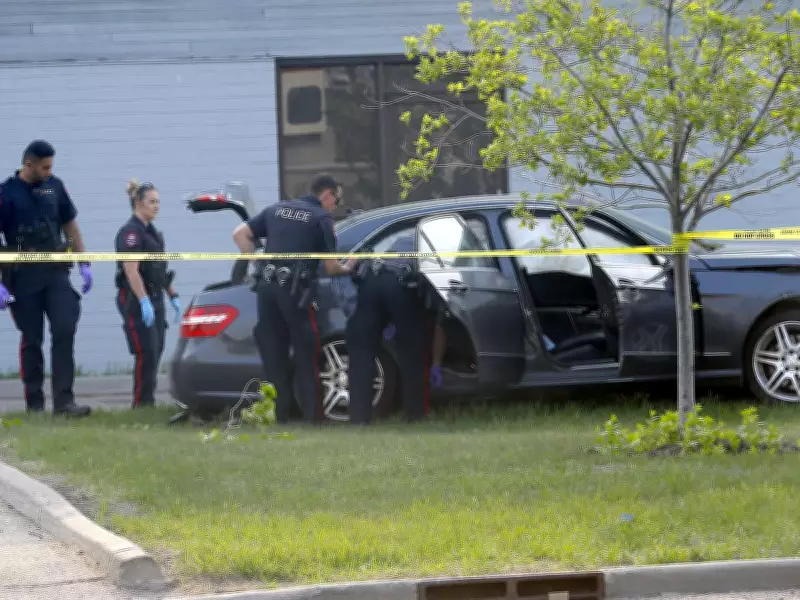
McColm managed to drive a short distance away before crashing his car. He was pronounced dead at the scene, adding to the tragedy of the events.
Background of the Conflict
Redden testified that he purchased the gun because he feared Spagnolo would show up to a planned meeting at Redden's parents' home. The meeting was intended for Redden to return contraband cigarettes that his business partner had demanded be returned.
The accused revealed he had entered the business of selling illicit cigarettes just weeks earlier but had decided he wanted out of the operation. Defence counsel Alain Hepner argued that jurors should have accepted Redden's claim that he feared Spagnolo, who had sent threatening texts to the accused the evening before the deadly encounter.
Parole Ineligibility Considerations
Following the verdict, jurors were asked to deliberate further on the issue of parole ineligibility. Their non-binding recommendation for Justice David Labrenz revealed divided opinions: four jurors made no recommendation, four suggested the minimum ten years, and two others proposed fifteen- and twenty-year periods.
A separate hearing on Redden's parole ineligibility for his mandatory life sentence will be scheduled for a later date. In the interim, Hepner has requested a psychological risk assessment be conducted on his client, who has remained in custody since the day of the shooting.
Surviving Victim's Testimony
Daniel Spagnolo, who survived being shot three times, testified during the trial but had limited recollection of events. He told jurors he didn't know who shot him, adding another layer of complexity to the case that jurors ultimately resolved with their guilty verdicts.
The Calgary courtroom drama has concluded with justice served for the victims' families, while the legal process continues to determine the final consequences for the convicted killer.