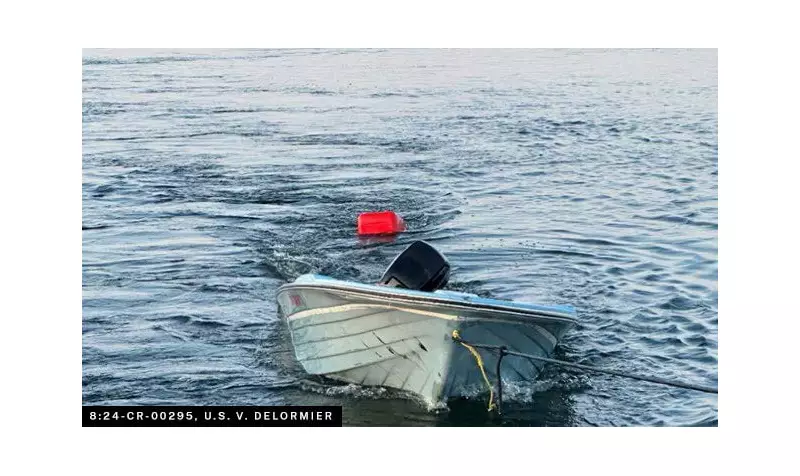
A man from the Akwesasne Mohawk Territory has been sent to the United States to face serious charges in connection with a tragic migrant smuggling incident that resulted in multiple drownings, including the deaths of two children. The extradition marks a significant step in a cross-border investigation that began after the recovery of eight bodies from the Saint Lawrence River.
The Tragic Incident and Recovery
The case centers on a fatal attempt to cross the Saint Lawrence River, which serves as part of the border between Canada and the United States. According to authorities, the incident involved a light blue and white boat operated by the suspect. U.S. officials confirmed that the vessel was recovered from the river near the location where the bodies of the eight deceased migrants were found. Among the victims were two children, highlighting the extreme dangers associated with irregular border crossings.
The investigation, led by the U.S. Department of Justice, quickly identified the suspect as a resident of Akwesasne, a territory that straddles the provinces of Quebec and Ontario, as well as the U.S. state of New York. This unique jurisdictional position has made cross-border law enforcement cooperation essential in this case.

The Path to Extradition
The extradition process, culminating in December 2025, involved close collaboration between Canadian and American authorities. The suspect was transferred to U.S. custody to face charges related to his alleged role in the smuggling operation that led to the drownings. The decision to extradite underscores the severity of the charges, which are linked to the loss of eight lives.
While the specific charges filed by U.S. prosecutors have not been detailed in the initial report, cases of this nature often involve counts of human smuggling resulting in death, conspiracy, and violations of immigration law. The involvement of minors in the tragedy is likely to be a significant factor in the proceedings.
Broader Context and Community Impact
This incident sheds light on the ongoing challenges of monitoring porous sections of the Canada-U.S. border and the human cost of smuggling networks. The Akwesasne territory, with its complex waterways and jurisdictional landscape, has been a known corridor for such activities. Local communities have repeatedly expressed concerns about the safety risks and criminal elements associated with these crossings.
The successful extradition demonstrates a firm commitment from both nations to pursue justice for the victims and their families, particularly the children who lost their lives. It also serves as a stark warning about the perils of attempting illegal river crossings, especially during hazardous conditions.
As the case moves forward in the U.S. justice system, authorities on both sides of the border are likely to continue their collaborative efforts to dismantle the smuggling networks that exploit vulnerable individuals. The outcome of this prosecution will be closely watched as a precedent for handling similar cross-border tragedies in the future.