A First Nation in northwestern Alberta has launched a major legal challenge against the provincial and federal governments, alleging they conspired to enable a citizen-led referendum on Alberta's separation from Canada. The lawsuit claims the move directly breaches Indigenous treaty rights.
Lawsuit Alleges Breach of Treaty Obligations
Sturgeon Lake Cree Nation, a signatory to Treaty 8, filed its statement of claim in the Edmonton Court of King's Bench on Monday, January 4, 2026. The nation accuses the Government of Alberta, the province's chief electoral officer, and the Attorney General of Canada of failing in their legal and treaty obligations.
The core legal argument is profound: "Alberta's secession cannot happen without First Nation consent to change a party to Treaty No. 8," the claim asserts. It emphasizes that consent, not mere consultation, is required before the question of secession can be delegated from a treaty party to the province's inhabitants.

A "Legal Impossibility" Without First Nations Consent
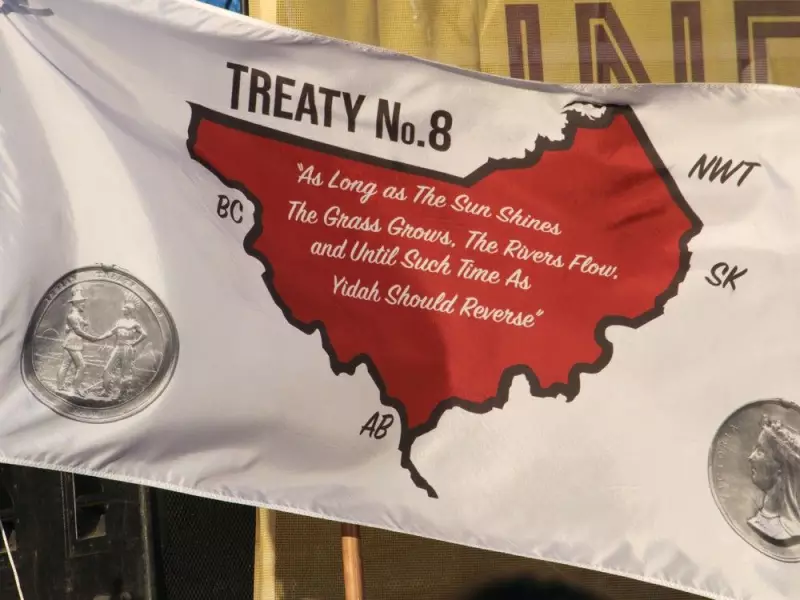
The 24-page legal document, which contains allegations not yet proven in court, traces legal precedent back to the Royal Proclamation of 1763. Sturgeon Lake Cree Nation, with 3,801 members, signed Treaty 8 in 1899—a time when Alberta did not yet exist as a province. The treaty was intended to last "in perpetuity."
"The province of Alberta has no inherent rights, nor is it the party to Treaty No. 8," the lawsuit states. "All of Alberta's rights are contingent on Canada's party status in Treaty No. 8. If there is no Treaty No. 8, there is no Canada, and if there is no Canada, there is no Alberta."
To bolster its case, the nation cites a December 2025 decision from King's Bench Justice Colin Feasby, who ruled that an independent Alberta could not unilaterally substitute itself as a party to Treaty 8. Consequently, the lawsuit concludes that "an independent Alberta is a legal impossibility without First Nation consent."
Claims of Conspiracy and Foreign Interference
The lawsuit makes striking allegations beyond the constitutional and treaty arguments. It claims the pro-separatist Alberta Prosperity Project (APP) has been courting "a hostile neighbour threatening annexation," an apparent reference to the administration of former U.S. President Donald Trump.
Furthermore, it accuses the Alberta government of having "wittingly conspired" with separatist organizers "to create the legislative conditions for an unlawful, separatist petition." This refers to a petition approved by Alberta's chief electoral officer on January 2, 2026, which Sturgeon Lake sought to block with an urgent interim injunction application filed alongside the main lawsuit.
The Alberta and Canadian governments now have between 20 days and one month to file their statements of defence in response to these serious allegations. The case places the complex intersection of Indigenous sovereignty, constitutional law, and separatist politics squarely before the courts.