Saskatchewan Ukrainians Reflect on Four Years of War, Seek New Beginnings
On the fourth anniversary of Russia's full-scale invasion of Ukraine, Yevheniia Kostiv vividly recalls the harrowing night in 2022 when she, her husband, and their young son sought refuge in their bathroom as bombing sounds intensified. Their home in the eastern Ukrainian village of Nikolaevka, now under full Russian occupation and destroyed by cluster munitions, offered only that windowless room as a fragile sanctuary.
A Journey from Destruction to Hope
"We lost part of us," Kostiv said, reflecting on the devastation that has ravaged her homeland over the past four years. Her family survived that initial attack, but the experience propelled them toward seeking safety elsewhere. In February 2023, they arrived in Saskatoon after their home region of Donetsk was captured by Russian forces and their village was obliterated.
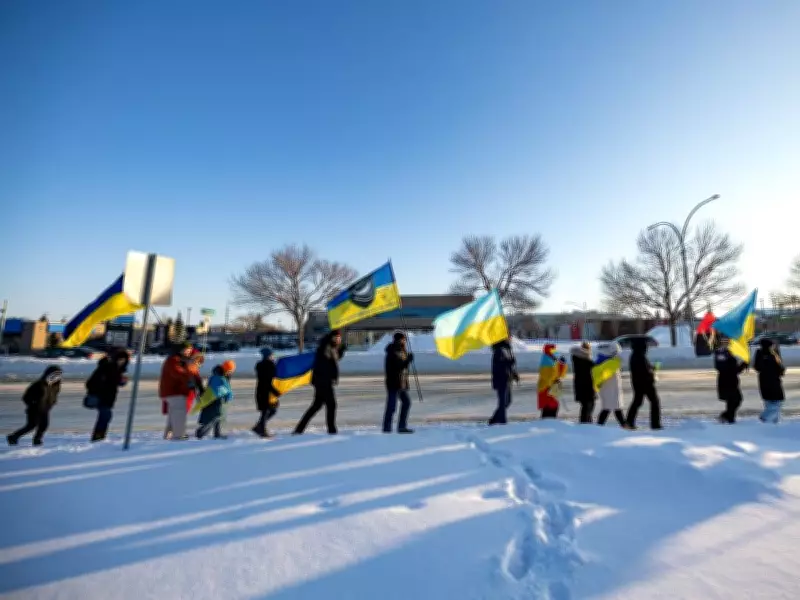
Kostiv, now 32, is among thousands of Ukrainian refugees who have relocated to Saskatchewan since the invasion began. The province, with its significant Ukrainian ancestral population, has become both a sanctuary and a base for continued relief efforts. Many in the community are calling for renewed public attention as the war enters its fifth year.

Canada as a "New Page"
For Kostiv, Canada represents a chance for a "new page," though she deeply misses the people, irreplaceable possessions, and peaceful memories of her homeland. "We love Canada," she affirmed, explaining that she and her husband, Pavlo, chose to settle in Saskatoon to secure opportunities for their four-year-old son, Sviatoslav.
While February 24, 2022, marks the official start of the full-scale invasion, conflict in Eastern Ukraine—including Kostiv's Donetsk region—has persisted since 2014. Her father, grandfather, and great-grandmother remain in a Russian-occupied portion of Donetsk, adding a personal layer to the ongoing tragedy.
Community Support and Volunteer Efforts
Saskatoon resident Tanya Baran, a registered nurse of Ukrainian descent, has witnessed the war's brutal reality firsthand. After the invasion, helping was a "no-brainer" for her. She has since embarked on seven volunteer medical trips to Ukraine with the NGO Ukrainian Patriot, where she serves as medical lead.
"My grandparents immigrated to Canada after World War II, so my entire life has been involved with the Ukrainian community here in Saskatoon," Baran noted. Her most recent trip in January proved particularly challenging due to harsh winter conditions and Russian attacks on infrastructure, which limited access to power, heat, and water to just four to six hours per day.
Looking Forward Amid Uncertainty
Despite the hardships, Kostiv and others maintain hope for an end to the war, though recent peace talks offer little indication of a swift resolution. The Saskatchewan Ukrainian community continues to bridge their past and present, supporting both newcomers and those still in conflict zones.
As reflections on four years of war underscore the profound losses endured, stories like Kostiv's and Baran's highlight the resilience of those rebuilding lives in Canada while keeping their homeland close to heart. The prairie city of Saskatoon has become a symbol of new beginnings, even as memories of a peaceful Ukraine linger.