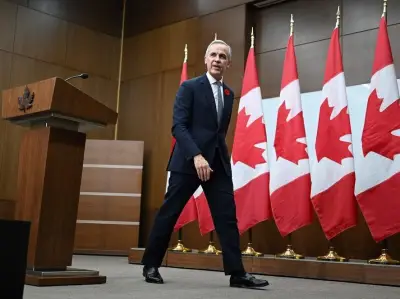
On June 9, 2026, the small Quebec town of Terrasse-Vaudreuil adopted a resolution declaring that trees possess the right to life, natural growth, integrity, and regeneration. The resolution, passed by the city council, aims to protect trees as living entities worthy of legal consideration. Mayor Michel Bourdeau stated that trees breathe, communicate through root systems, and are like human beings in their biological functions. However, this move has ignited a fierce debate about the inconsistency in Canada's legal protection of life.
Unborn Children Lack Legal Protection
Since the Supreme Court of Canada's 1988 Morgentaler decision, which struck down the country's abortion law, unborn children have had no legal protection at any stage of pregnancy. The court had called on Parliament to legislate on the matter, but no such law has been enacted. As a result, abortion is legal throughout pregnancy for any reason. Quebec has one of the highest abortion rates in Canada, with over 22,000 abortions reported in 2024, according to the latest available data.
Pete Baklinski, communications director for Campaign Life Coalition and author of the column, argues that the Terrasse-Vaudreuil resolution highlights a profound moral confusion. While trees are granted rights, human beings in the womb remain completely unprotected. Baklinski holds a Master's degree in theology and lives in Ontario.

Comparing Trees and Unborn Children
Mayor Bourdeau emphasized that trees are living entities that breathe and take in water, comparing them to humans. However, Baklinski counters that an unborn child is not merely like a human being but is a human being with a unique genetic identity, a beating heart, and a real biological relationship with the mother from conception. He notes that if a complex organism like an embryo were discovered on Mars, it would be hailed as life, yet in Canada, the same reality in the womb is ignored.
The column points out that unborn children are not theoretical lives but living human beings with potential. They grow and develop from the earliest stages, distinct from the mother's body. Despite this, they can be targeted by abortion at any point during pregnancy, without legal recourse.
Moral Inversion in Society
Baklinski argues that a society protecting trees while permitting abortion has lost its moral bearings. He references the Universal Declaration of Human Rights, which states that everyone has the right to life, liberty, and security of the person. He asserts that human rights must come before tree rights, and that recognizing a tree's right to life while denying the same to unborn children is morally inverted.
Supporters of the Universal Declaration of the Rights of the Tree claim that trees are a common good and that life on Earth depends on them. They advocate for fraternity and solidarity toward trees. However, Baklinski maintains that stewardship of creation includes caring for trees, but human beings deserve protection first, especially the youngest among them.
Call for Prioritizing Human Life
The column concludes that Canada must get its priorities straight. If a community can recognize the value of a tree, it should certainly recognize the humanity of an unborn child. Baklinski urges that the right to life for unborn children be legally protected, arguing that future generations depend on it. Without such protection, society risks cutting off its own future, as no one will be born to enjoy the trees.