The chief of Saskatchewan's second-largest First Nation is calling on the federal government to prioritize proposed legislation that would eliminate the second-generation cutoff from the Indian Act, as a court-ordered deadline approaches.
Concerns Over Status Loss
Lac La Ronge Indian Band Chief Tammy Cook-Searson expressed deep concern that many band members face the possibility that their children and grandchildren will lose their treaty status entirely because of the second-generation cutoff currently in place. In a recent interview, she emphasized that this rule has divided families and denied children their identity.
The Lac La Ronge Indian Band includes six communities on Treaty 6 territory: Lac La Ronge, Stanley Mission, Sucker River, Little Red River, Morin Lake Reserve, and Grandmother's Bay, with nearly 13,000 members. Approximately 3,600 of these members hold status under section 6(2) of the Indian Act, raising serious concerns about the continuation of treaty rights.

How the Cutoff Works
Currently, First Nations people can be registered under sections 6(1) or 6(2) of the Indian Act. Those registered under section 6(2) cannot pass on their status to a child if they have that child with a non-First Nations person. In effect, status is lost after two generations of choosing non-status partners.
Chief Cook-Searson described the cutoff as a discriminatory, colonial policy that interferes with the inherent responsibility of First Nations to determine who belongs to their nation. She worries that the federal government is implementing delay tactics to stall legislation that would end the cutoff.
Background of the Cutoff
The cutoff formula was implemented in 1985 as part of changes aimed at aligning the Indian Act with Canada's Charter of Rights and Freedoms. However, the law has recently tried to address the new gaps it created. In May 2025, Bill S-2 was proposed in the Senate to restore status to about 3,500 people who had lost it under previous Indian Act provisions, in compliance with a B.C. court decision (the Nicholas case) that found those provisions violated Charter rights.
The initial draft legislation also proposed removing offensive language from the Indian Act and giving First Nations women who were automatically transferred to their husbands' First Nation the option to return to their natal nation. After hearing from committee speakers, the Senate amended the bill to remove the second-generation cutoff and replace it with a one-parent rule, which would allow status to pass on indefinitely to future generations.
Court-Ordered Deadline
The B.C. Supreme Court ordered the federal government to restore status to the initial 3,500 people within 10 months. However, the government requested a six-month extension, which the court rejected on May 15. This rejection heightens pressure on the House of Commons to pass the bill when it resumes next week.
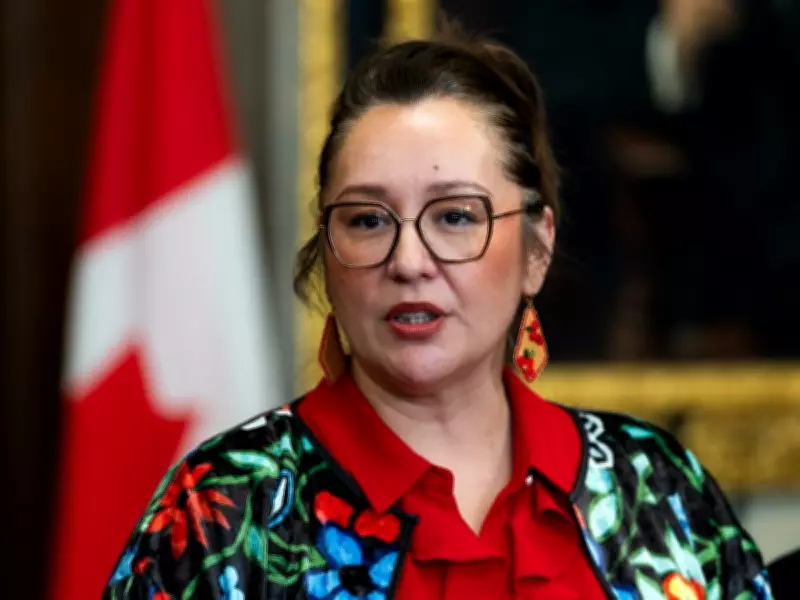
Minister of Indigenous Services Mandy Gull-Masty's office has maintained that more time is needed to consult First Nations on solutions to the second-generation cutoff, citing the right to self-determination. Chief Cook-Searson argues that further delays will have wide-ranging negative effects on her nation's members, and she urges immediate action to adopt the one-parent rule.