Indigenous Leaders Lead Tour of Ecuadorian Oil Field to Oppose Amazon Drilling Expansion
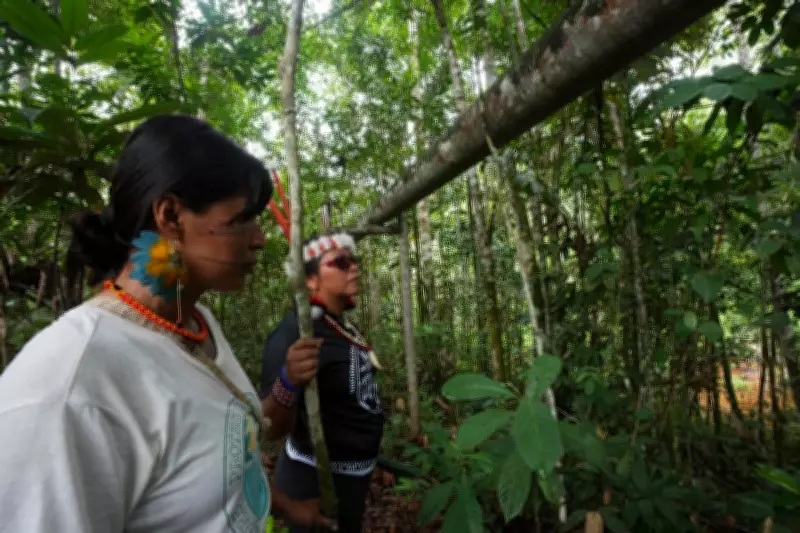
In a powerful act of environmental advocacy, Indigenous women from Ecuador recently conducted a guided tour through an active oil field in the Amazon rainforest. The event, held in the Sucumbios province on March 6, 2026, was organized as a stark warning against plans to expand drilling operations in this ecologically critical region.
Walking the Line of Environmental Impact
Prominent Indigenous leaders Toa Alvarado and Ene Nenquimo led participants through areas where oil infrastructure cuts directly through pristine rainforest. The tour specifically highlighted sections where pipelines fragment the forest canopy and disrupt traditional territories. Alvarado and Nenquimo, both respected voices in Indigenous environmental movements, provided firsthand accounts of how extraction activities have altered their communities' relationship with the land.
The visual evidence presented during the tour was particularly compelling, with participants witnessing the contrast between undisturbed rainforest and areas transformed by industrial activity. This direct exposure to the physical impacts of oil extraction served as the central message of the protest: expanded drilling would further endanger one of the planet's most vital ecosystems.

A Warning Against Expansion Plans
The timing of this demonstration is significant, coinciding with renewed discussions about increasing oil extraction in the Ecuadorian Amazon. Indigenous organizers explicitly framed the tour as a preventive action, aiming to show policymakers and the public what expanded operations would mean for forest integrity and Indigenous livelihoods.
"We are showing the world what expansion looks like before it happens," explained one participant. "These pipelines through our territory represent not just current damage but a future we must avoid."
The protest builds upon years of Indigenous resistance to resource extraction in the Amazon. Ecuador's rainforest regions have long been contested spaces where environmental protection, Indigenous rights, and economic development interests collide. This latest action represents a continuation of that struggle through innovative, on-the-ground demonstration tactics.
Broader Context of Amazon Protection
This event occurs within a global context of increasing concern about Amazon deforestation and its implications for climate change. The Ecuadorian Amazon, like similar regions across South America, faces persistent pressure from extractive industries despite growing international awareness of the rainforest's ecological importance.
Indigenous communities throughout the Amazon basin have increasingly positioned themselves as frontline defenders of these ecosystems. Their advocacy combines traditional ecological knowledge with modern protest strategies, creating powerful narratives about sustainable alternatives to resource extraction.
The Sucumbios tour represents more than just a local protest—it serves as a case study in how Indigenous communities are leveraging physical presence and visual evidence to influence environmental policy debates. As expansion plans continue to be discussed, such demonstrations ensure that the voices and perspectives of those most directly affected remain central to the conversation.