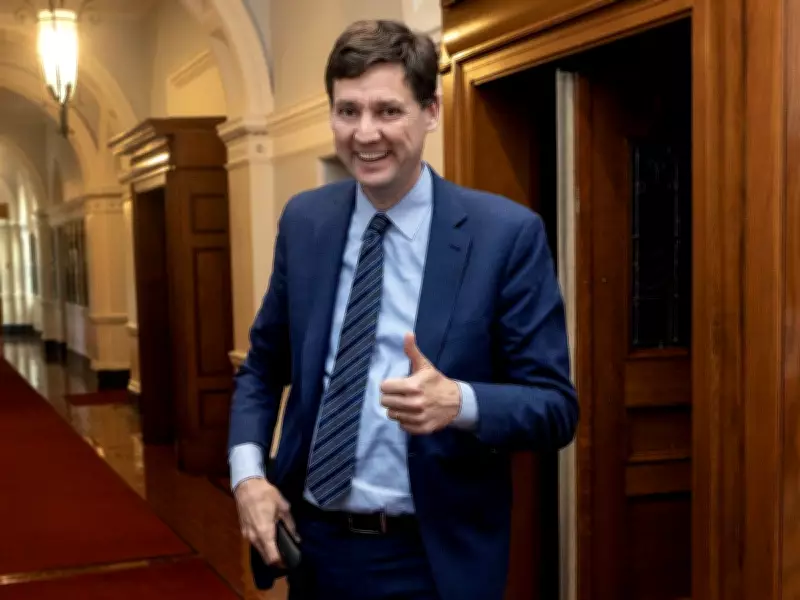
Premier David Eby received a boost from the Supreme Court of Canada on Thursday as the British Columbia legislature closed its spring session, a period in which questions about Indigenous title loomed large. The top court refused to hear a challenge of a New Brunswick ruling that Aboriginal title could not be declared over privately-owned lands, excluding private forestry lands from a title claim by the Wolastoqey First Nation. This decision means the New Brunswick ruling stands, and private property will be excluded from the title claim.
Eby indicated he remains concerned about unrelated cases involving court rulings on B.C.'s DRIPA law. The federal government immediately signaled that the New Brunswick case would be used in the provincial and federal appeal of the B.C. Cowichan Tribes case, where a B.C. Supreme Court judge ruled that Aboriginal title could coexist with private land ownership. An official with the Crown-Indigenous Relations Department told Bloomberg News that the New Brunswick Court of Appeal decision will inform arguments in other cases, such as the Cowichan case in British Columbia.
In B.C., Attorney General Niki Sharma said the New Brunswick case could bode well for the appeal of last August's decision granting the Cowichan Nation Aboriginal title to a swath of southeast Richmond. However, for the NDP, a spring session in which Eby expected to resolve questions about DRIPA once and for all instead created confusion about how Indigenous rights impact provincial legislation.

DRIPA and the Gitxaała Decision
DRIPA, the Declaration of the Rights of Indigenous Peoples Act, was intended to gradually bring provincial laws in line with the United Nations Declaration on the Rights of Indigenous Peoples. However, the government stated that the December Gitxaała decision leaves all provincial legislation at risk if it is not already aligned with DRIPA. Eby noted during a debate on his office's $15 million budget that the government has appealed that decision to the Supreme Court of Canada and was granted leave. He added that the appeal may be concluded before the fall session.
After promising to introduce legislation to amend DRIPA this session, Eby then said he would suspend DRIPA for three years. Eventually, he was forced to back down following opposition from his caucus and Indigenous leaders, stating that his government would consult with First Nations over the summer on next steps.
Lawsuits and Legal Challenges
The premier has said for months that more than 20 lawsuits have been amended to refer to the Gitxaała decision in seeking to rule other provincial laws invalid because they do not align with DRIPA. However, he has been unwilling to disclose what those cases are. On Wednesday, he revealed two of the cases, now that some preliminary decisions have been handed down. The first involves an individual seeking enhanced care from ICBC who had benefits cancelled after failing to show up for a medical exam. Their case was amended to argue that the civil resolutions tribunal had not taken DRIPA into consideration.
Both the Cowichan and Gitxaała cases have had recent legal developments as more than 20 lawsuits wend their way through the courts. The spring session concluded with uncertainty about how Indigenous rights will shape provincial legislation moving forward.