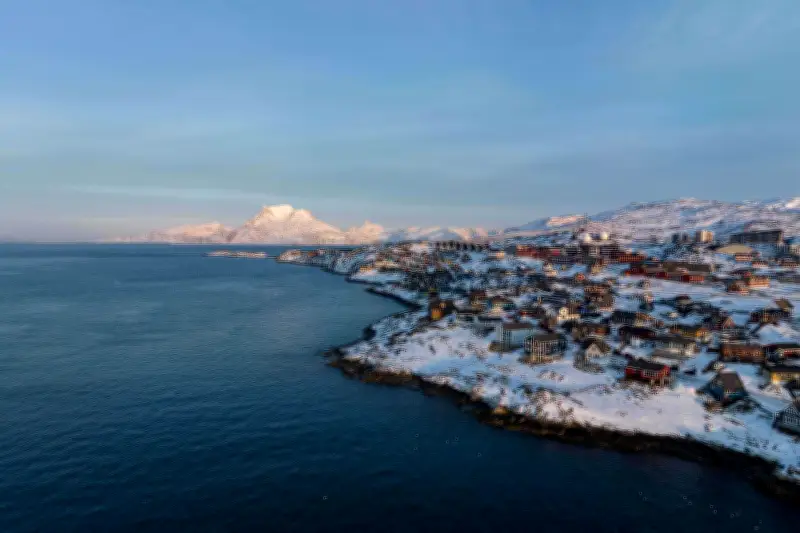
Greenlanders have firmly rejected former U.S. President Donald Trump's renewed push to gain control over the autonomous Danish territory, with officials and residents alike dismissing the idea as a non-starter. The proposal, which Trump reportedly revived in recent weeks, has been met with widespread condemnation across the island, where leaders emphasize that Greenland is not for sale and will remain under Danish sovereignty.
Government and Public Response
Greenland's Prime Minister Múte Bourup Egede stated unequivocally that the island's future is not up for negotiation. "Greenland is not a commodity to be traded. We are a nation with our own identity and aspirations," Egede said in a press conference. The sentiment was echoed by the Danish government, with Foreign Minister Lars Løkke Rasmussen reiterating that Greenland's status as part of the Kingdom of Denmark is non-negotiable. Public opinion polls indicate that over 90% of Greenlanders oppose any form of U.S. control, according to a survey by the University of Greenland.
Historical Context and Trump's Interest
Trump first floated the idea of purchasing Greenland in 2019, sparking international ridicule and a firm rebuke from Danish officials. The renewed push comes amid heightened geopolitical tensions in the Arctic, where strategic resources and shipping routes are becoming increasingly valuable. Trump's representatives have argued that U.S. control over Greenland would bolster American security and economic interests, but critics say the proposal undermines Greenland's autonomy and ignores the will of its 56,000 residents.

Impact on Greenland-Denmark Relations
The rejection has strengthened ties between Greenland and Denmark, with both sides reaffirming their commitment to the 2009 Self-Government Act, which grants Greenland broad autonomy while maintaining Danish control over foreign affairs and defense. Political analysts note that the controversy has actually boosted support for Greenlandic independence, with some parties advocating for a referendum on full sovereignty. The incident also highlights the growing importance of the Arctic region, as climate change opens new opportunities for resource extraction and navigation.
International Reactions
Other Arctic nations, including Canada, Norway, and Russia, have expressed solidarity with Greenland's position. Canadian Prime Minister Mark Carney stated, "The Arctic is not a territory for acquisition; it is a region of cooperation and mutual respect." The United States, under President Joe Biden, has distanced itself from Trump's proposal, with the State Department emphasizing that it respects Greenland's sovereignty. However, the episode has sparked debates about U.S. strategy in the Arctic, where China and Russia are expanding their influence.
Looking Ahead
Greenland's government plans to focus on sustainable economic development, including investments in renewable energy and tourism, rather than entertaining foreign acquisition offers. "Our path is one of self-determination and partnership, not subjugation," Egede concluded. As the Arctic continues to thaw, the island's strategic importance will likely keep it in the geopolitical spotlight, but Greenlanders have made clear that their future is theirs to decide.