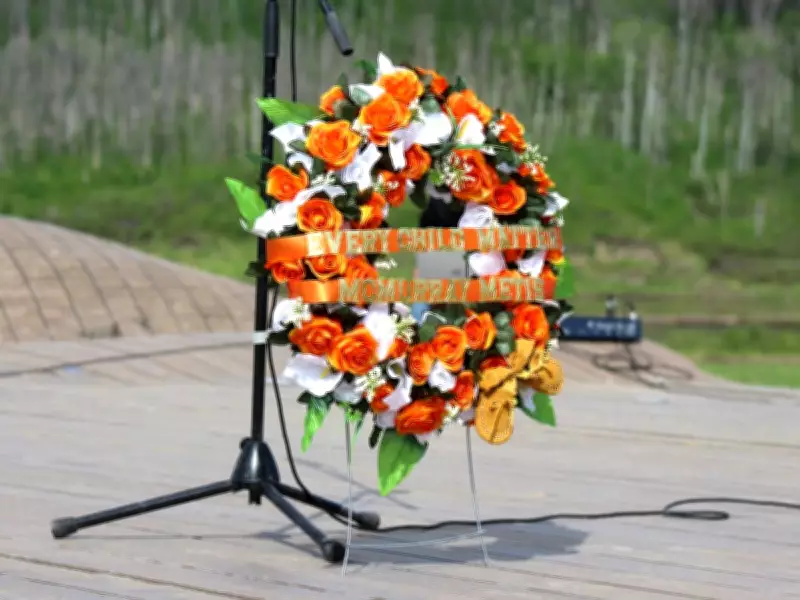
May 27, 2026, marks the fifth anniversary of the announcement from the Kamloops First Nation, in which Chief Rosanne Casimir stated that ground penetrating radar (GPR) had located 215 previously unknown graves containing the remains of missing Indigenous children. The yet-unproven allegation spurred a campaign of national shame and drove calls to criminalize residential school 'denial.'
Uncritical Acceptance and National Mourning
Media, politicians, and academics uncritically accepted the story. The New York Times amplified it by speaking of a 'mass burial site,' making it sound like the outcome of a civil war. Prime Minister Justin Trudeau ordered the Canadian flag to be flown at half-mast on federal buildings for almost six months, an unprecedented display of public mourning. MP Leah Gazan persuaded the House of Commons to vote that the Indian Residential Schools constituted a genocide. The resolution had no legal effect, but the impact on public opinion was substantial.
Initial Doubts and Alternative Explanations
Despite the hype, the Kamloops narrative began to fall apart almost immediately. Sarah Beaulieu, the Kamloops GPR operator, cautioned that excavations would be necessary to confirm the findings because GPR could discover soil anomalies but not identify what was underground. An alternate explanation for the 215 soil anomalies emerged when it was re-discovered that the Kamloops Indian Residential School had installed a sewage disposal system in the 1920s with thousands of feet of weeping tile in the area where unmarked graves were allegedly found.

Further Challenges to the Narrative
Difficulties continued to pile up. Independent researchers found death certificates showing the place of burial for almost all students who died while attending the Kamloops school. No one came forward with the names of children who had disappeared. The claim was implausible because both the Indian Affairs bureaucracy in Ottawa and the school administrations kept detailed lists of all students. The schools were supported by per capita payments, so they wanted to ensure they got all the money to which their enrolment entitled them, while officials in Ottawa wanted to ensure they didn't overpay.
Admission and Ongoing Impact
On the third anniversary of the Kamloops announcement, the First Nation's leaders threw in the towel, admitting that what had been found were not graves but soil anomalies that might be potential grave sites. But the Kamloops narrative has acquired a life of its own and is now embedded in the minds of true believers.
The CBC Hoax and Broader Implications
Earlier this month, we also learned that a CBC-affiliated comedy series called Northland Tales conducted an elaborate hoax, attempting to embarrass several high-profile critics of the Kamloops narrative, such as academic Frances Widdowson, B.C. MLA Dallas Brodie, and MP Aaron Gunn. This raises questions about whether public money should be spent to trash the reputations of people who take one side in a public debate.
Conclusion: Confirmation Bias, Not Hoax
The CBC sting operation was obviously a hoax, but was the Kamloops narrative a hoax in the same sense of being a deliberate deception? Some think so, but I don't. I believe it was confirmation bias, caused by an inexperienced GPR operator meeting a tribal leadership wanting to believe their own folklore about unmarked graves and missing children. That the Kamloops leadership ultimately repudiated the finding of human remains showed goodwill. But goodwill or not, the original announcement unleashed a moral panic that will persist for years.