First Nations Treaty Rights Emerge as Critical Hurdle in Alberta Separation Debate
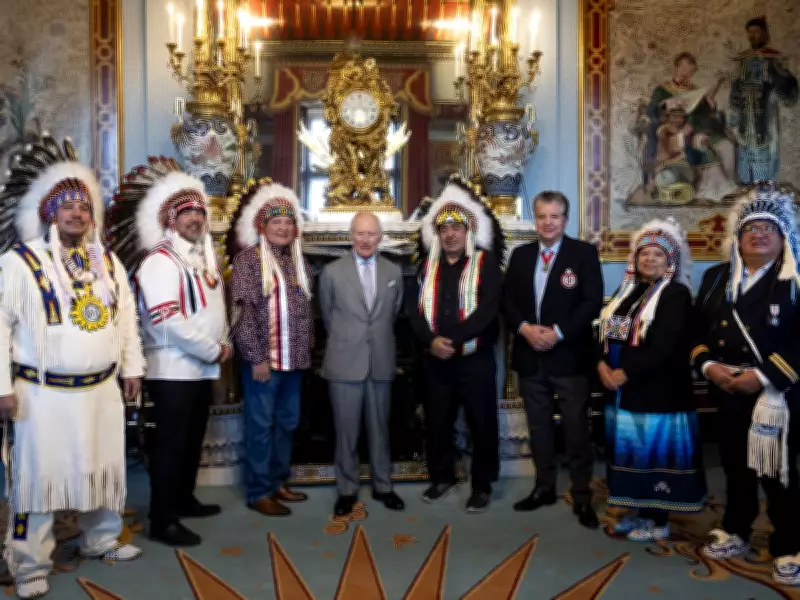
In a Canada experiencing increasing political restlessness, the fundamental question surrounding potential provincial separation extends beyond simple division to complex questions of addition and subtraction of sovereign relationships. The recent meeting between Treaty 6 First Nations leaders and King Charles III at Buckingham Palace has brought these tensions into sharp focus, as Indigenous communities reaffirm their nation-to-nation relationship with the federal Crown while expressing concerns about Alberta's independence movement.
Indigenous Leaders Take Center Stage
Earlier this week, Albertans witnessed a powerful display of political unity as chiefs from Treaties 6, 7 and 8 stood alongside provincial NDP MLAs on the steps of the Alberta Legislature in Edmonton. Their collective message was clear: a call for Premier Danielle Smith to denounce separatism and acknowledge the complex treaty relationships that would be disrupted by any independence movement.
Although it remains uncertain whether a separation referendum will be presented to Albertans in October, the mere possibility has ignited crucial conversations about the fate of First Nations within the province should a "yes" vote prevail. With 138 First Nations reserves comprising approximately 1.3 percent of Alberta's land base, Indigenous communities represent both a legal and moral force that cannot be ignored in any separation calculus.

Divergent Legal Perspectives
Pro-independence lawyer Keith Wilson presents a seemingly straightforward framework for First Nations in an independent Alberta: maintain the status quo with Canada, have Alberta assume federal responsibilities under existing treaties, or negotiate modern agreements with a new Alberta government. However, this perspective faces significant challenges from those who view separation as fundamentally incompatible with treaty obligations.
Former Alberta premier Jason Kenney and other opponents frame potential separation as a "rupture" of treaties with the Crown in right of Canada, warning that First Nations' resistance would trigger endless legal battles and political disruption. This warning has already materialized in concrete legal action, with Sturgeon Lake Cree Nation representing Treaty 8 communities in northwest Alberta filing for an injunction to halt Alberta's separation referendum process based on a citizen initiative.
"This case is about the consent of First Nations that is required for any separatist process in Alberta," their statement of claim unequivocally declares, establishing Indigenous consent as a non-negotiable prerequisite for any legitimate separation process.
Historical Precedents and Scholarly Insights
The current Alberta situation echoes historical debates from Quebec's sovereignty referendums in 1980 and 1995, when discussions centered on partitioning First Nations territory. Legal scholar Ghislain Otis, a University of Ottawa professor specializing in Indigenous rights since 2008 and a member of the Quebec bar since 1984, acknowledges that "the old ways were absolute—it's either you're in or you're out; that's partition and chaos."
Professor Otis, who voted yes in both Quebec referendums, emphasizes that he has "no objection in principle when it comes to contemplating independence for a province," but approaches the question with scholarly detachment rather than political advocacy. He views separation as "a last resort approach" that requires careful consideration of all stakeholders, particularly Indigenous communities whose treaty relationships predate provincial boundaries.
The Legitimacy Imperative
At the heart of this complex debate lies a fundamental question of political legitimacy. As Professor Otis and other scholars emphasize, any successful secession requires legitimacy that extends beyond simple majority vote. For First Nations communities, their continuing connection to the federal Crown represents a crucial check and balance against provincial overreach, creating what one observer describes as a "separation speed bump" that cannot be easily bypassed.

The Indigenous perspective sees treaties not as historical artifacts but as living agreements that establish ongoing relationships and responsibilities. This understanding creates significant obstacles for any separation movement that fails to adequately address how these relationships would be maintained, modified, or replaced in a new political configuration.
As Alberta's political landscape continues to evolve, the treaty rights and sovereign relationships of First Nations communities stand as perhaps the most significant challenge to any separation movement. Their legal standing, historical precedence, and moral authority create a complex web of considerations that any legitimate independence process must navigate with care, respect, and genuine partnership.