Jamie Pickard sat in the bathroom, listening to his headphones as the ventilation fan hummed overhead. It was a warm spring day in Edmonton, and for a moment, he was alone. Pickard and his friend Ashley had holed up in her apartment, smoking and drinking while her kids played in the other room. When the kids began to fuss, Ashley stepped outside. Moments later, Pickard heard a thump. Ashley returned, frantic.
"She said, 'Oh my God, help, help,'" Pickard later told a judge, his voice barely above a whisper. "'She's not breathing no more.'"
Pickard rushed into the next room, thinking one of the kids was choking. Instead, he saw a hole in the wall beside a battered little girl with a bump on her head and blood coming from her mouth. "I said, 'Oh my God, what did you do?' And then (Ashley) started to cry and tell me she doesn't know."

The girl on the floor was Nina Napope Dumais, the eight-year-old daughter of Ashley Rattlesnake's former partner, Brandon. The injury she suffered that day was the last of many in Rattlesnake's care — a doctor would later describe her as a "chronically abused, sick child." Instead of calling for help, Rattlesnake allowed Nina to die, then arranged to hide her body.
Nina's death is both a singular tragedy and part of a sprawling story of violence suffered by Indigenous women and girls across Canada. But because of what happened next, it also became a political story.
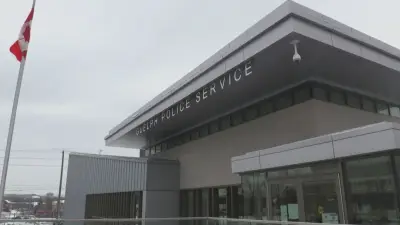
Edmonton police, in a move with few if any precedents, publicly objected when prosecutors agreed to let Rattlesnake plead guilty to manslaughter instead of murder, threatening a public relations war if the Crown didn't reverse course. Over the following months, top prosecutors were fired with no explanation, allegations of political interference were levelled at Alberta's UCP government, and a judge excoriated EPS for interfering in the case, suggesting senior police leaders may have broken the law.
A Little Girl's Life and Death
Rose Dumais remembers her niece as a protector. In a big playgroup of cousins and siblings, Nina was the referee, the peacemaker who, despite being little herself, always looked after those who were smaller. Rose called her Mama Bear.
"If something happened, Nina was the first one to be like, 'OK, kids, we just need to get along, no fighting,'" she recalled. "She was just so loving and caring … she never liked to see anybody get hurt or sad."
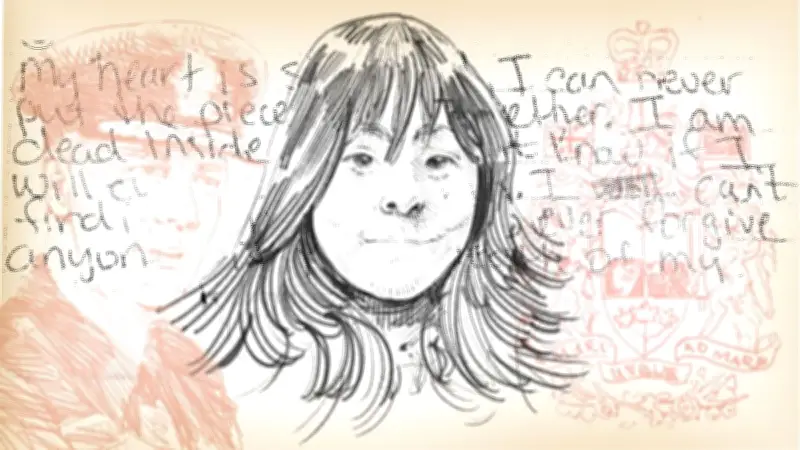
Nina was born in Edmonton, the eldest of three siblings. She had big brown eyes, loved animals and was naturally curious. Her father, Brandon Dumais, called her a ray of sunshine, a flower of a girl who loved to sing and dance and make "mini movies" with her cousins. Her favourite song was Miley Cyrus's "Butterfly Fly Away," which she sometimes sang as a duet with her father.
Nina was raised in Edmonton by Brandon and his grandmother, Nan. Her birth mom was not in the picture. After Nan died in August 2022, Brandon returned to live with Ashley, with whom he has three children. Brandon was arrested not long after, leaving Nina with Rattlesnake and her half-siblings.
Two of the half-siblings, aged four and five, later told police what Nina's life was like during her months in Rattlesnake's care. Their exact words have never been made public, but a court document says Rattlesnake singled Nina out for "unlawful corporal punishment." An autopsy revealed bruises consistent with being beaten with a long object, along with a fractured hand, displaced rib, and two damaged teeth, all of which had begun to heal without medical attention. One tooth had been knocked out completely, while another broke off at the base and became infected. Her body was too weak to survive what was coming.
On the afternoon of April 22, 2023, Pickard rode his bike to Rattlesnake's west Edmonton apartment. While the kids played in the other room, the adults caught up in the bathroom over vodka and cider. Still sweaty from the ride, Pickard turned the shower on cold and breathed in the cool mist. Someone took out a pipe, and they smoked some meth.

Once they settled in, Rattlesnake told Pickard how stressed she had been since Nina came to live with her. "She wasn't too sure what she was going to do … the extra kid under her care, she wasn't able to handle it," Pickard testified at Rattlesnake's preliminary inquiry. "She asked me what she should do. I said, 'I don't know — maybe take her to social services yourself or call the family or something, and have her put over there if you can't handle the responsibility.'"
Rattlesnake, then 27, had bounced from one caregiver to another as a child. "I don't have parents," she later told an Indigenous pre-sentence report writer. A member of Ermineskin Cree Nation, Rattlesnake's mom and dad both suffered from addiction and abandoned her by age two. She was eventually placed with her paternal grandparents, Rose and William Hilbach. Rose and William had steady jobs and made enough money to take the family on regular vacations, but there was a dark side, rooted in the couple's history as residential school survivors. Although she softened after William died, Rose hit Rattlesnake "almost daily," while William was also abusive. When another relative started abusing Rattlesnake not long after she turned seven, some family members told her it was her fault.
After a while, Pickard and Rattlesnake heard a commotion from the other room. Rattlesnake went to check on the kids and returned moments later, pleading for help. In the bedroom, Pickard saw Nina lying on the floor. Between the drugs and the shock, panic set in. One moment, Pickard felt rooted in place, the next like time had sped up. "It was light out, and the next thing you know it was dark already," he testified.
Rattlesnake herself swung from one extreme to another. One moment, she was holding Nina in her arms, "talking to her, kissing her … asking her if she's OK," Pickard said. In an instant, she was consumed by violent paranoia, demanding to know whether Pickard was recording her.
Pickard tried not to look at Nina, but caught glimpses of her breathing. He insists he told Rattlesnake to call 911. Instead, she called Edward Nievera, described in court records as a friend or boyfriend. Pickard claimed Nievera, 66, brought a handgun and loaded it in the kitchen. Rattlesnake told Pickard he couldn't leave. To emphasize the point, she placed some cardboard behind Pickard when he took a seat at the kitchen table — easier to clean up if Nievera shot him, he said.
"She basically said that if I leave, that I'm pretty much done," Pickard testified. "She didn't want me leaving because she knew I was the main witness." Eventually, Pickard was allowed to leave after promising not to call police. He said he didn't call an ambulance himself because there were warrants for his arrest. "I said, 'I got to go, I got appointments tomorrow and I hope you do the right thing … hopefully she's going to be OK.' Then I left right after that."
The Aftermath and Police Intervention
No one knows exactly how long Nina survived the head injury. What is clear is that, instead of getting help, Rattlesnake and Nievera focused on hiding the evidence. Nievera returned to the apartment the next day to drive Rattlesnake and her three children — the youngest of whom was two — to her father's house in Samson Cree Nation. On the way, she texted her brother, Ocean Hilbach, and said she was in trouble. Once they arrived, Hilbach, his friend Shayden Lightning and Rattlesnake's cousin Raighne Stoney agreed to return to Edmonton with Nievera. On the drive back to the city, Hilbach said they would be moving a body. He didn't say whose.
Pickard, meanwhile, had begun to tell people what he saw in the apartment. Two days after Nina's fatal head injury, someone called 911, and Pickard agreed to speak to police. When detectives caught up to Rattlesnake, she refused a wellness check but insisted the kids were fine. Asked where Nina was, Rattlesnake said she had gone to stay with her birth mom. Nina's family began handing out missing posters.
Five days after Nina's death, Rattlesnake and Nievera were arrested and charged with murder. Police found the little girl's body two days later, hidden in a hockey bag in the back of a broken-down truck near Rattlesnake's dad's home. A judge later said she had been treated like a piece of trash.
Rattlesnake was charged with first-degree murder, meaning police believed Nina's killing was planned and deliberate. When her preliminary inquiry began in 2024, though, it became clear prosecutors saw the case differently. On the day Pickard testified, prosecutor Terry Hofmann agreed to proceed with a charge of second-degree murder — still a deliberate killing, but not one planned in advance. Court records do not explain the Crown's decision to pursue the lesser charge, but an obvious difficulty with the Crown's case was a lack of witnesses to the fatal injury. The kids who spoke to police were in the other room, as was Pickard, who had other problems as a witness.
During Rattlesnake's preliminary inquiry, Pickard gave conflicting testimony about what Rattlesnake told him about Nina's injury. Pickard initially said Rattlesnake didn't tell him how Nina got hurt, but later admitted he told police that Rattlesnake said Nina caused the injury herself. Pickard was candid about his memory problems, including a history of hallucinating while on meth. More troublingly, Pickard lied under oath. Pickard told court that while he was at Rattlesnake's apartment, he took a bag of trash to the dumpster in a fit of anxiety-fuelled cleaning. He failed to mention the bag also contained an air pump he and Rattlesnake used on Nina in a haphazard attempt at CPR. Pickard had earlier revealed the details to police and admitted he was scared his DNA might be found in the apartment. As the only other adult in the home, he worried Rattlesnake might try to pin Nina's killing on him.
The cause of Nina's fatal injury was also ambiguous. Dr. Ingo von Both, who performed the autopsy, produced detailed diagrams mapping the injuries all over Nina's body. When asked to summarize his findings, he replied, "Boy, that's a loaded question," saying he could speak for 20 minutes straight about the injuries he observed. Von Both concluded Nina died from blunt force trauma to the head, the "tipping point" that pushed an already sick, abused little girl over the edge. But he couldn't say for sure what caused the fatal injury. It wasn't the type of trauma associated with being hit with an object like a bat, nor was it likely the result of a fall — though von Both agreed it might have been caused by Nina's head hitting the floor or the wall. Seated in the prisoner's box, Rattlesnake covered her ears for von Both's testimony.
According to court records, the Crown began exploring a plea agreement in Rattlesnake's case in January 2025. A few months later, Rattlesnake's accomplices entered pleas of their own. Nievera and Hilbach had been charged with being accessories to murder and causing an indignity to Nina's body. They pleaded guilty to the latter charge at a hearing that revealed the fraying relationship between the Crown and Nina's family. While reading a victim impact statement, one relative went off script and said Nievera and Hilbach should "rot in jail" — a breach of rules limiting victims to describing the mental, physical and financial impacts of a crime. During a break, the Crown and family exchanged tense words in the hallway. The court ultimately accepted a joint submission from the Crown and defence, sentencing both men to just under three years in prison, covered by their time in pre-trial custody.
The relationship continued to deteriorate over the coming months. Rose Dumais described a complete communications breakdown, saying the family learned Rattlesnake would be pleading to manslaughter from a news report the day before her Sept. 10 court hearing. "We showed up the next day and we were furious," she said. "We were 'like, what is happening? Why didn't you guys call us?' … And they're like 'Oh, the reason why we didn't call you is because our paralegal quit and we couldn't get into her phone records to get a hold of you guys.' We were like, how is that even possible?"
EPS's Unprecedented Letter
On Sept. 8, 2025, the Edmonton Police Service did something with few if any parallels in the history of Canadian policing. Two days before Rattlesnake pleaded guilty, Warren Driechel, one of EPS's two interim chiefs, approved a letter authored by Megan Hankewich, acting head of the service's legal department. The recipient was Kimberley Goddard, the assistant deputy minister in charge of the Alberta Crown Prosecution Service.
The letter, which EPS released after this newspaper inquired about a tip, was a formal request for Goddard to pull out of the Rattlesnake plea agreement. Hankewich said police first learned — to their "shock and horror" — that a manslaughter plea was on the table that spring, and that they had been told the Crown and defence planned to recommend an eight-year sentence. Hankewich said investigators believed they had a strong case for murder, and that allowing the plea to go ahead would be a "significant miscarriage of justice." The abuse Nina suffered was some of the "most horrifying" EPS investigators had ever seen, she later added.
Hankewich compared the Rattlesnake case with a 2015 Edmonton manslaughter trial in which a mother and father abused and starved their two-year-old daughters. In that trial, dubbed the Baby M case, the Crown sought 23 to 25 years in prison. Hankewich, a former prosecutor, said this was a time when police were "less frequently aghast with prosecutorial decisions."
Hankewich then turned to what EPS would do if the Crown didn't reverse course. "While we maintain hope that this case will see a trial, we will not publicly publish details of the evidence collected, so as to avoid the risk of tainting the prospective jury pool," Hankewich wrote. "However, if the matter concludes as currently planned, there is no potential jury pool to taint. Therefore, we will share significant information from our investigation with the public so that they can properly assess whether this prosecution and plea agreement were conducted appropriately, and advocate in the public forum for a stronger prosecution service."
Goddard declined to comment on the letter — a month after receiving it, the provincial government appointed her a judge of the Alberta Court of Justice, the first in a string of shakeups at the Alberta Crown Prosecution Service. Other prosecutors, though, read the letter with outrage. "You can pick from amongst a number of extremely negative terms," said Jim Robb, a Crown who retired in early 2026 after 52 years at the bar. "Nauseated, disgusted, appalled, repulsed, aghast, angry — especially the part about 'we're going to appeal to the court of public opinion.' It just went beyond the bounds of anything even vaguely appropriate."
The Plea and Public Outcry
Nina's supporters marched out of the courtroom chanting "no justice, no peace." It was Sept. 10, 2025, and Justice Jody Fraser had just accepted Rattlesnake's guilty plea to manslaughter. In an agreed statement of facts, Rattlesnake admitted only to causing "some" of Nina's earlier injuries, as well as failing to seek medical care for the fatal head trauma and the infected wounds that left Nina too weak to survive. Sentencing was scheduled for the new year.
Within hours, Hankewich hosted a news conference at the EPS media studio. She acknowledged EPS's request was "extraordinary," but insisted the "extreme difficulties" investigators had in communicating with the Crown justified the move. "This is not the first straw," she said. Hankewich insisted what happened to Nina was worse than what came out in court. "Even the statement of facts only scratches the surface of the horrific circumstances of this offence," she said. "Nothing that we heard today has changed how we see this file."
Many lawyers who watched Hankewich's news conference were stunned by what they saw. The separation between police and prosecutors is a fundamental part of Canada's justice system. While the two institutions work together closely, their roles are distinct: police gather evidence, and prosecutors make the case in court. The legal hurdles in bringing a case to trial are higher than laying a charge in the first place — let alone proving guilt beyond a reasonable doubt. While a case might look airtight when police hand it over to the Crown, court is unpredictable: evidence is deemed inadmissible, witnesses disappear or collapse under cross examination, defence lawyers provide information that wasn't available to police.
Crucially, prosecutors are meant to be independent — of police, government, public opinion and even the victim's family. Their goal is not to "win" a conviction at all costs, but to bring forward the evidence and ensure the accused get a fair trial — a safeguard against wrongful convictions. Robb was not involved in the Rattlesnake case, but believes Hankewich was being disingenuous when she suggested the plea was a failure of will on the part of the Crown. The threat of advocating regime change at the Crown's office looked like an organization playing politics with tragedy.
"There's something about these child (homicide) cases that rip your guts out, especially with a young kid who's been repeatedly and extensively abused … I wouldn't blame a prosecutor for saying they're suffering from PTSD after doing one." The difficulty in all murder cases, Robb said, is proving the accused had the specific intent to kill. That is often not feasible when there are no witnesses, and even more so when the accused was using drugs. "In some cases, frankly, we've been lucky to get manslaughter or criminal negligence convictions out of these long-standing abuse cases," he said. "They're incredibly difficult to run. The notion that (police are) going to disclose the file, unvetted by any legal analysis whatsoever, and appeal to the court of public opinion unless you reverse the decision, is a truly disgusting threat."
Others saw EPS's intervention as a righteous defence of an abused little girl. While they weren't informed ahead of time, Nina's family supported the move. So did Premier Danielle Smith. "People are tired of seeing a lax on crime kind of approach," said Smith, who was previously found to have violated conflict of interest rules by discussing an ongoing prosecution with her justice minister. "People want to see that people are going to be punished to the maximum capable under the law, and sometimes that can only happen with a trial."
Edmonton police and the Smith government had come to see eye to eye on other issues. Dale McFee, Driechel's predecessor and former boss, butted heads with Edmonton's left-leaning city council over what he believed were inappropriate forays into police operations and funding. Over time, McFee became closer with the UCP, taking centre stage at Alberta government news conferences on crime and social disorder and echoing UCP policy on those issues. In December 2024, Smith appointed McFee the head of the Alberta public service. The following month, just weeks before his departure from EPS, McFee asked the province to investigate council's appointment of two police commissioners the service deemed hostile to law enforcement — another intervention EPS acknowledge was without precedent.
This was the backdrop when, in late 2025, Edmonton's top prosecutor got a visit from his boss. Scott Niblock, whose legal career included a stint as a United Nations lawyer in Kosovo and Darfur, became Edmonton's chief Crown prosecutor in 2022. He reviewed Rattlesnake's plea from murder to manslaughter — standard procedure whenever a prosecutor is considering a plea to a lesser charge in a murder case — and watched from the gallery the day the plea went before court. On Nov. 13, 2025, Elizabeth Wheaton, a career prosecutor who replaced Kimberley Goddard as acting assistant deputy minister, walked into Niblock's office with an HR manager and read him a letter announcing he was being fired without cause. Months later, Niblock can still only guess why he was fired, but he believes EPS's reaction to the Rattlesnake case played a role. None of his previous performance reviews raised concerns about how he was running the office, he said.
"Edmonton was in good shape," he said. "They keep metrics … we were healthy." News of Niblock's firing travelled fast. Some co-workers saw Niblock and Ryan Abrams, an assistant chief Crown also fired that day, as they were led from the prosecution service's downtown office. One prosecutor said it felt like there had been a death in the workplace. Lawyers' groups — who had already criticized EPS's response to Rattlesnake's guilty plea — were soon raising an alarm about the firings. "(It) begs the question whether the terminations were for legitimate performance reasons, or if this is political interference in the prosecutorial function," said Association of Justice Counsel president Gregory Harlow. The Alberta Crown Attorneys' Association worried Niblock and Abrams had been dismissed for "improper reasons" and called for new employment protections so prosecutors can make decisions "free from political or improper external influence."
Mickey Amery, the justice minister, insisted the provincial government had nothing to do with the firings and said he respects the Crown's independence. He told reporters Wheaton was simply putting her stamp on the office. For Niblock, that explanation doesn't hold water. For one, Wheaton was filling in until a full-time replacement could be appointed. The idea that a temporary manager had the power to fire two senior staff doesn't seem plausible. "(The minister said) something about how this was her vision," Niblock said. "So her vision was just to get rid of Niblock and Abrams, and then I guess we're good now? It just makes no sense." "It wasn't Beth (Wheaton's) call, I'm quite certain of that." Wheaton declined to comment, as did Abrams, who Niblock said had no connection to the Rattlesnake case. Whatever the reason for the moves, just two months after EPS's threat to advocate for a "stronger" prosecution service, three top Crown officials were out of their jobs.
Sentencing and Judge's Rebuke
Until the date of Rattlesnake's sentencing, neither accused nor victim could be named in the media under a publication ban intended to protect Nina's identity. In late February, Justice Fraser lifted the ban at the family's request, giving them a chance to say Nina's name and tell the court what she meant to them. Starr Dumais described the wonder she felt watching her first grandchild learn to speak and take her first steps, and the wrenching sadness of the firsts Nina will never have. Charlene Dumais, an auntie, promised she would never let Nina become "another Indigenous child swept under the rug." Elaine Dumais, a great aunt, laid blame for Nina's death not just on Rattlesnake, but the systems that should have protected her. "The accused let her down, but so did the child welfare system, and so did her family, and I'm hoping the justice system won't let her down," she wrote.
On Feb. 27, Justice Fraser handed down Rattlesnake's sentence. Had she been convicted of second-degree murder, Rattlesnake would have faced life in prison with no chance of parole for at least 10 years. Manslaughter, on the other hand, carries the widest range of sentences in Canadian criminal law, from life in prison to no jail time at all. The Crown argued for nine years, while defence lawyer Robert LaValley asked for seven. Fraser, a former prosecutor, ultimately settled on eight years in prison. He condemned Rattlesnake's treatment of Nina, but reserved his harshest words for EPS leadership, who continued to say they might speak out about the sentence. "I find the actions of the Edmonton Police Service to be reprehensible," said Fraser. "The veiled threat that they may release more information about this matter if they are not happy about the sentence I impose comes dangerously close, and may actually cross the line, into an attempt to wilfully obstruct, pervert, or defeat the course of justice in a judicial proceeding."
For all EPS's criticism, Fraser said the plea to manslaughter was "completely appropriate" given the evidence. He even knocked a year off Rattlesnake's sentence to condemn police. When it was over, the courtroom erupted in angry shouts.
Nina's family were furious with Fraser's decision. As Rose sees it, Rattlesnake abused a little girl, who died in her care, then hid her body before her father could see her. "That is second-degree murder in my books," she said. EPS's decision to intervene, in the family's view, was further proof something in the system had gone terribly wrong.
Others see a system that, despite the pressure from EPS, worked as intended. Canadian courts require proof beyond a reasonable doubt — one is found guilty because they "probably" committed a crime, said former RCMP homicide detective Neil LeMay. Blackstone's ratio — the idea that it is better to let 10 guilty people go free than allow one innocent person to suffer — still rules the day. The idea of victims' rights is a much later addition. "The system is not perfect, and the system doesn't promise revenge or retribution," he said. "The term 'justice being served' actually refers to a process … it has nothing to do with victims' rights. That's something we've added that has sort of clouded peoples' perception of what they can expect when they go to court."
LeMay said there are "valid" criticisms of how the system handles child and domestic abuse cases — where previous violence can sometimes make it harder to prove intent for murder. "It would shock most people to hear that argument, but in a court of law it's going to get the judge's attention," he said. "He's going to go, 'What is there that shows that on that particular day, she intended to kill her, yet when she inflicted the same sort of beating yesterday, she didn't intend to kill her and she survived?'"
LeMay was among those who, after Fraser suggested Edmonton police obstructed justice, filed a criminal complaint with the justice ministry against Driechel and Hankewich. "If police leadership can publicly pressure prosecutors in one high‑profile case, what stops them from doing so in others?" he said. "What happens when the next case involves a police officer? Or a politically sensitive issue? Or a vulnerable community? These questions demand answers, and only an independent investigation can provide them."
Robb, the former prosecutor, said the episode has torpedoed morale among prosecutors and created a climate where Crowns look over their shoulders before making tough calls in high-profile cases. "Then you've got a significant problem in terms of the justice system," he said. "Independence of the Crown prosecutor and independence of the judiciary are two of the keys in preventing wrongful convictions. If you start to skew either of those things, you're increasing the risk."
Robb also took issue with the comparison to the Baby M case. The parents in that case were each sentenced to 15 years in prison after admitting they physically abused and starved the twin sisters for months while feeding their older brother. Robb said courts tend to look more harshly on people who, for no obvious reason, commit cold and callous acts over and over again. While Rattlesnake also subjected Nina to prolonged abuse, she herself had been abused as a child, in part, due to her family's history with residential schools — a factor courts must consider when sentencing Indigenous people. "Oftentimes, they're inflicting what has been inflicted on them previously when they were children. They're repeating a pattern of behaviour," he said. "When you get into the Baby M case … how do you go about starving a child to death? How do you do that, when your mind isn't clouded with drugs or mental disorders? That's what drives up the moral culpability."
Robb acknowledged that, to the average person, weighing the relative awfulness of child abuse cases can seem heartless. But it is a built-in part of Canada's common law system, which sentences people as individuals. "Our initial gut reaction as human beings is 'throw the book at her,'" he said. "But when you're in court, you have to look at what was done, what was the state of mind of the person, what attenuating factors are there … these are all things that every day courts have to wrestle with."
Ongoing Fallout
On June 11, three months after Rattlesnake was sentenced, the Alberta Serious Incident Response Team, the province's police watchdog, said it would investigate Edmonton police for "potential misconduct" related to the letter to the Crown. EPS said they would "cooperate fully" and are "committed to strengthening our relationship with the Crown." "Our thoughts remain with the Napope family, who we will support as they continue to mourn Nina's loss," a spokesperson said. Police declined to make anyone available for interview.
Stoney and Lightning, meanwhile, are awaiting trial for their alleged roles in hiding Nina's body. Hankewich is said to be facing a complaint with the Law Society of Alberta, while Driechel's stint as chief is only beginning — Edmonton city council appointed him to the full-time role just 11 days after the letter to Goddard. The Crown prosecution service declined to comment, citing the ongoing cases.
LaValley, Rattlesnake's lawyer, said he is still shocked by EPS's decision to intervene as it did. He said it was "disingenuous" to claim the letter was about communication issues with the Crown. "The fact that the letter was sent to the media further betrays the statement that this is about poor communication," he said. "The purpose of this letter was to create public pressure on the Crown prosecutor to do the bidding of the Edmonton Police Service."
Nina's family are doing their best to heal. They still have unanswered questions — including what additional information EPS planned to release about the case. Investigators have not contacted them since Fraser's decision, Rose said. "We're sitting here waiting, like is anything ever going to come of it? Why did they even do that in the first place?"
With credit for pre-trial custody, Rattlesnake has less than four years left on her sentence.