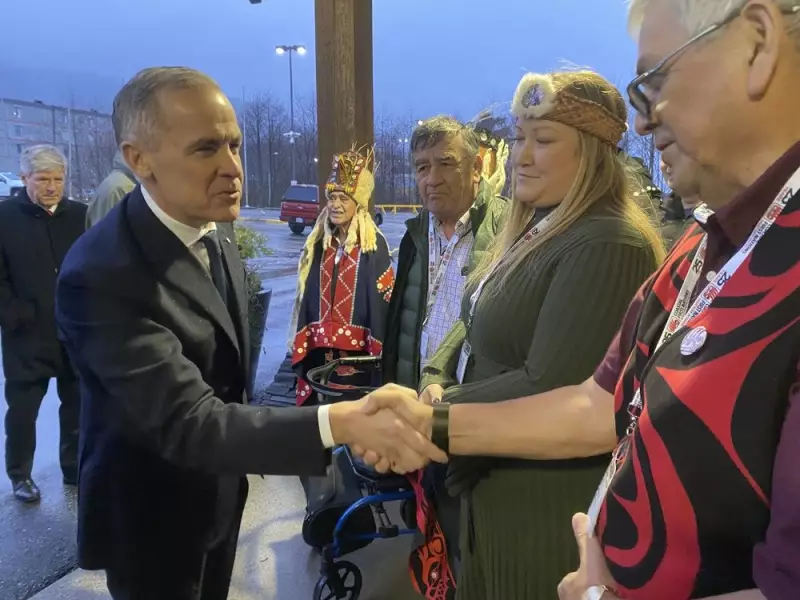
Prime Minister Mark Carney's recent meeting in British Columbia, framed as an engagement with "Coastal First Nations," has sparked scrutiny after revelations that the group is not a broad Indigenous governing body but a specific environmental non-profit organization.
A Meeting with a Specific Agenda
On January 13, 2026, Carney flew to Prince Rupert, B.C., for a meeting he described as being with "Coastal First Nations." In a subsequent statement posted on social media, he credited them as ancient guardians, writing, "Coastal First Nations have stewarded the waters of the B.C. North Coast from time immemorial."
However, the Prime Minister did not meet with a governing council representing the multitude of First Nations along the Pacific coast. Instead, he met with an anti-pipeline environmental advocacy organization that has operated under the name Coastal First Nations since 2002. Prior to that, the group was known as Turning Point and operated from within the offices of the David Suzuki Foundation.

The Composition of Coastal First Nations
Coastal First Nations describes itself as an alliance and counts representatives from eight First Nations on its board of directors. This represents a small fraction of the Indigenous communities on the coast. According to a map from the B.C. Assembly of First Nations, there are 72 First Nations with reserve land on the B.C. coast.
The eight nations associated with Coastal First Nations have a combined registered membership of approximately 11,236 people. For context, the latest census data shows British Columbia's total First Nations population at about 180,085. This means the group is endorsed by just over 10% of the coastal First Nations bands and represents roughly 6.2% of the province's total First Nations population.
In fact, the combined membership of the two largest First Nations in B.C.—the Squamish and Cowichan Tribes, which are not part of the Coastal First Nations group—is about 10,294, nearly equivalent to the entire membership of the eight-nation alliance.
Environmental Origins and Identity
The group's own documentation clarifies its origins as an environmental initiative. Its website details a 1990s effort by the David Suzuki Foundation to recruit First Nations into "Indigenous-led conservation." The organization's last major public event before the Carney meeting was a gala celebrating its 25th anniversary.
Furthermore, "Coastal First Nations" is not the legal name on the organization's registration documents. If Carney had used its official name, his statement would have read: "The Great Bear Initiative Society has stewarded the waters of the B.C. North Coast from time immemorial."
This incident highlights the nuanced landscape of Indigenous representation and advocacy in Canada, where the names and mandates of specific groups may not fully convey their scope or composition to the broader public.