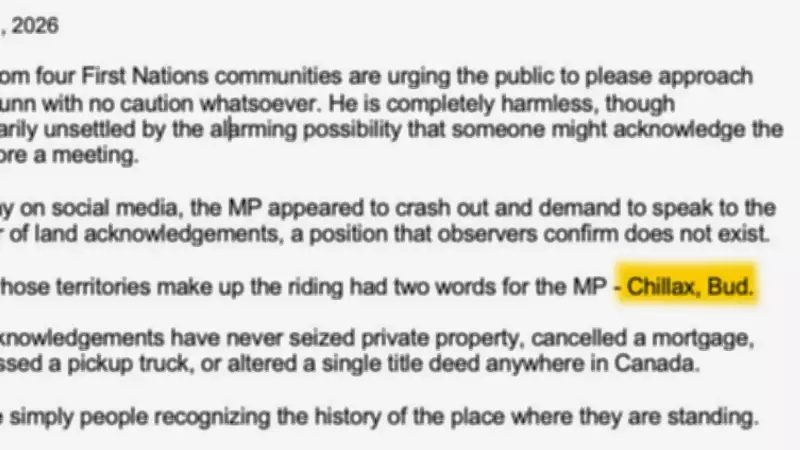
First Nations communities on Vancouver Island have captured national headlines with a clever and provocative response to a social media post by Member of Parliament Aaron Gunn, propelling their position on property rights into the viral spotlight. The cheeky statement, which playfully references "crashing out," has ignited widespread discussion on Aboriginal title and land claims in British Columbia.
A Cheeky Retort Gains Momentum
The incident began when MP Aaron Gunn made a post on social media, the exact content of which has not been fully disclosed, but it evidently touched on property rights or land issues. In response, several First Nations groups on Vancouver Island crafted a witty and sharp retort that quickly spread across platforms. Their statement, characterized by its bold and humorous tone, directly addresses concerns over Aboriginal title and the implications of recent court cases.
Context of Aboriginal Title and Legal Precedents
This viral moment occurs against a backdrop of significant legal developments regarding Aboriginal title in Canada. Recent court rulings have reinforced Indigenous land rights, leading to increased scrutiny and action from First Nations. In British Columbia, appraisers have begun adding land-claims clauses to property assessments following these legal decisions, reflecting the growing impact of Aboriginal title on real estate and land use.

The First Nations' response highlights their assertive stance in asserting their rights and challenging narratives that may undermine their sovereignty. By leveraging social media, they have effectively amplified their message to a broader audience, engaging both supporters and critics in a dialogue about Indigenous rights and property law.
Implications for Property Rights and Public Discourse
The viral nature of this exchange underscores the power of digital platforms in shaping public opinion on complex issues. It brings to the forefront questions about how property rights are defined and respected in relation to Indigenous claims. The statement has sparked debates among policymakers, legal experts, and the general public, with many praising the First Nations for their strategic use of humor to convey serious points.
Moreover, this event ties into larger national conversations about reconciliation and the implementation of Indigenous rights. As First Nations continue to advocate for their land and resources, such public engagements play a crucial role in educating and mobilizing support. The response serves as a reminder of the ongoing struggles and triumphs in the fight for Aboriginal title recognition.
Looking Ahead: Continued Advocacy and Awareness
As the statement continues to circulate online, it is likely to influence future discussions on property rights and Indigenous issues in Canada. First Nations leaders may use this momentum to push for further legal and policy changes, ensuring their voices are heard in matters that affect their communities. The incident also highlights the importance of respectful and informed dialogue between Indigenous peoples and government representatives.
In conclusion, the viral "crash out" statement from B.C. chiefs is more than just a social media moment; it is a significant act of advocacy that brings critical attention to Aboriginal title and property rights. By combining wit with a powerful message, these First Nations have successfully elevated their cause, prompting reflection and action across the nation.