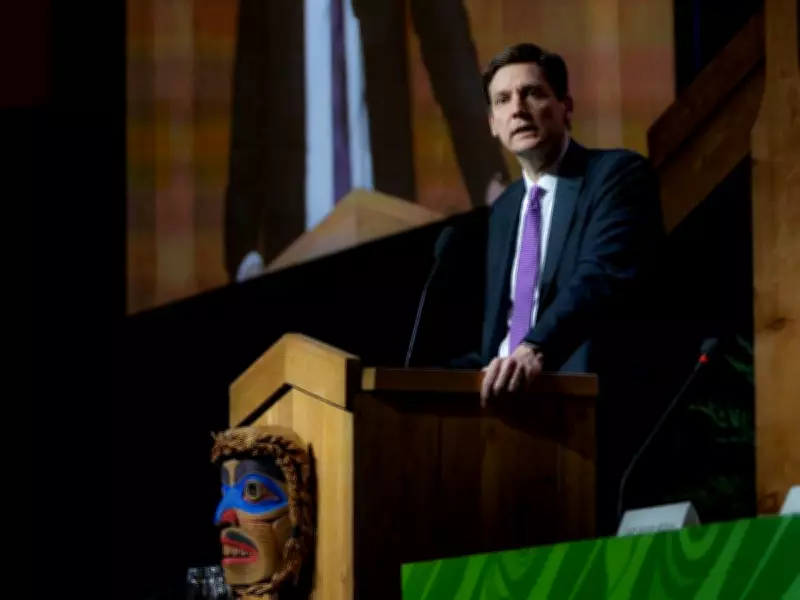
B.C. Government Challenges Court Decision on Indigenous Consultation for Mining Rights
Premier David Eby has announced that the British Columbia government has formally filed an appeal to the Supreme Court of Canada regarding a significant court decision involving mineral rights and Indigenous consultation requirements. The appeal, submitted on February 3, challenges a B.C. Court of Appeal ruling that requires government consultation with First Nations before granting mineral rights in traditional territories.
Court Decision Creates Confusion Around Indigenous Rights Legislation
In a detailed statement, Premier Eby expressed concern that the December 2025 court decision has created substantial confusion regarding the intent and implementation of the Declaration on the Rights of Indigenous Peoples Act (DRIPA). The ruling granted the Gitxaała and Ehattesaht First Nations a victory in their longstanding effort to overturn provisions of the Mineral Tenure Act.
"Recent events have created confusion and concern about the intent of the Act and reconciliation work generally," stated Premier Eby. "We are seeking to appeal that decision at the Supreme Court, while we work with First Nation partners on amendments to get back to the original intention of the Declaration Act."

Legal Challenge Focuses on DRIPA Interpretation
The provincial appeal argues that the B.C. Court of Appeal erred in its interpretation of DRIPA when ruling that the current Mineral Tenure Act violates the Crown's duty to consult with First Nations. This legal challenge comes at a critical juncture for resource development policy in British Columbia.
DRIPA was passed unanimously by the B.C. legislature in 2019 with the specific purpose of aligning provincial laws and regulations with the United Nations Declaration on the Rights of Indigenous Peoples. Subsequent amendments to the Mineral Tenure Act in 2021 further required that provincial laws be interpreted by courts with DRIPA principles in mind.
Background of the Gitxaała Legal Victory
The Gitxaała Nation successfully overturned a lower court ruling that had previously sided with the provincial government. This represents a significant development in Indigenous rights jurisprudence in Canada, particularly regarding resource extraction and traditional territory rights.
The case has broader implications beyond mining rights, as DRIPA has faced increased scrutiny since last summer when a B.C. Supreme Court decision granted Cowichan Tribes title to substantial land in south Richmond, raising concerns among property owners about fee simple holdings.
Government's Dual Approach: Legal Challenge and Legislative Reform
Premier Eby emphasized his government's commitment to a dual strategy: pursuing the legal appeal while simultaneously engaging in consultation with First Nations on proposed amendments to DRIPA. These amendments are scheduled for introduction this spring.
"In recognizing our province's legal reality, our government's goal has always been to stay out of court and avoid the uncertainty court decisions create," explained Premier Eby. "We aim to deliver prosperity through partnership with First Nations and local communities in a way that lifts everyone up. The Act's purpose is to be a roadmap to stay out of court and try to find constructive resolution of shared concerns. It reflects that reconciliation is a two-way street."
Implications for Resource Development and Indigenous Relations
This legal development occurs within a complex landscape of Indigenous rights, resource development, and provincial legislation. The outcome of the Supreme Court appeal could establish important precedents for:
- How consultation requirements are implemented under DRIPA
- The balance between mineral rights and Indigenous territorial rights
- The interpretation of reconciliation principles in resource development contexts
- Future amendments to provincial legislation affecting Indigenous communities
The case represents a critical test of how British Columbia implements its commitment to the United Nations Declaration on the Rights of Indigenous Peoples while managing natural resource development across the province.