

Senate Democrats Tout ICE Constraints in DHS Funding Bill, But Face Internal Opposition
Top Senate Democrats have declared they pushed for maximum possible restraints on Immigration and Customs Enforcement within a bipartisan Department of Homeland Security funding package. However, the negotiated provisions appear unlikely to satisfy the party's progressive base or many congressional colleagues who argue the measures fall short of meaningful reform.
Funding Bill Includes Oversight Provisions
The legislation, which must pass before DHS funding expires on January 30, allocates substantial resources to immigration enforcement agencies. The bill provides $10 billion for ICE and $18 billion for Customs and Border Protection, the latter currently assisting ICE's expansive operations in Minnesota and other states. New oversight elements include:
- $20 million for body-worn cameras for ICE and CBP officers
- Mandatory de-escalation training for agents
- Formal reminders about Americans' rights to record interactions with officers
- Enhanced transparency requirements for agency budgeting
Democratic senators supporting the legislation frame it as the least unfavorable option available, arguing that alternatives would leave ICE operating without any new constraints. Nevertheless, House Democrats appear poised for mass opposition, while immigration advocates contend the bill does little to restrain an agency the administration seeks to insulate from accountability.

Criticism from Within Democratic Ranks
Senator Chris Murphy (D-Conn.), a member of the Senate Appropriations Committee, voiced strong criticism while inspecting Texas detention facilities. "This budget doesn't seem to have any new meaningful constraints on ICE's illegal behavior," Murphy stated, adding in an online video that the legislation would "do nothing meaningful to change the reality of ICE's campaign of brutality."
The political calculus presents Democrats with difficult choices. A short-term continuing resolution would maintain the status quo without implementing new guardrails. Alternatively, refusing to fund the agency would trigger a DHS shutdown at month's end, though ICE operations would continue thanks to separate funding Republicans secured through last year's unilateral legislation.
Negotiator Defends Limited Progress
Senator Patty Murray (D-Wash.), the top Democrat on the Senate Appropriations Committee who helped negotiate the DHS budget, acknowledged limitations while defending the agreement. "There is much more we must do to rein in DHS, which I will continue to press for. But the hard truth is that Democrats must win political power to enact the kind of accountability we need," Murray advised in a statement.
She noted that shutting down DHS would also halt operations at other critical agencies within the department, including FEMA and TSA, even as ICE continued its enforcement activities.
House Democrats Mount Opposition
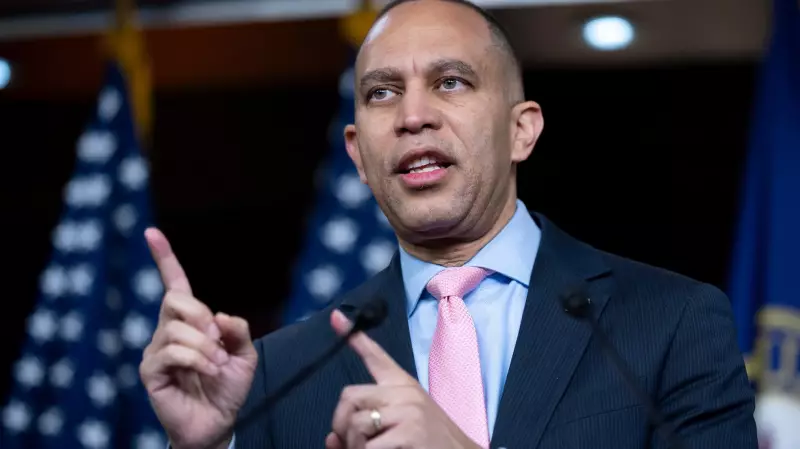
House Democrats are mobilizing against the legislation amid ongoing national outrage over the fatal shooting of Renee Good in Minnesota by an ICE agent. House Minority Leader Hakeem Jeffries (D-N.Y.) announced his opposition during a closed-door caucus meeting, citing the bill's failure to constrain ICE tactics.
"Some of the things that we believe are appropriate in this instance are demanding be part of any final bill, are a warrant requirement. That's common sense," Jeffries stated during a television interview. "ICE should not be able to storm houses of worship, hospitals and schools. That's common sense that relates to protocols that exist for every other law enforcement agency in the country. ICE should have a use-of-force standard. None currently exists."
Republican Resistance and Advocates' Response
None of these Democratic demands were incorporated into the bipartisan funding bill after Republican resistance. This has led immigration advocates to argue that refusing to fund DHS represents the only viable option for accountability.

"What we see here is Congress washing its hands of power to actually put constraints on an agency that is hurting our communities," said Heidi Altman, vice president of policy at the National Immigration Law Center. "We're plunging toward authoritarianism and the DHS budget is allowing it."
Political Context and Presidential Response
The debate unfolds as President Trump and Republican lawmakers continue defending the administration's immigration enforcement approach, despite the deployment of over 3,000 ICE agents to Minnesota's Twin Cities region where both immigrants and U.S. citizens have been detained.
During a Tuesday press briefing, Trump acknowledged that ICE can "make mistakes sometimes" while expressing sympathy that Good's father had been a supporter. "ICE is gonna be too rough with somebody or — you know, they're dealing with rough people," the president told reporters. "They're gonna make a mistake sometimes. It can happen. We feel terrible."
The Senate will require 60 votes to pass the legislation when the chamber reconvenes next week, with some Democratic support expected despite growing opposition within the party.





