

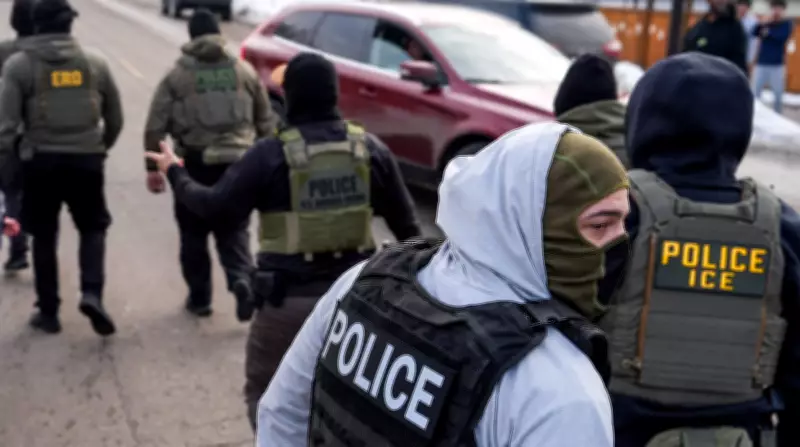
Federal Judge Mandates ICE to Guarantee Attorney Access for Detainees in Minnesota
A federal judge has issued a significant order compelling U.S. Immigration and Customs Enforcement to ensure that detainees in Minnesota have proper access to their legal counsel. This ruling comes after findings that the agency obstructed thousands of individuals from consulting with their attorneys during a recent enforcement operation.
Judge Brasel's Ruling on Constitutional Rights
U.S. District Judge Nancy Brasel, appointed by former President Donald Trump, declared that ICE's practices during Operation Metro Surge effectively nullified detainees' ability to secure legal representation. She highlighted policies such as swift transfers out of Minnesota and restrictions on phone calls as key factors that all but extinguish a detainee's access to counsel.
The initial decision was made in a class action lawsuit filed on January 27, and the order will remain effective for 14 days as legal proceedings continue. It specifically requires the government to halt rapid transfers of detainees from the state and to permit attorney-client visits and private phone communications.

Nonprofit Advocacy and Agency Response
Democracy Forward, the nonprofit organization that filed the lawsuit, emphasized that the right to legal counsel is fundamental and not optional in the United States. President Skye Perryman criticized the Department of Homeland Security for detaining people in unsuitable facilities, using shackles, conducting secret out-of-state transfers, and deliberately blocking access to counsel to avoid accountability.
While ICE acknowledged the constitutional right to counsel and denied having a policy to prevent attorney access, Judge Brasel found that in practice, the agency created conditions that isolated thousands from their lawyers. The plaintiffs, noncitizen detainees, provided substantial evidence of poor detention conditions, contradicting ICE's minimal explanations and claims of resource shortages.
Resource Allocation and Detention Practices
In her ruling, Judge Brasel pointed out the inconsistency in ICE's resource management. She noted that the agency allocated significant resources to deploy thousands of agents to Minnesota, detain thousands of individuals, and house them in facilities, yet claimed insufficient resources to uphold detainees' constitutional rights.
Most detainees are initially held at the Bishop Henry Whipple Federal Building in Minneapolis, but many are quickly transferred out of state without notice, leaving attorneys unable to contact them. The judge also found that detainees are sometimes moved so rapidly and frequently that ICE loses track of their locations.
The White House has not yet responded to requests for comment on this matter. This case underscores ongoing debates over immigration enforcement and the protection of legal rights for detainees in the United States.






