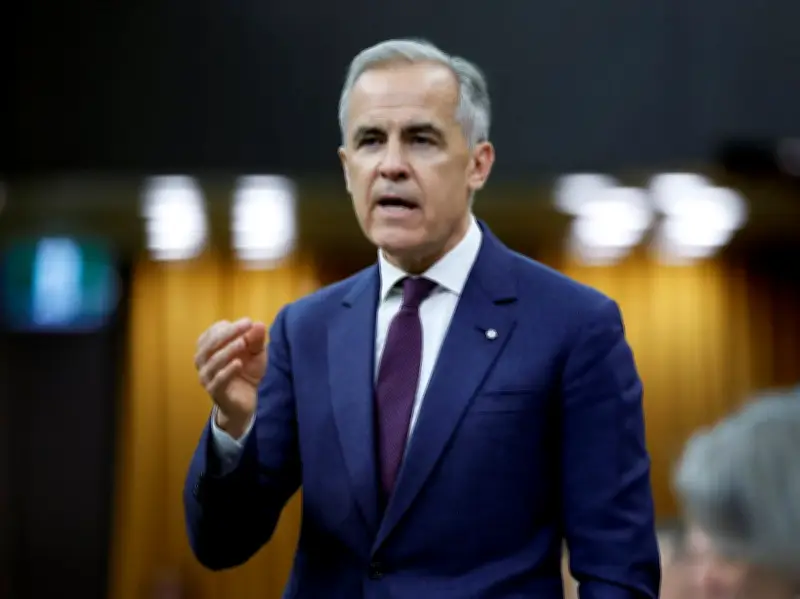
Prime Minister Mark Carney recently attributed Canada's slide into recession to his government's decision to lower immigration targets. Speaking to reporters on Tuesday, Carney said, "We see some weakness, in part because of clear decisions by the government," referring to reduced immigration levels. This statement has shed light on a long-standing concern among economists: that Canada's post-COVID economic growth has been artificially propped up by an unprecedented influx of new consumers.
Per-capita recession masked by population growth
For years, analysts have warned that Canada's GDP growth was misleading. While total economic activity increased, it was largely driven by population growth rather than genuine improvements in productivity or living standards. In 2024, GDP grew by 1.6 percent, but the population surged by 1.8 percent, fueled by record numbers of temporary foreign workers, asylum seekers, international students, and permanent residents. This resulted in a decline in per-capita GDP, signaling that the average Canadian was becoming poorer.
CIBC Deputy Chief Economist Benjamin Tal described this phenomenon as a "per-capita recession" as early as October 2024. "If it's not a formal recession, it's a per-capita recession," he stated at a conference in Ottawa. The Bank of Canada later acknowledged in a 2025 monetary policy report that GDP growth was "essentially flat on a per-person basis."

Critics point to declining living standards
Conservative shadow finance minister Jasraj Singh Hallan highlighted the issue in November 2024, telling the House of Commons that "our GDP per capita has been on the decline for two years. In simple terms, Canadians are getting poorer." The Fraser Institute has characterized this as an "ugly" growth experience, noting in a 2025 report that while aggregate GDP grew by about six percent between 2020 and 2024, the benefits were not felt by the average citizen.
The reliance on immigration to boost economic figures has been a contentious topic. Critics argue that it masks underlying weaknesses in the economy, such as low productivity and stagnant wages. As Canada navigates its current recession, the debate over immigration's role in economic growth is likely to intensify.