

Immigrant Families Stage Protest at Texas Detention Facility Over Child Detention Case
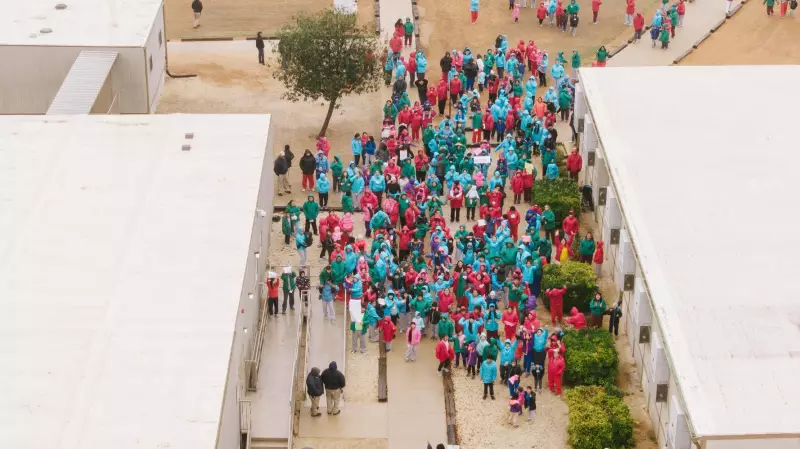
Dozens of immigrant families gathered in a powerful demonstration on Saturday behind the fences of a Texas detention facility, where a 5-year-old Ecuadorian boy and his father were recently transferred after being detained in Minnesota. The protest at the South Texas Family Residential Center in Dilley, Texas, highlighted growing concerns over the treatment of families in immigration custody.
Aerial Images Capture Emotional Protest Scene
Aerial photographs captured by The Associated Press revealed children and parents bundled in jackets and sweaters against the winter chill, many holding handmade signs with messages including "Libertad para los niños" (Liberty for the kids). The visual documentation provided a stark glimpse into the conditions and emotions at the facility.
Eric Lee, an immigration attorney who was present to visit a client, reported hearing families chanting "Libertad!" or "Let us go" from outside the facility. The protest represented a collective cry for dignity and lawful treatment from individuals who feel criminalized despite their family status.

Personal Testimony from Detained Mother
Maria Alejandra Montoya Sanchez, 31, who has been detained at the Dilley facility since October with her 9-year-old daughter, spoke to The Associated Press by phone following the demonstration. "The message we want to send is for them to treat us with dignity and according to the law. We're immigrants, with children, not criminals," she emphasized, articulating the frustration shared by many detained families.
Montoya Sanchez confirmed she briefly saw 5-year-old Liam Conejo Ramos and his father, Adrian Alexander Conejo Arias, during the protest. The family's detention in Minnesota on Tuesday has become a focal point in America's ongoing immigration debates, with conflicting accounts emerging about whether authorities provided adequate opportunity for the parents to arrange alternative care for their child.
Protest Organized Internally by Exhausted Families
According to Montoya Sanchez, the demonstration was organized internally by families who have grown weary of prolonged detention and what advocates describe as substandard conditions. These alleged conditions reportedly include food contamination with worms, persistent illness among detainees, and insufficient access to medical care.
Attorney Eric Lee later learned from his clients inside the facility that the protest was specifically connected to Liam Conejo Ramos's case. Lee, who traveled from Michigan for a scheduled client visit, described being ordered out of the waiting room by guards when the protest began. "That children and their parents would risk retribution under these conditions to speak up is a testament both to how courageous they are and how abysmal the conditions of this place is," he observed.
Broader Context of Immigration Enforcement
The protest occurred against a backdrop of heightened immigration tensions nationwide. Earlier on Saturday in Minneapolis, a federal immigration officer shot and killed a man, sparking protests that brought hundreds onto frigid streets and intensified concerns in a city already grappling with recent violence.
Legal documents reveal systemic issues at the Dilley facility. According to a December report filed by U.S. Immigration and Customs Enforcement in an ongoing federal lawsuit, hundreds of children have been held at the center beyond court-mandated time limits, raising questions about compliance with legal standards for family detention.
A spokesperson for the Department of Homeland Security did not provide immediate comment on Saturday regarding the protest or the specific allegations about facility conditions. Marc Prokosch, an attorney representing the Conejo Ramos family, also did not immediately return messages seeking comment on the day of the demonstration.
The protest at the South Texas Family Residential Center underscores the complex challenges facing immigrant families in detention, particularly those with young children, as immigration policies continue to evolve and enforcement practices face increased scrutiny from advocates and legal observers.






