A Father's Struggle: Explaining ICE Violence to Children in Minneapolis
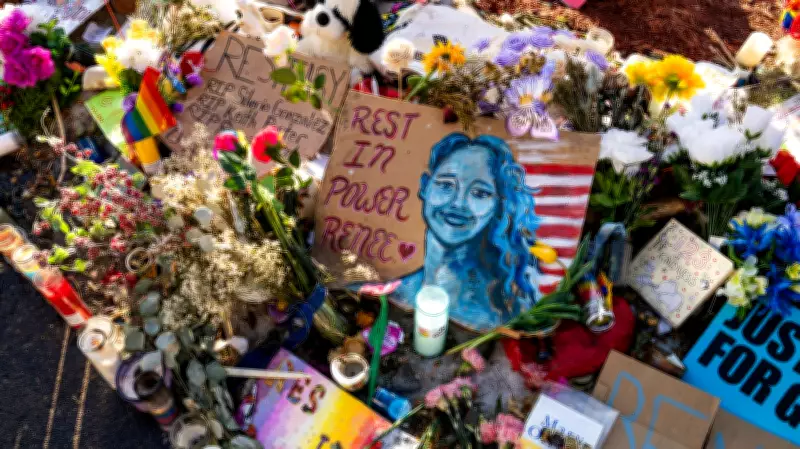
On January 7, just three hours after dropping my kids off at school, a news alert flashed on my phone: an unarmed woman had been shot and killed by an immigration agent a few miles from our home in Minneapolis. Before I could even process the impact on our city, my mind raced to how this would affect my fourth grader and kindergartener. The killing of Renee Good by agent Jonathan Ross sent shockwaves through our community, but the chaos was only beginning.
Chaos at Roosevelt High School
Hours after the shooting, Immigration and Customs Enforcement agents stormed the grounds of Roosevelt High School as students were leaving after the dismissal bell. Amid the confusion, a special education assistant was detained and taken away. Without warning, ICE agents fired chemical weapons into the crowd of panicked students and staff. By dinnertime, I kept this information from our kids, already burdened by past tragedies like the Annunciation Catholic school shooting and the assassination of Minnesota House Speaker Melissa Hortman and her husband. A third local catastrophe felt overwhelming.
After washing dishes, I left to join thousands at a vigil for Renee Good, not telling my children where I was going. Later, an email announced local school closures for two days due to safety concerns. My wife and I debated how to explain that they couldn't attend school because of a murder and federal agents wreaking havoc outside a high school. We consulted a document titled What To Say To Kids About ICE, but its suggestions felt hollow, emphasizing distance from the victims. It said nothing about how to discuss the risk of pepper spray at school.

My wife began to cry, angrily rejecting a hug. I'm just so angry right now, she said, wiping away tears. This moment captured the raw emotion gripping our city.
Community Response and Fear
Since Operation Metro Surge began, countless immigrant families went into hiding, too afraid to leave their homes. Like many others, my friends and I gathered groceries for donation to food shelves and churches. Over the weekend, our elementary school principal emailed that fourth and fifth grade teachers would discuss the shooting and high school incident with students. We realized we needed to prepare our fourth grader, a girl who recently debated Santa Claus's existence.
Sitting down with her, I felt like a liar for not explaining earlier. She tensed up, sensing bad news. I stuttered through an explanation about Renee Good, a brave woman observing ICE agents, who said, I'm not mad at you, before being shot. My daughter somberly looked down and said, Oh, in a way that signaled her childhood was ending. I explained the high school incident, using the term chemical irritant instead of pepper spray, which sounded too benign. When I finished, she asked, Did the kids die? Grateful to say no, I assured her teachers would keep her safe, but I doubted it myself.
A friend's middle schooler noted that between the pandemic, George Floyd uprising, politician's assassination, and Annunciation shooting, the ICE occupation seemed normal. Kids her age don't even know how things could be better. They don't know what the adults could possibly mean when they say normal. To them, this is normal, she said. I hoped my kindergartener might emerge unscathed, but a co-worker's 6-year-old son cried upon seeing ICE agents with guns on I-94, reminding me I had little control over his definition of normal.
Daily Precautions and Community Solidarity
Before driving, I debated which car to use in case I needed to ditch it overnight. I considered bringing eyeglasses and comfortable clothes in case of detention. As a white man in an upper-middle-class neighborhood, my neighbors and I were thrust into this by a leader few of us voted for. We now communicated via encrypted apps to avoid surveillance.

On group chats, messages detailed families in hiding, children working to support households, and kids with no parents at bus stops. Neighbors traded tips on school safety, like wearing ski goggles against pepper spray and using earplugs for loud whistles. We discussed snuffing out tear gas canisters between white-collar tasks. Before schools reopened, the district offered an online learning option for a month, implicitly for families fearing ICE. Attendance plummeted, with half of St. Paul's Spanish-speaking students and a quarter of Somali students absent. By January 13, one-fifth of Minneapolis Public Schools students expressed interest in online learning.
Our school, with a small immigrant population, felt less vulnerable, but nervous tension lingered on the first morning back. Dropoff seemed normal, but by day's end, a bomb threat hit a nearby middle school, and ICE was reported outside elementary schools in wealthier, whiter neighborhoods. Reports piled up of ICE agents ramming cars, driving erratically, and abducting people without warning. One agent told a detained white woman, We don't need a reason to take you. Agents often slipped on icy sidewalks, once leaving a loaded magazine behind.
Personal Vigilance and Hope
With ICE regularly near my kids' school, I told them I was just going for a walk before school, actually scouting for masked agents. As a white family, we focused on mental well-being, but immigrant families faced deportation risks. Many parents already escorted children at high-risk schools. I carried a recorder to alert people to ICE presence, a grim new normal confirmed when a nearby Catholic school went into lockdown after an abduction.
Yet, our city united like never before. Bystanders helped save a family of eight after ICE shot Venezuelan man Alfredo Alejandro Aljorna. In the chaos, agents tear-gassed a minivan with a 6-month-old boy, who appeared lifeless before hospital treatment. Ten days later, ICE agents pinned down and shot Alex Pretti multiple times in the back. Candlelight vigils were called in every neighborhood. At our block gathering, a friend started a chant but paused for kids, only to have sixth-grade girls shout, Say it! When they did, adults cheered.
Outside observers might think only immigrants are affected, but every resident's life is upended. A friend's middle schooler stayed home, emotionally drained. Another child, told of a trip to Naples, Florida, asked, Is there ICE in Naples? Upon hearing no, she wistfully said, You mean, we get to have five days without ICE?! In February, my fourth grader's birthday wish list included Banning ICE right after Love.
On February 12, border czar Tom Homan announced Operation Metro Surge would draw down, offering the tiniest hope. But with over a thousand ICE agents still in Minnesota, skepticism ran high. Reports suggested remaining agents were becoming more secretive. We need to hope it was worthwhile to stand with smartphones and whistles against armed men. We need to believe in protest and vigilance until my daughter's wish comes true.