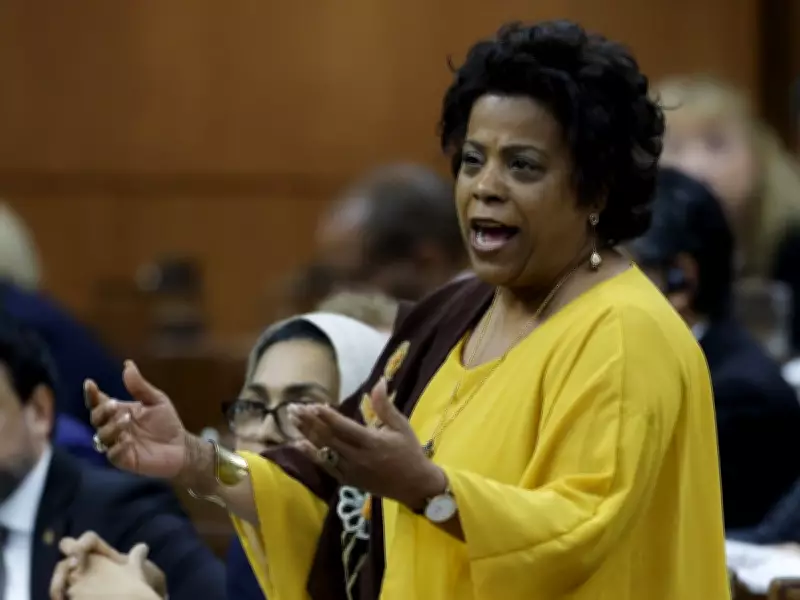
Federal Health Minister Marjorie Michel says she cautioned Alberta about staying on the right side of federal rules as the province expands the scope of private practice in the province.
“As I’ve said every time, I’m the federal minister, so I’m the guardian of the Canada Health Act,” said Michel on Tuesday.
Michel told the National Post that she had a candid call earlier this month with Alberta counterpart Adriana LaGrange about Bill 11, a new provincial law allowing some physicians to split time between the public and private systems.

“We had a very open conversation about (Bill 11),” said Michel, who added that the call took place on Friday, Apr. 17.
Bill 11 was passed into law in December 2025 but corresponding regulations updating medical practice rules for Alberta doctors are still being written, and expected to be finalized later in the spring.
Michel said LaGrange told her during the Apr. 17 call that she intended for the regulations to stay within the bounds of the Canada Health Act.
She added that she and LaGrange agreed that the federal and provincial health ministries would work together as partners while the regulations were still being developed.
“Our two departments should be engaged because, if they were to move in (the wrong direction), then Health Canada could say, ‘no, if you do this, you will be out (of the Act),'” said Michel.
The Canada Health Act requires the federal government to impose dollar-for-dollar health-transfer deductions on any province that charges patients for core services.
The landmark Alberta legislation establishes dual practice, enabling physicians employed in the public system to perform procedures like hip and knee replacements at private medical facilities. Critics say this opens the door to a two-tiered system where better-off patients get a higher standard of care.
LaGrange said in a December 2025 interview with National Post that cancer surgeries and emergency procedures will still be performed exclusively in the public system.
She’s since introduced Bill 29, which if passed will allow Albertans to pay out-of-pocket for private, preventative health tests without a doctor’s referral.
Dr. Shawn Whatley, a physician and past president of the Ontario Medical Association, said there’s bound to be disagreement over whether the new Alberta law crosses any of the “red lines” set out by the Canada Health Act, especially surrounding the principles of public administration and accessibility.
“I expect these kinds of arguments will be made when someone, that is some lobbyist group, challenges Alberta on this in court,” said Whatley.
Whatley added that the Canada Health Act isn’t the only, or even the most important, factor surrounding Alberta’s fledgling dual-use model.
“The network (both formal and informal) of regulations, policies, and statutes that govern medicine are far more important and extensive than the (Health Act),” said Whatley.
LaGrange’s office didn’t immediately respond to an inquiry about the Apr. 17 call with Michel.