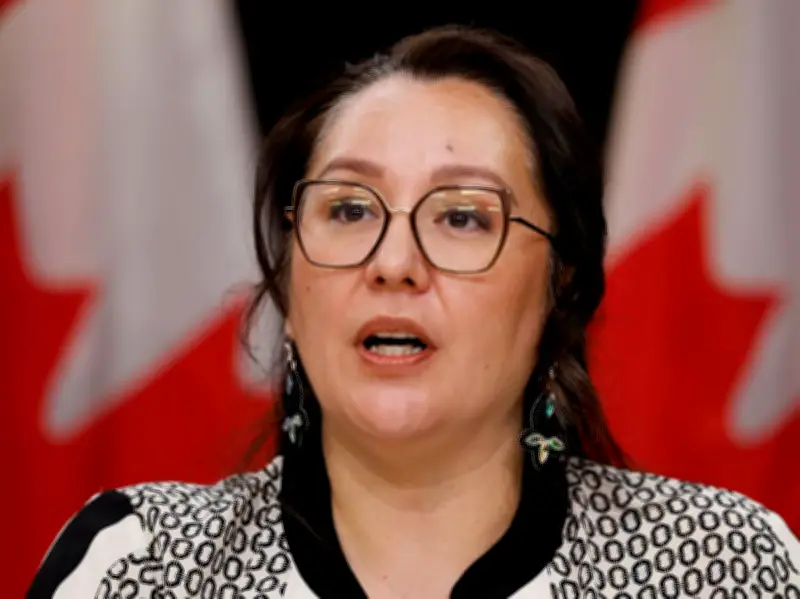
In a significant policy shift, the Canadian federal government is signaling a departure from the long-standing 'harm reduction' approach to the overdose crisis, according to Indigenous Services Minister Mandy Gull-Masty. Speaking at a press conference on Parliament Hill, Gull-Masty revealed that Indigenous leaders are increasingly requesting treatment centres rather than safe consumption sites.
Indigenous Communities Lead the Call for Change
'In almost every single meeting I’ve had this year, leadership has indicated to me that treatment centres are one of their big capital asks,' Gull-Masty stated. The press conference provided an update on the illegal drug crisis, which continues to ravage Canada at rates second only to the United States, according to the Commonwealth Fund. Indigenous communities have been disproportionately affected, with over 10 per cent of all Canadian First Nations having declared states of emergency related to drugs.
Currently, 67 First Nations have declared such emergencies, highlighting the severity of the crisis. For over a decade, harm reduction—making illicit drug use safer without discouraging it—has been central to Canada's response. Safe consumption sites expanded from Vancouver's Downtown Eastside to every time zone, low-barrier shelters became common in major cities, and free drug paraphernalia like syringes and crack pipes were widely distributed.

Experiments in Decriminalization and Safer Supply
British Columbia experimented with decriminalizing illicit drug possession and a 'safer supply' program that distributed free recreational opioids to addicts. In 2023, Provincial Health Officer Bonnie Henry even recommended expanding safer supply to First Nations, including smokeable fentanyl. Liberal MPs defended harm reduction as essential health care, with Élisabeth Brière stating in 2024 that 'without harm reduction services, more people will die.'
However, Indigenous communities have taken a harder line. Multiple First Nations in Ontario, B.C., and the Prairies have issued banishment orders against residents involved in the drug trade. Ontario's Pic Mobert First Nation posts signs at entrances warning of identification checks for suspected traffickers.
Focus on Treatment and Prevention
Gull-Masty's Monday remarks focused on treatment and prevention rather than containment. She announced 83 sites in First Nations communities offering opioid agonist treatment, using medications like methadone to taper addiction. Four new drug treatment centres have opened, including one on the James Smith Cree Nation territory in Saskatchewan, which experienced a drug-fueled mass stabbing in 2022.
The press conference also acknowledged a broader Canadian retreat from harm reduction, particularly safe consumption sites. 'More and more you see provinces who don’t want safe consumption sites, they want to act more on treatment,' Gull-Masty said, reflecting a national shift in strategy to combat the overdose crisis.