Ukrainian President Volodymyr Zelenskyy has signalled a potential breakthrough in the protracted war with Russia, announcing plans for a direct meeting with former U.S. President Donald Trump. The development comes amid a renewed American diplomatic push to broker an end to the nearly four-year conflict.
High-Stakes Diplomacy Accelerates
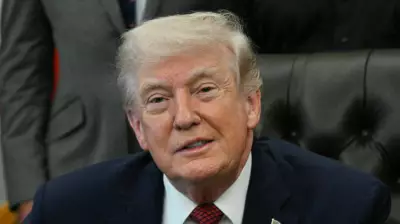
In a social media post on Friday, President Zelenskyy stated that a summit with Trump is scheduled to happen "in the near future." He emphasized the urgency of the diplomatic efforts, writing, "We are not losing a single day. We have agreed on a meeting at the highest level – with President Trump in the near future." Zelenskyy added that "a lot can be decided before the New Year," hinting at a possible accelerated timeline for peace negotiations.
This announcement followed what Zelenskyy described as a "good conversation" on Thursday with U.S. special envoy Steve Witkoff and Trump's son-in-law, Jared Kushner. The American team, reactivated by Trump, is attempting to navigate the sharply conflicting demands from Kyiv and Moscow, which have so far stalled peace efforts.

Divergent Positions on Donbas and Ongoing Violence
Earlier in the week, Zelenskyy outlined a potential concession, expressing willingness to withdraw Ukrainian troops from the eastern Donbas region. This move would be conditional on a simultaneous Russian pullback and the establishment of a demilitarized zone under international monitoring. The Donbas, comprising Luhansk and Donetsk, remains a core battleground, with Russia controlling most of Luhansk and about 70% of Donetsk.
However, Russia has shown no sign of agreeing to relinquish seized territory. Moscow has instead insisted that Ukraine cede all remaining land it holds in the Donbas—an ultimatum Kyiv has rejected. While Russian Foreign Ministry spokeswoman Maria Zakharova noted "slow but steady progress" in talks, a fundamental gap remains.
Meanwhile, the war's brutal toll continues. On Friday, local officials reported that one person was killed and three wounded by a guided aerial bomb in the Zaporizhzhia region. A separate missile strike on the city of Uman wounded six people. Overnight Russian drone attacks on Mykolaiv and Odesa damaged energy infrastructure and left parts of Mykolaiv without power.
Military Strikes Target Economic and Civilian Infrastructure
Ukraine continues its strategy of targeting Russian economic resources. On Thursday, Ukraine's General Staff reported striking the Novoshakhtinsk oil refinery in Russia's Rostov region using British-supplied Storm Shadow missiles. The attack, which caused multiple explosions and a fire that wounded a firefighter, is part of a campaign to cripple Moscow's oil export revenue.
Conversely, Russia's sustained attacks on Ukraine's power grid appear designed to weaponize winter conditions, denying civilians access to heat, light, and running water. This dual-track reality—intensifying diplomacy alongside relentless military strikes—defines the current phase of the conflict as world leaders push for a resolution.
The planned Zelenskyy-Trump meeting represents the most significant high-level diplomatic engagement in months. Its outcome could determine whether 2026 begins with a path to peace or a continuation of Europe's largest armed conflict in decades.