Zelenskyy's Davos Address Reinforces Carney's Message on Global Action
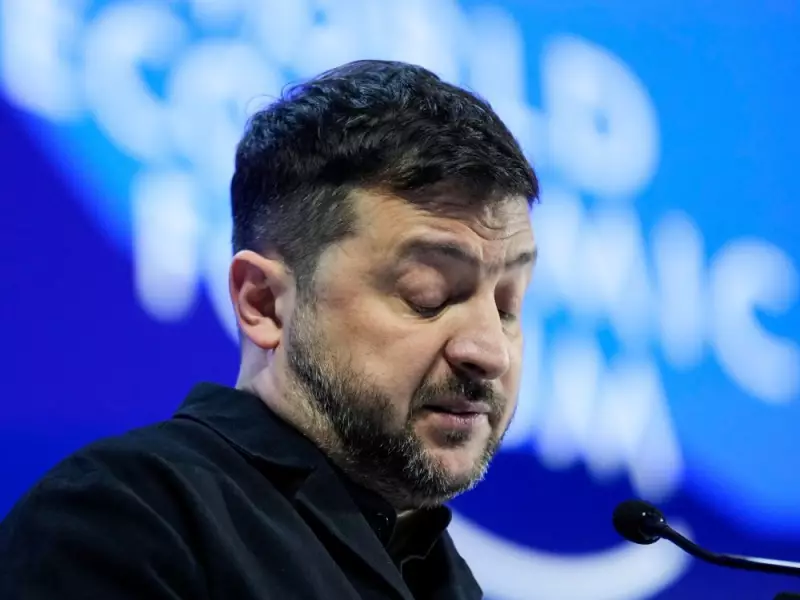
In a powerful address at the World Economic Forum in Davos, Ukrainian President Volodymyr Zelenskyy delivered what observers have termed a "barrage of truth bombs" directed at European allies. His speech, delivered on January 22, 2026, emphasized that real global order cannot be built from words alone, but requires concrete actions. This message resonated strongly with the earlier call for unity made by former Bank of Canada governor and Canadian political figure Mark Carney at the same prestigious gathering.
Carney's Unconventional Davos Moment
When Prime Minister Mark Carney took the stage at Davos, the audience expected typical political platitudes. Instead, they received a blunt assessment of Canada's perspective on global realities. Carney's straightforward approach startled the assembly of billionaires, bureaucrats, and political leaders, earning him a rare standing ovation. His central argument focused on the necessity for middle powers to unite in resisting what he described as a chaotic and unpredictable world increasingly dominated by Washington's influence.
Conservative leader Pierre Poilievre later noted that speeches alone change nothing, emphasizing that without accompanying action, even the most eloquent words remain empty. Carney's address contained no new programs, agreements, or international treaties that would materially alter global dynamics. Yet its significance lay in its challenge to powerful figures who have spent the past year attempting to navigate the turbulent political landscape without committing to decisive action.

The Stark Choice Presented to Global Leaders
Carney presented a binary choice to his international audience: either submit to external domination and become satellite states taking orders from foreign capitals, or unite in determined resistance and accept the accompanying costs. He specifically warned against attempts to placate or appease unpredictable administrations, suggesting that such approaches would only be interpreted as weakness and invite further demands.
While Carney didn't explicitly name specific middle powers, his message clearly targeted the European Union and its member states. The implication was that the EU possesses the potential for great power status if it could overcome internal divisions and act with unified purpose. This unspoken subtext formed the foundation of his appeal for collective action against global instability.
Zelenskyy's Call for Action Over Rhetoric
Ukrainian President Volodymyr Zelenskyy expanded upon Carney's themes with his own direct address to European allies. His assertion that "you can't build a new world order out of words, only actions create real order" served as both a critique of diplomatic rhetoric and a call for substantive commitment. Zelenskyy's experience leading Ukraine through prolonged conflict lends particular weight to his emphasis on action over empty promises.
The Ukrainian leader's speech, described by one U.K. news outlet as containing "truth bombs," challenged European allies to move beyond comfortable declarations and implement tangible measures. His message reinforced Carney's earlier argument that the current global situation demands more than hopeful speeches and good intentions—it requires coordinated, determined action from nations willing to resist external pressures.
The Broader Implications for Global Politics
The convergence of messages from Carney and Zelenskyy at Davos highlights a growing recognition among global leaders that traditional diplomatic approaches may be insufficient for contemporary challenges. Both speeches emphasized that middle powers must either unite to preserve their autonomy or risk becoming subordinate to larger, unpredictable forces.
This dual appeal for unity and action comes at a critical juncture in international relations, as nations grapple with shifting alliances, economic uncertainty, and security concerns. The emphasis on moving beyond rhetoric to implement concrete measures represents a significant departure from the often-cautious language of international forums like Davos.

As global leaders consider these calls for action, the fundamental question remains whether powerful nations and alliances will translate compelling speeches into meaningful policy changes. The speeches by Carney and Zelenskyy have set a challenging standard for international diplomacy—one that measures success not by eloquent words, but by decisive actions that create genuine global order.