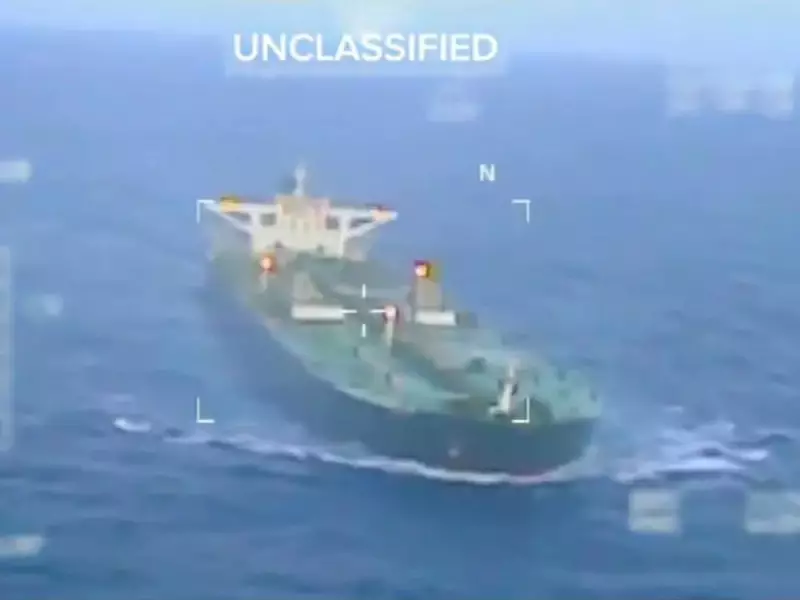
Recent military actions by the United States in the Caribbean, targeting tankers carrying sanctioned Venezuelan crude, have intensified scrutiny of the Trump administration's objectives towards Caracas. The seizure of the Centuries crude oil tanker by the U.S. Coast Guard on December 20, 2025, marks a significant escalation, raising fundamental questions about the campaign's underlying goals.
Beyond Drugs: The Core Motivations
While Washington officially cites drug trafficking as the rationale for its naval operations, analysts and regional leaders are probing deeper. The core debate revolves around three potential drivers: a genuine anti-narcotics effort, a push for political change in Venezuela, or a strategic move to control the nation's vast petroleum resources. Venezuela holds the world's largest proven oil reserves, a fact central to the geopolitical equation.
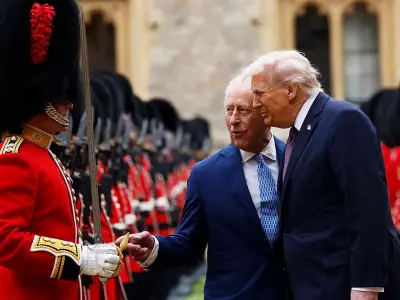
Brazilian President Luiz Inacio Lula da Silva, offering mediation, expressed skepticism that oil is the sole interest. Meanwhile, U.S. President Donald Trump has publicly accused Venezuela of taking "all of our oil" and stated, "we want it back." This rhetoric underscores the long and complicated energy relationship between the two nations.

A Century of Oil Ties and Recent Decline
The historical context is crucial. U.S. companies have been extracting Venezuelan oil since the 1920s, and many American refineries are specifically designed to process its heavy crude. Until 2005, Venezuela was a top supplier to the U.S., with monthly exports sometimes reaching 60 million barrels.
The dynamic shifted after 2007 when socialist leader Hugo Chavez accelerated the nationalization of the industry, seizing U.S. corporate assets. Production has since plummeted from a peak of over three million barrels per day (bpd) in the early 2000s to roughly one million bpd today. This decline is attributed to corruption, under-investment, and U.S. sanctions imposed in 2019.
Currently, Chevron is the only U.S. firm authorized to ship Venezuelan oil to the United States, accounting for about 200,000 bpd, or 10% of Venezuela's total output. The remaining production is challenged, with an estimated 500,000 bpd exported on the black market, primarily to China and other Asian countries.
The Geopolitical Stakes: A Battle for Influence
For some observers, the situation transcends oil. Venezuelan professor of petroleum economics Carlos Mendoza Potella argues that Washington's actions are likely "not just about oil" but represent the United States "claiming the Americas for itself." He frames the tension as part of a broader global contest, stating, "It's about the division of the world between the United States and its rivals, Russia and China."
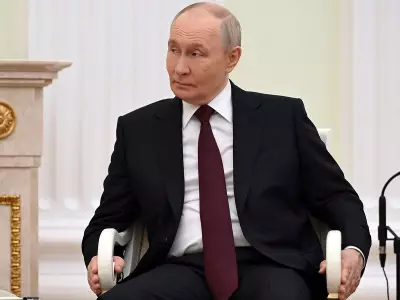
This perspective aligns with Russia's recent pledge of "full support" to Venezuela against escalating U.S. "hostilities." The standoff thus transforms from a bilateral dispute into a proxy arena for great power competition, with Venezuela's energy wealth and strategic location as the prize. Analysts also note that the massive investment required to revive Venezuela's crippled oil infrastructure may be less attractive to U.S. firms given current global supply and low prices, further suggesting that strategic containment of rivals is a key motive.
The interception of tankers in the Caribbean is more than a law enforcement operation; it is a high-stakes maneuver in a complex game of energy security and hemispheric dominance. The coming weeks will reveal whether the pressure leads to negotiation, further escalation, or a recalibration of alliances in the region.