U.S. Navy Seizure of Iranian Ship Casts Doubt on New Talks in Pakistan
The U.S. Navy's forced seizure of an Iranian-flagged cargo ship has introduced significant doubt regarding an announcement from U.S. President Donald Trump that negotiators are set to travel to Pakistan on Monday for a new round of talks with Iran. This incident, occurring near the Strait of Hormuz, marks the first interception since a naval blockade began last week, escalating tensions in the ongoing conflict.
Iran's Response and Military Constraints
Iran's military labeled the U.S. seizure as an act of piracy and stated that Tehran will respond soon. The Khatam al-Anbiya Central Headquarters, which oversees Iran's regular military and its paramilitary Revolutionary Guard, explained that it refrained from attacking U.S. Marines during the raid due to the presence of family members of the ship's crew aboard the vessel Touska. "Due to the presence of some family members of the ship's crew, they faced constraints in order to protect their lives and ensure their safety, as they were in danger at every moment," the headquarters said. However, it vowed to take necessary action against the terrorist U.S. military in the future, without providing further details.
Diplomatic Uncertainty and Preparations
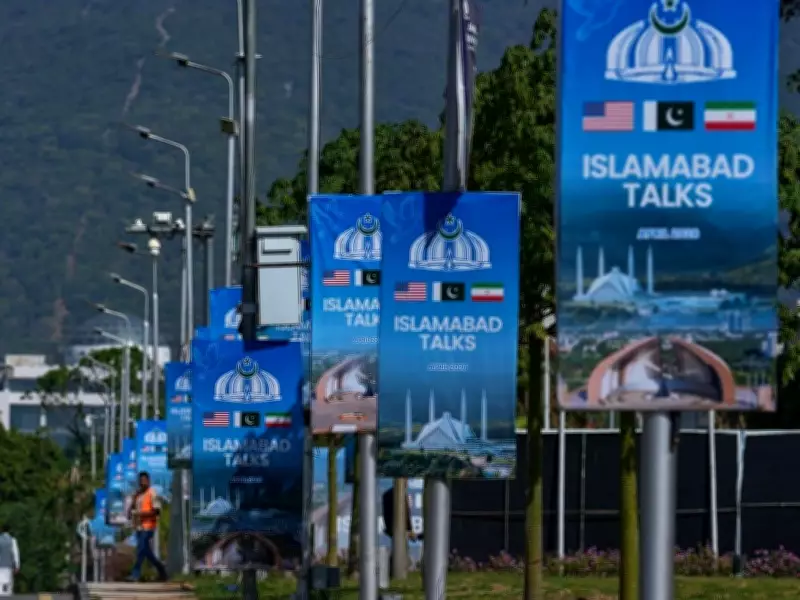
Esmail Baghaei, spokesperson for Iran's Foreign Ministry, indicated that Tehran currently has no plans to attend any talks with the U.S., though he did not rule out future participation. "So far, while I am here, we have no plans for the next round of negotiations and no decision has been made in this regard," Baghaei stated during a news conference. Despite this uncertainty, Pakistani authorities have intensified diplomatic contacts with both Washington and Tehran to ensure that a second round of talks could proceed as early as Tuesday. Prime Minister Shehbaz Sharif engaged in a phone conversation with Iranian President Masoud Pezeshkian, and security measures have been heightened in Islamabad around a luxury hotel where delegations are expected to meet.

War Casualties and Broader Context
In related developments, Iran's forensic chief, Abbas Masjedi, reported a new death toll for the war with Israel and the U.S., stating that at least 3,375 people have been killed. This figure includes 383 children aged 18 and under, with 2,875 males and 496 females among the deceased. Masjedi noted that only four of the dead remain unidentified, highlighting the severe human cost of the conflict. The U.S. seizure and Iran's threatened response add to the complexities of a situation where much of Iran's naval and airborne assets have already been destroyed.
The forced seizure by the U.S. Navy not only challenges the prospects for diplomatic negotiations but also underscores the volatile nature of the Middle East conflict, with both sides poised for further escalation.