U.S. President Donald Trump's newly appointed special envoy to Greenland has openly declared his intention to see the Danish territory become part of the United States, a move that has provoked immediate and strong condemnation from the government of Denmark.
Appointment Sparks Immediate Controversy
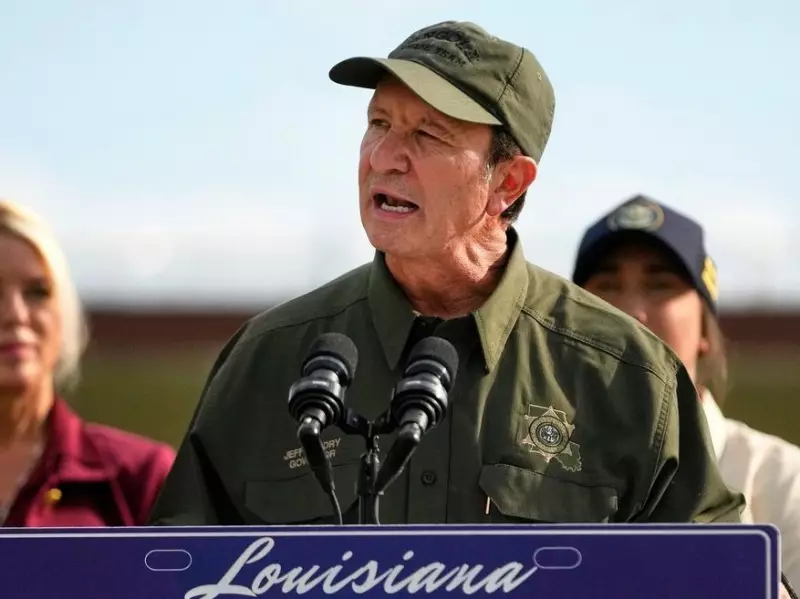
On Sunday, December 22, 2025, President Trump announced via a post on Truth Social that Louisiana Governor Jeff Landry would serve as the United States Special Envoy to Greenland. Trump stated that Landry "understands how essential Greenland is to our National Security" and would advance U.S. interests.
Governor Landry quickly accepted the volunteer position on the social media platform X, writing, "It’s an honor to serve you in this volunteer position to make Greenland a part of the U.S." He clarified that the role would not affect his duties as Louisiana's governor.

Denmark's Forceful Diplomatic Response
The announcement and Landry's stated goal triggered a swift and angry reaction from Copenhagen. Denmark's Foreign Minister, Lars Lokke Rasmussen, told TV 2 he was "deeply upset" by the appointment and found the envoy's statements "completely unacceptable."
Rasmussen confirmed he would summon the U.S. Ambassador to Denmark in protest. In a separate statement, he emphasized that the U.S. must "show respect for the territorial integrity of the Kingdom of Denmark."
In a joint statement, Danish Prime Minister Mette Frederiksen and Greenland's Prime Minister, Jens-Frederik Nielsen, firmly rejected any notion of a takeover. They asserted that "one cannot annex another country" and declared, "Greenland belongs to the Greenlanders and the U.S. shall not take over Greenland."
Strategic Stakes and Historical Context
The controversy revives a long-standing U.S. strategic interest in the vast, resource-rich island. Greenland's location represents the shortest air and sea route between North America and Europe, making it a critically important site for ballistic missile defense systems.
President Trump has publicly expressed a desire to purchase Greenland on multiple occasions, citing security needs, an idea consistently rejected by both Denmark and Greenland's autonomous government. The island's economy relies heavily on fishing and subsidies from Copenhagen.
This latest diplomatic flare-up underscores the persistent geopolitical tensions surrounding the Arctic region and signals potential challenges for transatlantic relations should such policy directions continue.