In a dramatic overnight operation that has sent shockwaves across the globe, the United States has announced the capture of Venezuelan President Nicolas Maduro and declared its intention to assume control of the South American nation. The unprecedented move, confirmed by U.S. President Donald Trump on Saturday, January 3, marks the most direct U.S. intervention in the hemisphere in decades.
Operation and Immediate Aftermath
President Trump revealed the operation during a press conference at his Mar-a-Lago resort in Florida. He stated that U.S. forces successfully apprehended the long-serving Venezuelan leader, Nicolas Maduro, in or near one of his safe houses. The raid reportedly knocked out electricity in parts of the capital, Caracas.
Despite the capture, the situation on the ground remains fluid. U.S. forces do not yet control the country, and Maduro's government appears to still be functioning. Venezuelan Defense Minister Vladimir Padrino released a video message urging unity and resistance. Meanwhile, the streets were described as calm at sunrise, with soldiers patrolling and some small pro-Maduro gatherings forming.

Trump framed the intervention as necessary for Venezuela's future. “We’re going to run the country until such time as we can do a safe, proper and judicious transition,” he said, adding, “We can’t take a chance that someone else takes over Venezuela who doesn’t have the interests of Venezuelans in mind.” He explicitly stated he was “not afraid of boots on the ground.”
Open-Ended Occupation and Oil-Funded Reimbursement
The U.S. President outlined a plan for an indefinite American presence, drawing parallels to past lengthy engagements in Iraq and Afghanistan. However, he provided few specifics on how the U.S. would administratively run Venezuela when pressed by reporters.
A central pillar of Trump's justification focused on Venezuela's vast natural resources. He asserted that the occupation “won’t cost us a penny” because the United States would be reimbursed from Venezuelan oil reserves, which he repeatedly referenced. “The money coming out of the ground,” he said, would cover American costs.
Trump also claimed that U.S. Secretary of State Marco Rubio had been in contact with Venezuelan Vice President Delcy Rodriguez, whom he called Maduro's “presumptive successor.” According to Trump, Rodriguez told Rubio, “We’ll do whatever you need,” a claim Reuters could not immediately verify. Sources indicated Rodriguez was in Russia, a claim Moscow's foreign ministry dismissed as “fake.”
Regional and Global Backlash
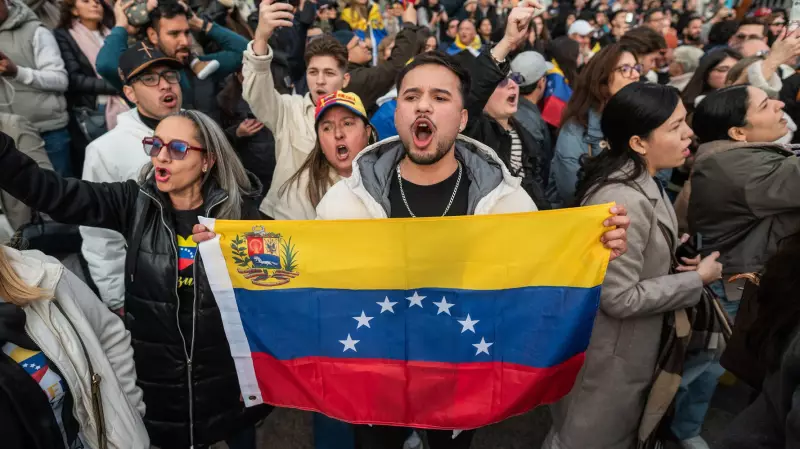
The intervention has sparked immediate and fierce international condemnation, particularly across Latin America, reviving painful memories of historical U.S. interventions. The action echoes the Monroe Doctrine and past instances of “gunboat diplomacy.”
Venezuela's allies were swift to respond:
- Russia, Cuba, and Iran condemned the strikes as a violation of sovereignty.
- Iran urged the U.N. Security Council to halt the “unlawful aggression.”
Reactions from major Latin American nations were mixed, reflecting deep regional divisions:
- Argentina's President Javier Milei praised Venezuela's new “freedom.”
- Mexico condemned the intervention.
- Brazil's President Luiz Inacio Lula da Silva said it crossed “an unacceptable line.”
The U.S. has accused Maduro, a 63-year-old former bus driver chosen by Hugo Chavez, of running a “narco-state” and rigging the 2024 election—charges he denies, countering that Washington seeks his nation's oil. The removal of Maduro, who ruled for over 12 years, now creates a significant power vacuum in the country of 28 million people, risking a protracted quagmire for the United States.