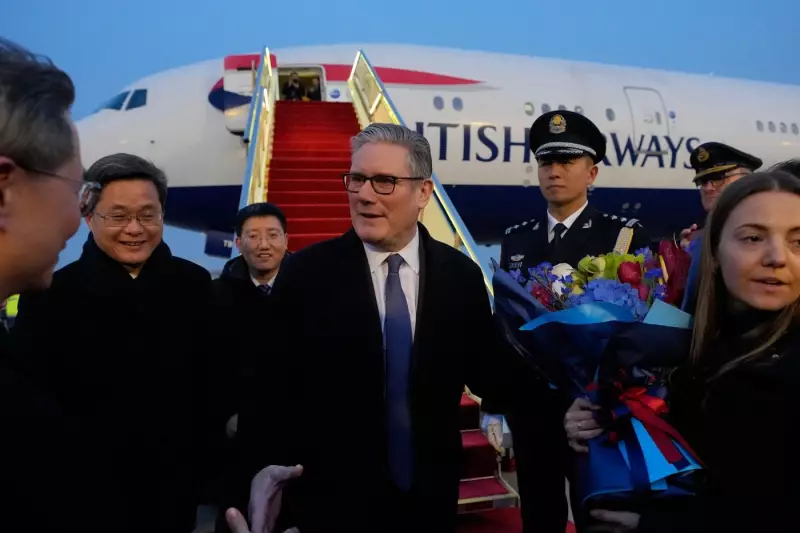
UK Leader's Beijing Mission Navigates Delicate Diplomatic Terrain
British Prime Minister Keir Starmer has embarked on a high-stakes diplomatic journey to China, arriving in Beijing on Wednesday, January 28, 2026. This official visit represents a critical balancing act for the United Kingdom, as it seeks to simultaneously advance economic interests, safeguard national security, and manage the complex geopolitical landscape shaped by the United States under former President Donald Trump.
The Core Challenges of Contemporary Diplomacy
The Prime Minister's agenda in China is multifaceted and fraught with competing priorities. On one hand, the UK government is keen to strengthen trade partnerships and secure investment opportunities in the world's second-largest economy. This economic dimension is particularly crucial as Britain continues to navigate its post-Brexit economic strategy and seeks stable international markets.
Conversely, significant national security concerns loom over the relationship. The British government must address issues related to technology transfer, intellectual property protection, and China's growing global influence—all while maintaining its commitments to democratic values and human rights standards.

The Trump Factor in International Relations
Complicating this diplomatic equation is the political reality in the United States, where Donald Trump's administration continues to shape foreign policy approaches. The UK must carefully calibrate its China policy to align with its traditional transatlantic partnership with Washington while pursuing its own national interests.
This delicate positioning requires Starmer to demonstrate diplomatic finesse, as he must avoid alienating either major power while advancing Britain's strategic objectives. The visit comes at a time when global alliances are being reassessed and economic partnerships are being reconfigured across multiple continents.
Strategic Implications for Global Politics
The outcome of this diplomatic mission could have far-reaching consequences for international trade patterns and security arrangements. As middle powers like the UK navigate between competing superpowers, their diplomatic maneuvers become increasingly significant in shaping the global order.
Observers will be closely monitoring how Starmer manages these competing pressures, particularly regarding technology cooperation, infrastructure investment, and security coordination. The Prime Minister's ability to secure tangible benefits for Britain while maintaining principled positions on security matters will be a key measure of his diplomatic effectiveness.
This visit represents more than just bilateral engagement—it serves as a case study in how democratic nations can engage with China on economic matters while protecting their core security interests and maintaining important international partnerships.