British Leader Rejects Canadian PM's Global Vision, Stresses Pragmatic Approach
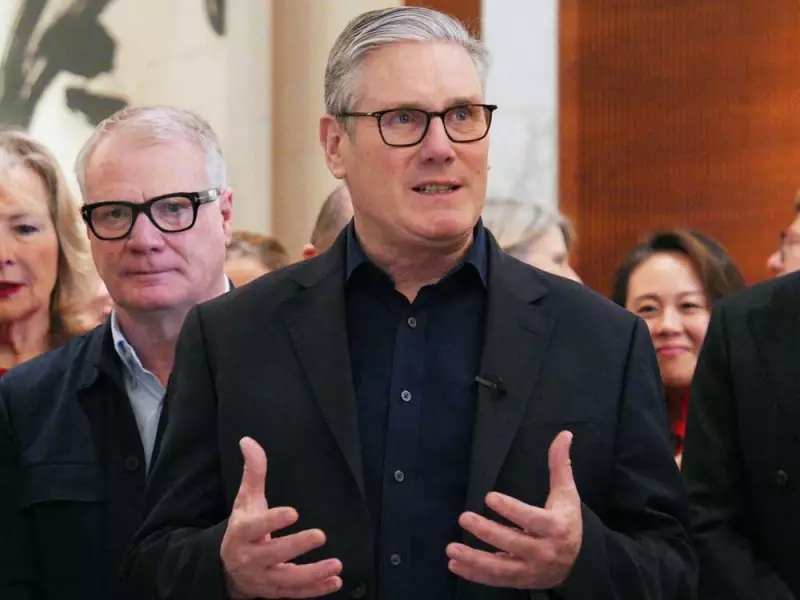
In a notable divergence of diplomatic perspectives, British Prime Minister Keir Starmer has publicly distanced himself from Canadian Prime Minister Mark Carney's recent call for middle powers to unite against unpredictable global forces. The British leader emphasized a pragmatic approach to international relations during comments made while traveling to China this week.
Starmer's Pragmatic Response to Carney's Davos Address
When questioned by reporters about Carney's World Economic Forum speech advocating for middle powers to band together, Starmer offered a distinctly different viewpoint. "I'm a pragmatist, a British pragmatist applying common sense," Starmer declared, underscoring his nation's traditional diplomatic approach.
The British prime minister further elaborated on his position, stating: "I'm pleased that we have a good relationship with the U.S. on defence, security, intelligence, and on trade and prosperity, and it's very important that we maintain that good relationship." This emphasis on maintaining strong bilateral ties with the United States contrasts sharply with Carney's more multilateral vision.

The Contentious Davos Speech That Sparked Controversy
Carney's address at the prestigious World Economic Forum in Davos, Switzerland last week received a standing ovation but has since generated significant international tension. The Canadian leader spoke of a "rupture in the world order" and suggested that "middle powers like Canada" possess "the capacity to build a new order that embodies our values."
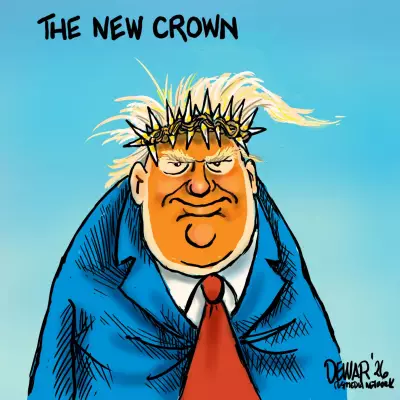
While Carney's speech did not explicitly name any specific nations, it was widely interpreted as a critique of American foreign policy under President Donald Trump. The implications were immediately apparent when Trump threatened punitive tariffs against Canada in response to Ottawa's trade agreement with China.
Contradictory Accounts of Diplomatic Damage Control
The aftermath of Carney's Davos remarks has revealed conflicting narratives about diplomatic efforts to manage the fallout. U.S. Treasury Secretary Scott Bessent claimed that Carney had "aggressively walked back" his comments during a phone conversation with President Trump.
However, Carney presented a different version of events when speaking to reporters on Parliament Hill. "To be absolutely clear, and I said this to the president. I meant what I said in Davos," the Canadian prime minister asserted. "It was clear. It was a broader set of issues that Canada was the first country to understand the change in U.S. trade policy that he had initiated, and we're responding to that."
Carney did acknowledge having "a very good conversation on a wide range of subjects" with the American president, suggesting that despite their differences, diplomatic channels remain open between the two North American allies.
Broader Implications for International Relations
This public divergence between British and Canadian leadership approaches highlights significant differences in how Western democracies are navigating an increasingly complex global landscape. Starmer's emphasis on bilateral pragmatism versus Carney's call for middle power coalition-building represents two distinct philosophical approaches to contemporary diplomacy.
The situation underscores the delicate balance that nations must maintain between asserting their values and preserving crucial international relationships. As global power dynamics continue to evolve, such public disagreements between traditional allies may become more frequent, testing the resilience of long-standing diplomatic partnerships.