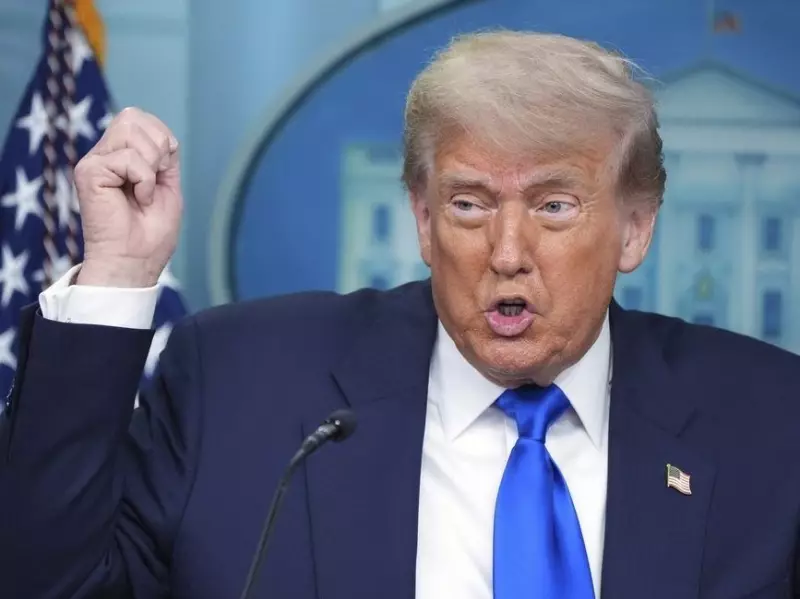
U.S. President Donald Trump's decision to issue a military threat to Iran via social media in the middle of the night has been labeled as neither intelligent nor strategic. However, the core message of his post—support for Iranian protestors—aligns with what many analysts argue should be a consistent Western policy.
A 3 a.m. Social Media Ultimatum
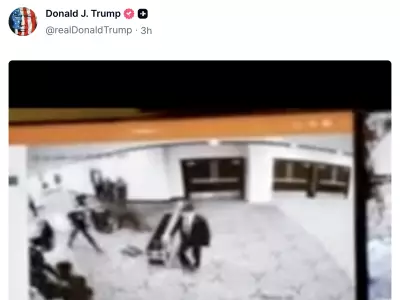
In the early hours of Thursday, January 2, 2026, President Trump took to his Truth Social platform to address the Iranian regime. He warned that if it "violently kills peaceful protestors … the United States of America will come to their rescue." He punctuated the statement by declaring America was "locked and loaded and ready to go."
This incident highlights ongoing concerns about Trump's impulsive communication style, especially given the late hour. Critics suggest such grave foreign policy declarations merit more deliberation than a social media post composed at 3:00 a.m.

The Context: Renewed Protests in Iran
Trump's post was a direct response to escalating unrest within Iran. Since the previous Sunday, large crowds have been demonstrating for democratic reforms and protesting unbearably high consumer prices. On Thursday, six protestors were killed after attacks by Iranian security forces attempting to quell the demonstrations.
The President, who has often touted his performance on cognitive tests, framed his threat as a defense of the protestors' safety. His action stands in stark contrast to the approach of previous administrations during similar Iranian uprisings.
A History of Western Hesitation
Analysts point out that the West, and particularly the United States, has a record of failing to support democratic movements in Iran when it mattered most. The most notable example was during the 2009 Green Revolution, when hundreds of thousands marched against the ruling ayatollahs.
At that time, the administration of President Barack Obama was engaged in nuclear negotiations with Tehran. Fearing that overt support for the protestors would derail those talks, the U.S. and Europe offered no public promise of recognition or moral support. This lack of backing is widely seen as a factor in the revolution's failure.
This pattern of turning a blind eye to internal repression for the sake of diplomatic deals has, according to some foreign policy observers, only emboldened the "mad mullahs of Tehran." They argue that peaceful insurrections need the assurance of international recognition to succeed.
The Core Debate: Method vs. Message
While the method of Trump's declaration—a late-night social media blast—is broadly criticized as reckless, it has ignited a debate about the substance. Many agree that intervening to support peaceful protests demanding regime change in Iran is exactly what the U.S., Canada, and Europe should do.
The central question becomes whether an ill-advised delivery undermines a fundamentally correct position. The incident underscores the tension between diplomatic protocol and the urgent need to support populations living under authoritarian rule, a dilemma that continues to challenge Western foreign policy.