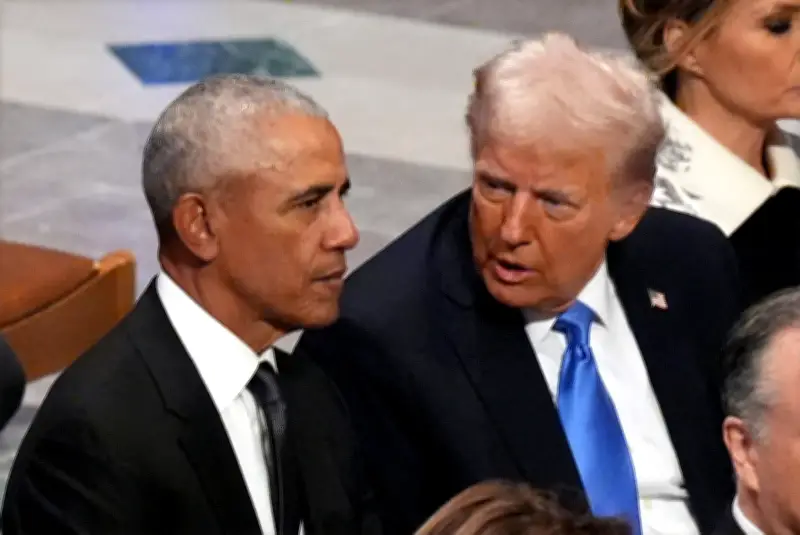
Former U.S. President Barack Obama and President Donald Trump have taken markedly different approaches to Iran's nuclear program. While Obama's 2015 deal aimed to curb Iran's nuclear ambitions through diplomacy and sanctions relief, Trump's 2026 agreement emphasizes a more hardline stance, with stricter enforcement and broader restrictions.
Obama's Approach: The Joint Comprehensive Plan of Action (JCPOA)
The JCPOA, signed in 2015, limited Iran's uranium enrichment in exchange for lifting economic sanctions. It was a multilateral agreement involving the U.S., UK, France, Germany, Russia, China, and the EU. Obama hailed it as a diplomatic triumph that prevented a nuclear-armed Iran.
Trump's Approach: A New Deal
Trump withdrew from the JCPOA in 2018, citing its flaws. His 2026 deal, negotiated bilaterally, imposes tighter caps on enrichment and includes provisions on ballistic missiles and regional activities. Critics argue it lacks the multilateral support of Obama's accord.

Key Differences
- Scope: Obama's deal focused solely on nuclear issues; Trump's includes missile and regional security.
- Partners: Obama worked with global powers; Trump pursued a bilateral approach.
- Enforcement: Trump's deal has stricter inspection regimes and automatic snapback of sanctions.
Both agreements aim to prevent Iran from developing nuclear weapons, but their strategies reflect divergent foreign policy philosophies.