Trump's Davos Address Raises Global Alarm Over Greenland Ambitions
In a speech that sent shockwaves through international diplomatic circles, U.S. President Donald Trump addressed the World Economic Forum in Davos, Switzerland, offering mixed signals about his administration's intentions toward Greenland. While world leaders initially breathed a sigh of relief when Trump promised not to pursue a military takeover of the Danish territory, subsequent comments revealed a persistent fixation that continues to unsettle European capitals.
Market Turmoil and Diplomatic Tensions
The day before his formal address, Trump had sparked significant anxiety across Europe when questioned by reporters about his plans for Greenland. His cryptic response of "You'll find out" triggered immediate market reactions, with stock exchanges worldwide posting substantial losses. This financial turbulence appears to have influenced the president's subsequent public assurance against forced acquisition, though his underlying ambitions remain clearly evident.
European leaders continue to express deep concern that Trump's persistent interest in acquiring Greenland could potentially ignite a damaging trade war. The uncertainty surrounding American intentions has created a diplomatic climate of apprehension and speculation among NATO allies and trading partners.

Direct Threats and Confused Geography
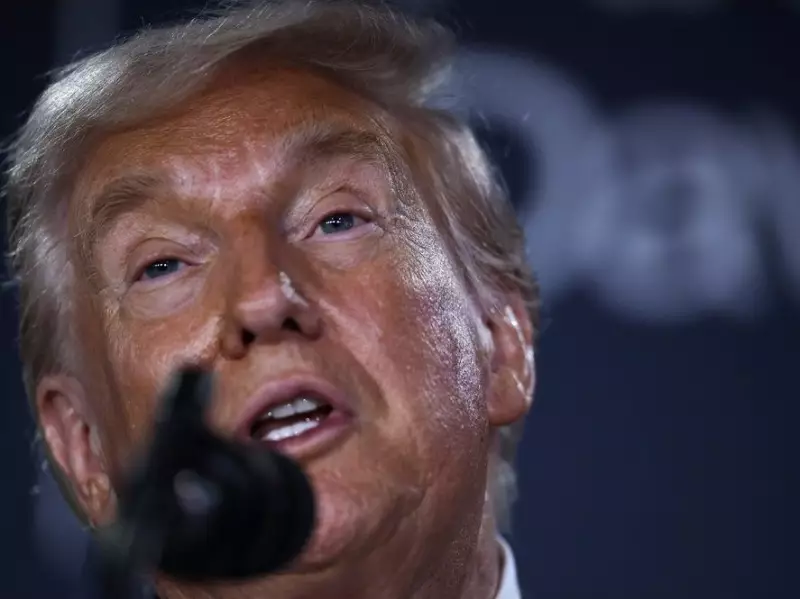
During his Davos appearance before an audience of global leaders and business executives, Trump delivered what many interpreted as a thinly veiled ultimatum regarding Greenland. "You can say yes and we will be very appreciative, or you can say no and we will remember," the president declared, emphasizing his desire for "immediate negotiations" with Denmark concerning American control of the territory.
Trump repeatedly referred to Greenland as "our territory," asserting that the massive island properly belongs to North America and that he would accept nothing less than complete American ownership. Observers noted with concern that the president appeared confused about basic geography, mistakenly referring to Greenland as "Iceland" on multiple occasions during his remarks.
Critical Minerals and Strategic Positioning
Behind Trump's public statements lies a strategic interest in Greenland's considerable natural resources. The territory contains significant deposits of critical minerals essential for modern technology and defense applications. Denmark's recent agreement to permit expanded American military presence in Greenland has fueled speculation that the Trump administration seeks not just territorial control but privileged access to these valuable resources.
This development carries particular significance for Arctic security dynamics, as control of Greenland would substantially enhance American strategic positioning in the increasingly important polar region.
Canada Faces Presidential Criticism
In a notable departure from diplomatic convention, Trump specifically singled out Canada and Prime Minister Mark Carney for criticism during his Davos address. The president asserted that "Canada lives because of the U.S." and claimed that "Canada isn't grateful" for American military protection.
These comments represent a significant distortion of historical reality. Trump failed to acknowledge Canada's substantial military contributions alongside American forces throughout modern history. Canada joined the Allied effort in the Second World War in 1939, nearly two full years before the United States entered the conflict following the attack on Pearl Harbor in 1941.
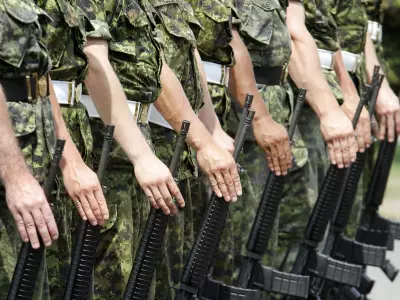
More recently, following the September 11 attacks, Canada deployed over 40,000 military personnel to Afghanistan as part of Operation Enduring Freedom. Between 2001 and 2014, 158 members of the Canadian Armed Forces lost their lives during this deployment, demonstrating significant sacrifice in support of shared security objectives.

Arctic Security Implications for Canada
Trump's Greenland ambitions carry direct consequences for Canadian national security interests. As an Arctic nation with the world's longest coastline in the region, Canada finds itself on the frontline of polar security considerations. The potential American acquisition of Greenland would fundamentally alter the strategic balance in the High North, with implications for sovereignty, resource access, and military positioning.
This development comes as Canada's government has begun reinvesting in military capabilities after years of relative neglect. The necessary shift in defense priorities will require substantial financial commitment and strategic focus, but experts agree that the cost of failing to address evolving Arctic security challenges would prove even greater in the long term.
The combination of Trump's territorial ambitions, his criticism of Canadian contributions, and the potential for trade conflict creates a complex diplomatic landscape that Canadian officials must navigate carefully in the coming months.