Trump Launches Ambitious 'Board of Peace' Initiative at World Economic Forum
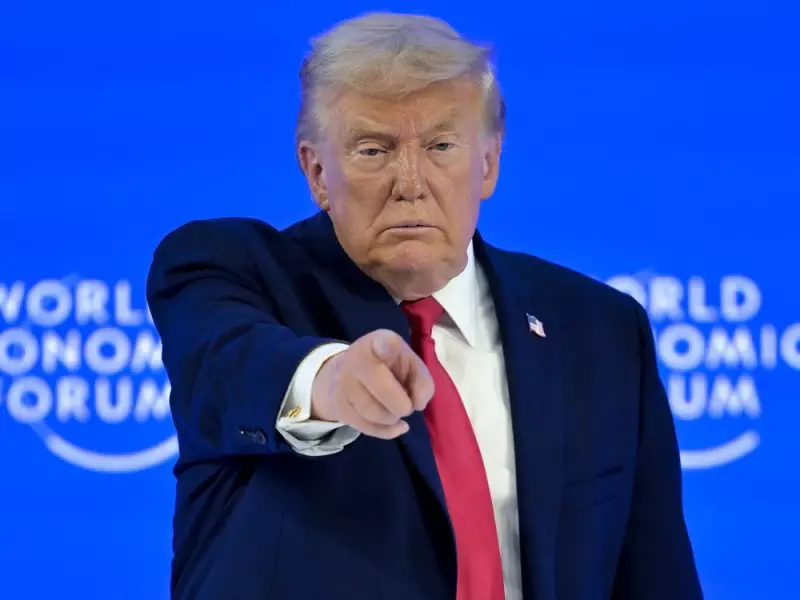
In a significant move on the global stage, U.S. President Donald Trump formally established his much-discussed "Board of Peace" during a speech at the World Economic Forum in Davos, Switzerland. The president expressed his vision that this new international body could eventually rival the United Nations in addressing world conflicts and fostering diplomatic solutions.
Global Participation and Ambitious Goals
Trump announced that 59 countries have already joined the board, although only officials from 19 nations attended the initial meeting in Davos. The president addressed participants directly, stating, "You're the most powerful people in the world" and noting that most were "very popular leaders" who were "friends of mine."
The board's formation stems from Trump's 20-point ceasefire plan for Gaza, which previously received endorsement from the UN Security Council. Israeli Prime Minister Benjamin Netanyahu was the first leader announced to join the initiative. Trump emphasized that the board's initial focus would be on mapping the future of the Gaza Strip, where Israel continues its conflict with Hamas, but he suggested the scope could expand to other global issues as successes accumulate.

Key Requirements and International Responses
A central condition for continuing the Gaza ceasefire involves the disarmament of Hamas, which the group has refused and Israel considers non-negotiable. Trump issued a warning to Hamas that they must either disarm voluntarily or face consequences.
While Trump touted strong membership, several notable countries have not yet committed to participation:
- Russia is consulting with strategic partners before deciding
- Britain declined due to concerns about broader legal treaty implications
- Norway, Sweden, and Slovenia have either refused or not accepted invitations
- Canada, Ukraine, China, and the European Union have yet to fully commit, though Canadian Prime Minister Mark Carney previously expressed willingness to join "in principle"
Relationship with Existing International Institutions
Trump has previously suggested that his Board of Peace might eventually replace some functions of the United Nations, potentially rendering the organization obsolete. However, during his Davos address, he clarified that the board would work "in conjunction with the United Nations" while criticizing the UN for not doing enough to resolve certain global conflicts.
U.S. Secretary of State Marco Rubio noted that some countries plan to join but require parliamentary approval, while other nations not originally invited have inquired about membership. The board represents Trump's most ambitious international diplomatic initiative to date, blending his characteristic deal-making approach with traditional statecraft in an attempt to reshape global conflict resolution mechanisms.