The government of Somaliland has firmly rejected allegations from neighbouring Somalia that its newly established diplomatic ties with Israel are part of a strategic bargain involving Palestinian resettlement or military bases.
Denial of "Baseless Allegations"
In a statement issued on Thursday, January 1, 2026, Somaliland's Foreign Ministry used the social media platform X to dismiss what it called "false claims" by the Somali government. The ministry asserted that its engagement with Jerusalem is "purely diplomatic, conducted in full respect of international law and the mutual sovereign interests of both countries."
The statement emphasized that the allegations are intended to mislead the international community and undermine Somaliland's diplomatic progress. It reiterated Somaliland's commitment to regional stability and peaceful international cooperation.

Somalia's Accusations and Strategic Concerns
The denial comes in response to comments made by Somali President Hassan Sheikh Mohamud in an interview with Qatar's Al Jazeera network on Tuesday. President Mohamud characterized Israel's recognition of Somaliland as a "strange" move that was not merely a diplomatic gesture but a cover for specific Israeli strategic objectives.
He claimed that Somaliland accepted three key conditions in exchange for the recognition:
- Agreeing to accept Palestinians from Gaza.
- Allowing the establishment of an Israeli military base on its coast along the Gulf of Aden.
- Joining the Abraham Accords peace agreements.
Context of the Recognition and Regional Dynamics
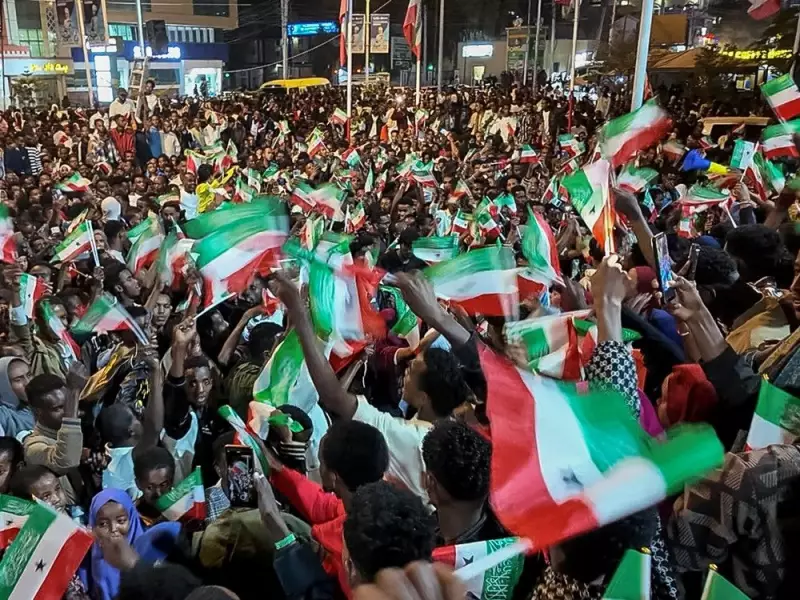
Israel became the first United Nations member state to officially recognize Somaliland on December 26, 2025, prompting celebrations in the breakaway region's capital, Hargeisa. Somaliland, a democratic entity with over 6.2 million inhabitants, declared independence from Somalia in 1991 but has not gained widespread international recognition.
The region holds significant strategic value due to its location. It lies directly across the Gulf of Aden from Yemen, where Israel has been engaged in conflict with the Iranian-backed Houthi group. This positions Somaliland along a crucial maritime chokepoint linking the Red Sea to the Indian Ocean.
The idea of Somaliland as a potential destination for Gazans was first floated in March 2025 as part of a reported plan by then-U.S. President Donald Trump to transform Gaza. A senior Somaliland official responded at the time that the government was "open to discussing anything" but only with governments that recognize its sovereignty.
International reactions have been measured. Following Israel's announcement, former U.S. President Trump, who had previously expressed interest in recognizing Somaliland, stated he would need to study the issue further. Tammy Bruce, the U.S. deputy ambassador to the U.N., clarified that Washington's support for Israel's right to make its own diplomatic decisions did not signal a U.S. policy change regarding Somaliland's status.
The development has heightened tensions in the Horn of Africa, sparking protests in Mogadishu, Somalia, and marking a significant shift in the geopolitical landscape of the region.