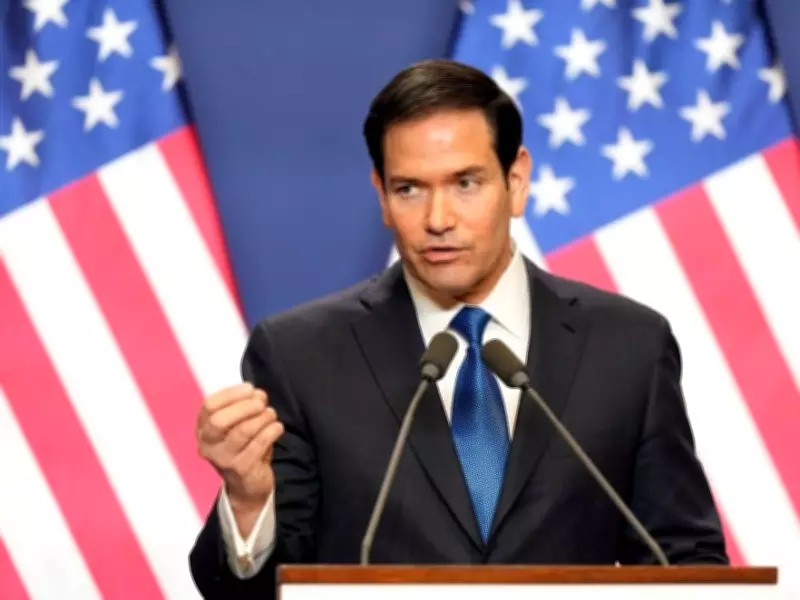
Rubio's Munich Address: A Defining Moment for Transatlantic Relations
In a speech that resonated with clarity and conviction, United States Secretary of State Marco Rubio addressed the Munich Security Conference in Germany on February 14, 2026. His remarks, delivered before an international audience including political leaders from both sides of the Atlantic, stood out for their thoughtful articulation of America's foreign policy vision under the Trump administration.
A Voice of Reason in a Complex Landscape
Within President Donald Trump's administration, Rubio has emerged as the most articulate spokesman on foreign policy matters. At Munich, he demonstrated this prowess by offering a robust defence of the transatlantic alliance while skillfully avoiding the divisive rhetoric that has sometimes unsettled European partners in recent years. His approach contrasted sharply with previous engagements, such as Vice-President JD Vance's speech in Davos, Switzerland, which many Europeans interpreted as a signal of American disengagement.
"Together we rebuilt a shattered continent in the wake of two devastating world wars," Rubio stated, highlighting the historical depth of U.S.-European ties. He emphasized that these relationships are measured not in election cycles but in centuries of shared struggle and cooperation. The Secretary of State argued that America does not seek weaker or dependent allies but strong partners capable of contributing meaningfully to collective security.

The Imperative of Strength and Shared Values
Rubio delivered an unmistakable warning: alliances only function effectively when all parties carry substantial weight. He pointed out that the United States cannot indefinitely subsidize European welfare states while simultaneously underwriting the continent's security against threats like a revanchist Russia. "We do not want our allies to be weak, because that makes us weaker," he asserted, urging Europe to abandon self-imposed guilt and reclaim confidence in its cultural heritage and civilization.
This critique extended beyond defence spending to include policy choices such as aggressive green energy mandates and mass migration, which Rubio suggested are often driven by moral atonement rather than national interest. These decisions, he contended, have left Europe less stable, cohesive, and capable of self-defence.
Defending the Foundations of Western Civilization
At the heart of Rubio's address was a profound question: What exactly is the West defending? He argued that armies fight for a people, a nation, and a way of life—specifically, a great civilization proud of its history and confident in its future. This civilization is built on values like the rule of law, freedom of speech and religion, property rights, democratic governance, and republican self-rule. Rubio emphasized that these principles form the real foundation of the transatlantic alliance and are why Russia has historically remained at Europe's margins.
"I am here today to leave it clear that America is charting the path for a new century of prosperity, and that once again we want to do it together with you, our cherished allies and our oldest friends," Rubio declared. He called for a Europe proud of its heritage, with the means to defend itself and the will to survive, embracing the opportunities of a new century while learning from the past.
A Framework for Future Cooperation
Rubio's speech provided a disciplined and serious framework for the Trump administration's foreign policy, infused with a sense of historical gravity that has been lacking in recent transatlantic debates. In Munich, he did more than reassure allies; he reminded them of the alliance's core purpose: to defend and promote the shared values that define Western civilization. This articulation marks a significant step in fostering a stronger, more resilient partnership for the challenges ahead.