Rafah Border Crossing Reopens in Gaza, Yet Passage Remains Extremely Restricted
The Rafah border crossing, a critical gateway between the Gaza Strip and Egypt, has officially reopened after a period of closure. However, despite this development, access remains severely limited, with only a handful of individuals managing to traverse the border. This situation unfolds against the backdrop of the protracted Israel-Hamas war, which continues to shape the humanitarian and geopolitical landscape of the region.
Limited Movement for Medical Evacuations
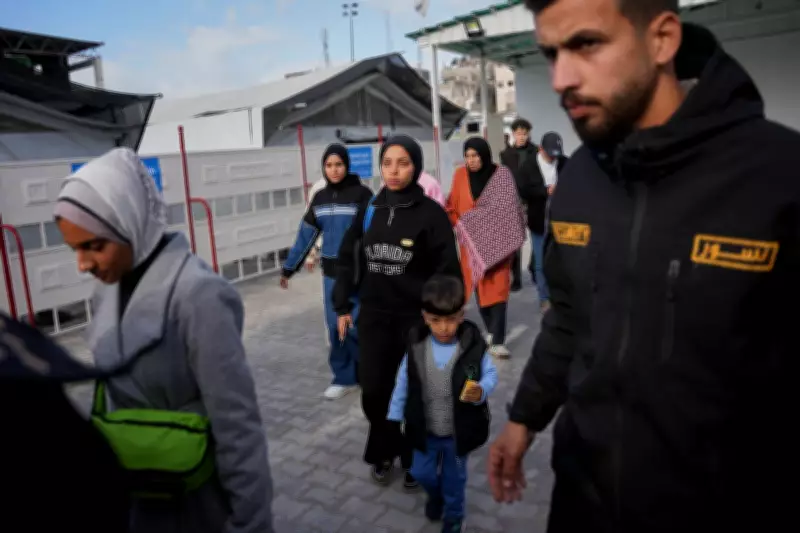
Reports from the ground indicate that the primary beneficiaries of the reopened crossing have been Palestinian patients requiring urgent medical treatment abroad, accompanied by their relatives. Scenes from Khan Younis, a city in southern Gaza, showed groups gathering to board buses destined for the Rafah crossing as recently as early February 2026. This selective passage underscores the dire healthcare crisis within Gaza, where local medical infrastructure has been overwhelmed by the conflict's casualties and ongoing hostilities.
The process for crossing remains fraught with bureaucratic and security hurdles. Egyptian and Palestinian authorities, in coordination with international agencies, are reportedly vetting applicants stringently, leading to significant delays and a low throughput of people. This bottleneck means that for the vast majority of Gaza's population, the border reopening offers little immediate relief from the enclave's severe conditions.

Context of the Ongoing Israel-Hamas Conflict
The reopening of the Rafah crossing occurs within the complex and volatile context of the Israel-Hamas war. The conflict, which has seen multiple escalations, has resulted in extensive damage to Gaza's infrastructure, including roads and facilities near border areas. Security concerns on both sides of the border contribute to the restrictive access policies.
Humanitarian organizations have repeatedly called for sustained and unimpeded access to Gaza for aid and for the evacuation of critically ill and wounded individuals. The partial reopening of Rafah is seen as a tentative step, but far short of the comprehensive access needed to address the scale of the humanitarian need. The flow of essential supplies, including food, medicine, and fuel, through this crossing point remains a critical issue for the survival of Gaza's civilian population.
International Response and Future Outlook
The international community, including key mediators, continues to engage with Israeli, Egyptian, and Palestinian authorities to negotiate more stable and open passage arrangements. The goal is to establish corridors that can facilitate not only medical evacuations but also the delivery of sustained humanitarian aid and, potentially, the movement of civilians seeking refuge.
However, the political and security complexities of the war make any significant expansion of access challenging. The situation at the Rafah crossing serves as a microcosm of the larger conflict—a point where humanitarian needs intersect with stringent security and political controls. Observers note that without a broader ceasefire or de-escalation agreement, the border is likely to remain a point of limited, rather than free, movement.
For now, the reopening of the Rafah crossing offers a glimmer of hope for some, but for most residents of Gaza, it represents another constrained avenue in a landscape of limited options and continued hardship.