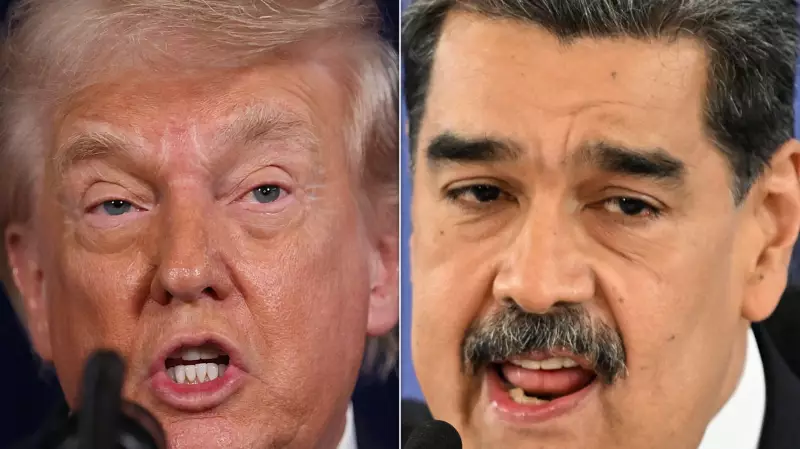
The political landscape was rocked on Saturday as a U.S. military operation led to the capture of Venezuelan President Nicolás Maduro, an action immediately condemned by The New York Times editorial board as "illegal and unwise." The board's sharp critique, published hours after President Donald Trump announced the strike, accuses the administration of pushing the nation toward an international crisis without valid justification or congressional approval.
Details of the Operation and Immediate Fallout
According to reports, the operation unfolded in the early hours of Saturday morning. Venezuelan ruling party leader Nahum Fernández informed the Associated Press that Nicolás Maduro and his wife, Cilia Flores, were captured at their home inside the Fort Tiuna military installation. President Trump declared on Truth Social that the mission was conducted "in conjunction with U.S. Law Enforcement."
U.S. Attorney General Pam Bondi swiftly announced that Maduro faced a federal indictment from the Southern District of New York. The charges are severe, including narco-terrorism conspiracy and cocaine importation conspiracy. Bondi labeled the couple "international narco traffickers" and vowed they would face American justice in American courts.

A Clash of Editorial Perspectives and Constitutional Concerns
The New York Times editorial board launched a comprehensive assault on the administration's rationale and methods. It dismissed the claim that the action targeted "narco-terrorists" responsible for U.S. overdoses as "particularly ludicrous," noting Venezuela is not a meaningful producer of the drugs in question. The board framed Trump's strategy as "latter-day imperialism" and a dangerous departure from established international norms.
The core legal argument centered on the U.S. Constitution. The editorial insisted that if the President wished to justify such military action, he must seek authorization from Congress. Without it, his actions stand in violation of U.S. law. The board concluded that the administration acted "without any semblance of international legitimacy, valid legal authority or domestic endorsement."
This view found support among Congressional Democrats, who also denounced the strike as illegal. However, a starkly different opinion emerged from The Washington Post's editorial board. Owned by Jeff Bezos, the Post endorsed the military action in an editorial titled "Justice in Venezuela," calling it a "major victory for American interests" and one of the boldest presidential moves in years. Despite this support, the Post acknowledged "legitimate legal questions about the operation" persist.
Uncertain Future and Deepening Political Divide
The event has ignited a fierce debate over presidential war powers, international law, and America's role on the global stage. While The New York Times expressed a faint hope that the crisis might end less catastrophically than feared, its final judgment was unequivocal: "We know that Mr. Trump’s warmongering violates the law." The capture of Maduro has not only created a volatile situation in South America but has also precipitated a profound constitutional and political crisis at home, highlighting a deep divide in how American power should be wielded.