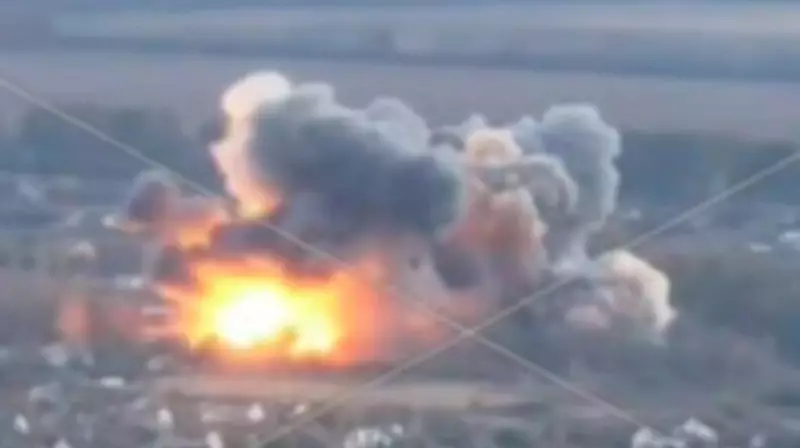
In a dramatic escalation ahead of high-stakes diplomacy, Russian forces launched a barrage of missiles and drones against Ukraine's capital, Kyiv, and several other regions overnight Saturday. The attack comes just one day before a critical meeting between Ukrainian President Volodymyr Zelenskyy and U.S. President Donald Trump, aimed at finalizing a deal to end the nearly four-year conflict.
Overnight Assault on the Capital
The assault began late Saturday, with explosions reverberating through Kyiv as Ukrainian air defence systems were activated to intercept incoming threats. The country's military reported via Telegram that missiles were being deployed, while the air force stated that Russian drones were targeting the capital alongside northeastern and southern regions.
An air raid alert remained active in Kyiv for approximately four hours after the initial sirens sounded. Fortunately, initial reports indicated no immediate casualties, significant damage, or widespread power outages resulting from the overnight strikes. Russian officials did not immediately comment on the latest attacks.

This assault follows a pattern of intensified Russian strikes on Ukrainian infrastructure. On Thursday night, targets included the country's energy grid and the southern Odesa region, home to Ukraine's primary seaports.
The Diplomatic Stumbling Block: Territory and Security
Ahead of the attacks, President Zelenskyy outlined the central focus of his Sunday meeting with President Trump in Florida. The talks are set to address the core issue of which territories would be controlled by each side following a cessation of hostilities. The war, Europe's deadliest since World War Two, began with Russia's invasion in February 2022.
Zelenskyy revealed that a U.S.-driven 20-point draft peace plan is now 90% complete. He emphasized that a bilateral security guarantee agreement with the United States is also nearly ready, a crucial element given the failure of past post-Soviet assurances.
"A lot can be decided before the New Year," Zelenskyy told Politico, expressing hope for rapid progress. However, President Trump asserted the United States' leading role in the process, telling the same publication, "He doesn’t have anything until I approve it. So we’ll see what he’s got."
Key Points of Contention in the Peace Plan
Beyond the broader territorial disputes, several specific issues remain unresolved:
- Control of the Zaporizhzhia Nuclear Plant: The status of Europe's largest nuclear power station, seized by Russia early in the war, is a critical point of negotiation.
- The Donbas Region: Moscow demands a Ukrainian withdrawal from unoccupied areas of the eastern Donetsk region as part of securing the entire Donbas. Kyiv insists any ceasefire must freeze the current front lines.
- Security Guarantees: While the U.S. has proposed a 15-year security deal subject to renewal, Zelenskyy told Axios that Ukraine seeks a longer, legally binding agreement to deter future Russian aggression.
Under a proposed U.S. compromise, a free economic zone would be established if Ukraine cedes parts of Donetsk, though details are still being finalized.
Potential for a Referendum and Cautious Optimism
In a significant revelation, Zelenskyy indicated a willingness to put the final 20-point peace plan to a national referendum—provided Russia agrees to a 60-day ceasefire to allow for preparation and voting. This move would be contingent on his inability to secure stronger U.S. backing for Ukraine's territorial position.
Despite the complexities, there are signals of cautious optimism from both sides. Russian Deputy Foreign Minister Sergei Ryabkov noted that Kyiv's version of the plan differs from what Russia discussed with Washington but suggested matters had reached a potential "turning point." The Kremlin confirmed that Putin's foreign policy aide, Yuri Ushakov, has already engaged with the Trump administration after reviewing U.S. peace proposals.
As the leaders prepare to meet, the overnight missile attacks serve as a stark reminder of the devastating conflict that any agreement must ultimately halt. The world watches to see if diplomacy can finally deliver a lasting peace.