US Vice-President JD Vance began high-level talks with Iranian officials in Switzerland on Sunday to negotiate a permanent peace deal addressing Iran's nuclear program and the reopening of the Strait of Hormuz, as President Donald Trump threatened military strikes if Hezbollah continues attacks on Israel.
First High-Level Meetings in Bürgenstock
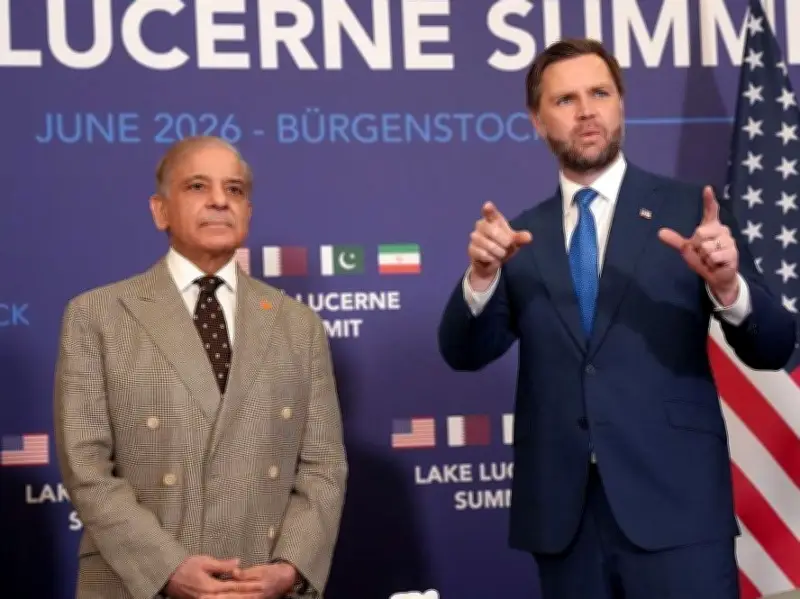
The meetings, held in the Swiss resort of Bürgenstock, included representatives from the US, Iran, Qatar, and Pakistan. Iranian Foreign Minister Abbas Araghchi attended alongside Vice-President Vance. The talks follow a memorandum of understanding signed by Trump on Wednesday, which gives the two countries 60 days for negotiations, with a possible extension.
According to a statement from Vance, the discussions represent "the beginning of a technical negotiation that's not going to solve every disagreement." He added that the meeting would allow both sides to "sit together as teams for the first time really in history to figure out what matters most to the respective parties."

Trump's Social Media Threats
As talks got underway, Trump posted on social media Sunday, warning Iran to "immediately stop their highly paid PROXIES in Lebanon from causing trouble. If they don't, we'll hit Iran very hard again, just like we did last week, only harder!!!" Speaking to Fox News, Trump said he told Iranian leaders directly that if they close the Strait of Hormuz, "You won't even make it back" to Iran, using an expletive.
The semi-official Tasnim news agency reported that the Iranian delegation opposed a joint photo with the US delegation, citing a person familiar with the matter. Iranian media said the round of talks would last one day, with officials meeting mediators before holding discussions with the US later Sunday.
Stakes High Amid Hezbollah-Israel Conflict
The talks are complicated by recent fighting between Israel and Iranian-backed Lebanese militant group Hezbollah, which threatens to derail the diplomacy. Iran's semi-official ISNA news agency said the main topics would include a "comprehensive ceasefire" in Lebanon, from which it demands Israel withdraw, and the fate of billions of dollars in Iranian assets frozen overseas.
Tehran on Saturday accused Israel of violating a truce in Lebanon and announced the Strait of Hormuz would be shut again. Despite the announcement, millions of barrels of oil continued to flow through the waterway, according to the Joint Maritime Information Center.
Negotiation Framework
Vance noted that the goal is to get "the actual structure of negotiation in place," building on technical discussions in Switzerland involving Jared Kushner and Steve Witkoff, Trump's two global negotiators. The interim deal has signaled a pause in US-Iran hostilities, but Sunday's discussions are likely just the start of protracted wrangling spanning Iran's nuclear capabilities and economic relief for Tehran.
"What today really represents is the beginning of a technical negotiation that's not going to solve every disagreement," Vance told reporters alongside officials from Pakistan and Qatar, who are acting as mediators.