Iranian Government Voices Concern Over U.S. Naval Deployment
Iran has issued a stern warning regarding potential regional instability, directly linked to the recent arrival of a United States aircraft carrier strike group in the vicinity. This development occurs against a backdrop of escalating geopolitical friction and symbolic public displays within the Iranian capital.
Tehran's Public Messaging Amid Military Movements
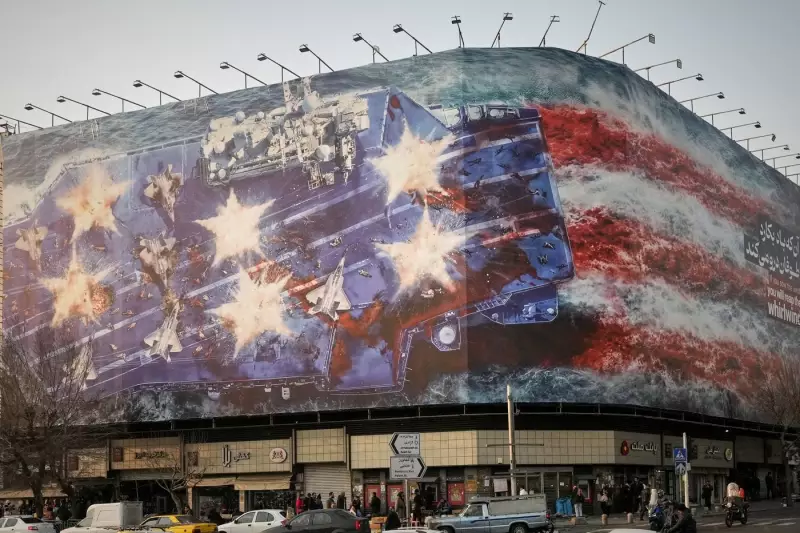
In Tehran, a large billboard was prominently displayed at Enqelab-e-Eslami (Islamic Revolution) Square, featuring a stark visual message. The imagery depicted a heavily damaged U.S. aircraft carrier with disabled fighter jets on its deck. Accompanying the graphic was a bilingual sign written in both Farsi and English, conveying a pointed proverb: "If you sow the wind, you'll reap the whirlwind." This public installation, observed on Sunday, January 25, 2026, serves as a clear reflection of the official Iranian stance and domestic propaganda efforts responding to perceived American military posturing.
Analysis of the Strategic Context
The warning from Iranian authorities underscores the fragile state of security dynamics in the Middle East. The deployment of a U.S. naval strike group, a potent symbol of military power, is routinely interpreted by Tehran as a direct threat to its national sovereignty and regional influence. Diplomatic analysts suggest that such movements often trigger a cycle of rhetorical escalation and necessitate careful diplomatic navigation to prevent miscalculation.

The core of Iran's statement emphasizes a direct causal link between external military deployments and the risk of destabilization. This perspective is a recurring theme in Iran's foreign policy discourse, which frequently frames U.S. military activities as provocative and a primary source of tension. The situation remains fluid, with international observers closely monitoring for any subsequent military or diplomatic actions from either side that could alter the current equilibrium.
This incident highlights the ongoing and complex struggle for influence in the region, where naval assets and public symbolism are key tools in a broader contest of power and resolve. The international community continues to watch for developments that could impact global energy security and regional peace.