Iran Responds to Trump's Pressure Tactics Ahead of Critical Nuclear Talks
In the lead-up to crucial nuclear negotiations in Geneva, Iran has issued a sharp rebuke to U.S. President Donald Trump's recent statements, labeling his remarks as "big lies" while simultaneously advocating for "honorable diplomacy." The comments from Iranian officials come as the United States has deployed its largest concentration of aircraft and warships to the Middle East in decades, a move seen as part of Trump's strategy to secure a deal amid Iran's internal challenges following widespread protests last month.
Escalating Military Presence and Regional Concerns
Satellite imagery captured on Tuesday by Planet Labs PBC and analyzed by The Associated Press reveals American vessels, typically stationed in Bahrain at the U.S. Navy's 5th Fleet headquarters, now positioned at sea. This naval dispersal mirrors actions taken before Iran's attack on Qatar in June, aimed at safeguarding against potential assaults. The 5th Fleet deferred inquiries to U.S. Central Command, which has not yet provided a response. If the upcoming talks collapse, Trump has repeatedly threatened military action against Iran, a prospect that neighboring nations fear could ignite a broader regional conflict, especially with tensions from the ongoing Israel-Hamas war still simmering. Iran has already declared all U.S. military bases in the Middle East as legitimate targets, endangering tens of thousands of American troops stationed there.
Trump's State of the Union Address and Iranian Retorts
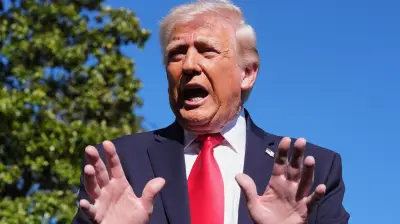
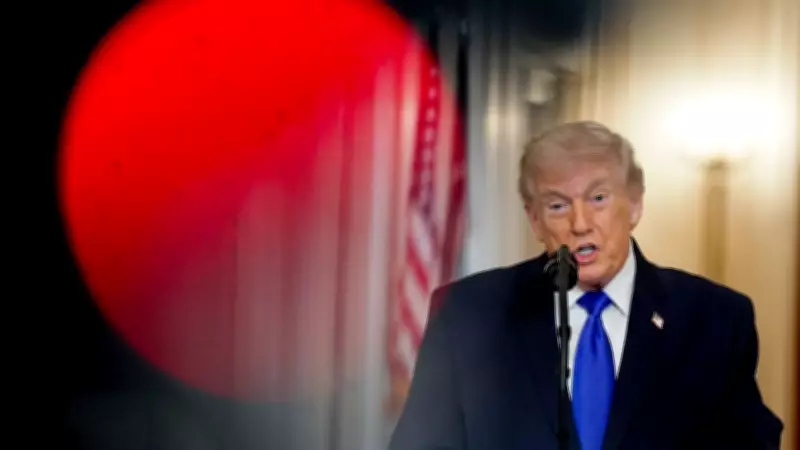
During his annual State of the Union speech on Tuesday night, President Trump addressed Iran's nuclear ambitions, warning that the country is developing missiles capable of reaching Europe and potentially the United States. He accused Iran of restarting its weapons program despite prior warnings. In response, Iranian Foreign Ministry spokesman Esmail Baghaei drew a controversial comparison, likening Trump to Joseph Goebbels, Adolf Hitler's propaganda minister. Baghaei accused the U.S. administration of waging a "disinformation & misinformation campaign" against Iran, asserting that allegations regarding Iran's nuclear activities and ballistic missiles are mere repetitions of "big lies." He emphasized that professional liars often create an "illusion of truth" through persistent falsehoods.

Disputed Death Toll Figures and Diplomatic Warnings
Trump claimed in his speech that at least 32,000 people were killed in Iran's recent protests, a figure at the higher end of estimates from activists. The U.S.-based Human Rights Activist News Agency has documented over 7,000 deaths, suggesting the actual toll may be significantly higher. Iran's government, which has historically minimized casualty counts, reported only 3,117 fatalities on January 21. Separately, Mohammad Bagher Qalibaf, Iran's parliament speaker, issued a stern warning, stating that the U.S. must choose between respectful diplomacy or face Iran's forceful retaliation. He stressed that any attack during negotiations would be met with a firm response from Iran's defensive forces.
Uncertainty Surrounding Nuclear Program and Regional Stability
Satellite photos previously analyzed by the AP indicate that Iran has begun reconstructing missile production sites and conducting work at three nuclear facilities damaged in U.S. attacks last June. Iran maintains that its nuclear program is for peaceful purposes, but Western nations and the International Atomic Energy Agency assert that Iran had a nuclear weapons program until 2003. Prior to the June assault, Iran was enriching uranium to 60% purity, just a technical step away from weapons-grade levels of 90%. The upcoming talks in Geneva, mediated by Oman, will involve Iranian Foreign Minister Abbas Araghchi and U.S. officials led by special envoy Steve Witkoff. If these discussions fail, the potential for military action raises numerous uncertainties, including the objectives of such strikes, the status of Iran's nuclear capabilities, and the risk of regional retaliation that could disrupt oil markets and stability in the Persian Gulf and Israel.